SAGE

Therapeutic Advances in Medical Oncology Template

Write in a clean editor, then format for Therapeutic Advances in Medical Oncology in one click — DocuGuru applies the official SAGE template with author–year references and exports a submission-ready PDF plus the editable LaTeX source. Free to start.

About the Therapeutic Advances in Medical Oncology format

Therapeutic Advances in Medical Oncology is a peer-reviewed journal published by SAGE, covering Cancer Immunotherapy and Biomarkers, Lung Cancer Treatments and Mutations, Lung Cancer Research Studies.

PublisherSAGE
Reference styleAuthor–year (Harvard)
Author–year — (Smith, 2023) in the text
Smith, A., Jones, B. and Lee, C. (2023) 'A representative article title', Therapeutic Advances in Medical Oncology, 12(3), pp. 45–58.

Formats any DOI in Therapeutic Advances in Medical Oncology style. No sign-up.

Publishes research inCancer Immunotherapy and Biomarkers Lung Cancer Treatments and Mutations Lung Cancer Research Studies HER2/EGFR in Cancer Research Colorectal Cancer Treatments and Studies
ISSN1758-8340
Citation impact (2-yr)3.39
h-index90
i10-index945
Total citations44,493
Article processing charge$2,300
Open accessYes
Top institutions publishing hereSun Yat-sen University
Journal websiteus.sagepub.com
You getA submission-ready PDF and the editable LaTeX source — ready to submit.

Papers published in Therapeutic Advances in Medical Oncology per year

28
2014
28
2015
50
2016
48
2017
77
2018
119
2019
245
2020
166
2021
185
2022
180
2023
233
2024
280
2025

Citation impact of Therapeutic Advances in Medical Oncology by publication year

2.1K
2014
2.8K
2015
1.8K
2016
2.4K
2017
5.1K
2018
5K
2019
6.8K
2020
3.6K
2021
3.1K
2022
2.5K
2023
1.4K
2024
619
2025

Citations each year’s papers have accumulated so far — the most recent years are still building up.

Most-cited papers in Therapeutic Advances in Medical Oncology

An overview of the c-MET signaling pathway

Shawna Organ, Ming‐Sound Tsao · 1 Nov 2011

c-MET is a receptor tyrosine kinase that, after binding with its ligand, hepatocyte growth factor, activates a wide range of different cellular signaling pathways, including those involved in proliferation, motility, migration and invasion. Although c-MET is important in the control of tissue homeostasis under normal physiological conditions, it has also been found to be aberrantly…

The PI3K/AKT/mTOR pathway in breast cancer: targets, trials and biomarkers

Elisavet Paplomata, Ruth O’Regan · 1 Apr 2014

The phosphoinositide 3 kinase (PI3K)/Akt/mammalian (or mechanistic) target of rapamycin (mTOR) pathway is a complicated intracellular pathway, which leads to cell growth and tumor proliferation and plays a significant role in endocrine resistance in breast cancer. Multiple compounds targeting this pathway are being evaluated in clinical trials. These agents are generally well tolerated and can…

Pharmacologic resistance in colorectal cancer: a review

William A. Hammond, Abhisek Swaika, Kabir Mody · 18 Dec 2015

Colorectal cancer (CRC) persists as one of the most prevalent and deadly tumor types in both men and women worldwide. This is in spite of widespread, effective measures of preventive screening, and also major advances in treatment options. Despite advances in cytotoxic and targeted therapy, resistance to chemotherapy remains one of the greatest challenges in…

Liquid biopsy of cancer: a multimodal diagnostic tool in clinical oncology

Raffaele Palmirotta, Domenica Lovero, Paola Cafforio et al. · 1 Jan 2018

Over the last decades, the concept of precision medicine has dramatically renewed the field of medical oncology; the introduction of patient-tailored therapies has significantly improved all measurable outcomes. Liquid biopsy is a revolutionary technique that is opening previously unexpected perspectives. It consists of the detection and isolation of circulating tumor cells, circulating tumor DNA and…

Review: Chemotherapy-induced diarrhea: pathophysiology, frequency and guideline-based management

Alexander Stein, Wieland Voigt, Karin Jordan · 4 Dec 2009

Diarrhea is one of the main drawbacks for cancer patients. Possible etiologies could be radiotherapy, chemotherapeutic agents, decreased physical performance, graft versus host disease and infections. Chemotherapy-induced diarrhea (CID) is a common problem, especially in patients with advanced cancer. The incidence of CID has been reported to be as high as 50-80% of treated patients…

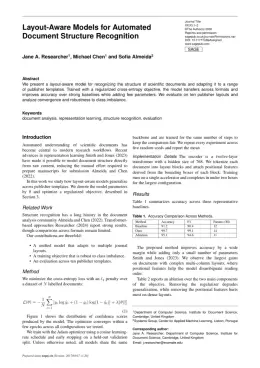
Therapeutic Advances in Medical Oncology template — frequently asked questions

How do I write a paper in the Therapeutic Advances in Medical Oncology format?
In DocuGuru you write your manuscript in a normal editor — no LaTeX setup required — and select the Therapeutic Advances in Medical Oncology template. When you export, DocuGuru compiles the paper into the official SAGE format and hands you a submission-ready PDF along with the editable LaTeX source.
What reference style does Therapeutic Advances in Medical Oncology use?
Therapeutic Advances in Medical Oncology uses Author–year (Harvard) references, shown as author–year markers such as (Smith, 2023) in the text. DocuGuru formats every in-text citation and the reference list in this exact style automatically. A reference appears like this: Smith, A., Jones, B. and Lee, C. (2023) 'A representative article title', Therapeutic Advances in Medical Oncology, 12(3), pp. 45–58.
Do I need to know LaTeX to submit to Therapeutic Advances in Medical Oncology?
No. DocuGuru generates the sagej LaTeX class and compiles the PDF for you in the background, so you get a SAGE-ready Therapeutic Advances in Medical Oncology document without writing any LaTeX. If you do want it, the LaTeX source is included in the export.
Can I import an existing draft into the Therapeutic Advances in Medical Oncology template?
Yes. Paste or upload your current manuscript — Word, LaTeX, Markdown, or plain text — and DocuGuru reflows it into the Therapeutic Advances in Medical Oncology format with correct headings, figures, tables, and author–year citations.
Who publishes Therapeutic Advances in Medical Oncology?
Therapeutic Advances in Medical Oncology is a multidisciplinary journal published by SAGE. DocuGuru's Therapeutic Advances in Medical Oncology template matches SAGE's official submission format.
Can I export a submission-ready Therapeutic Advances in Medical Oncology PDF?
Yes — DocuGuru produces a PDF built with the official Therapeutic Advances in Medical Oncology template (the sagej class) that is ready to submit to SAGE, together with the matching LaTeX source files.
How much does the Therapeutic Advances in Medical Oncology template cost?
You can start writing in the Therapeutic Advances in Medical Oncology template for free. Exporting the final submission-ready Therapeutic Advances in Medical Oncology PDF and LaTeX source is part of DocuGuru's paid plans — see the app for current pricing.
Use the Therapeutic Advances in Medical Oncology template