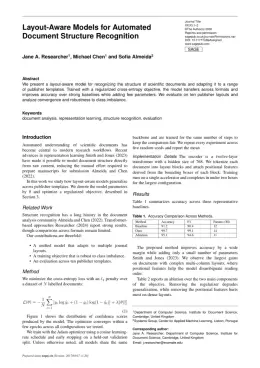
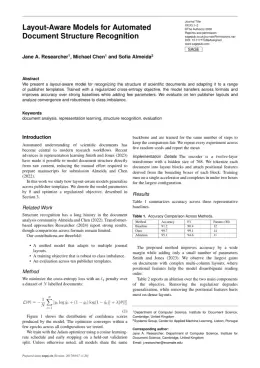
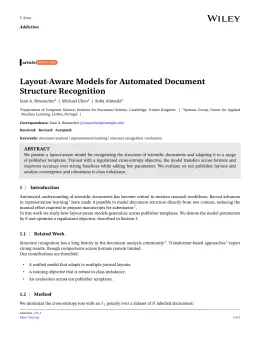
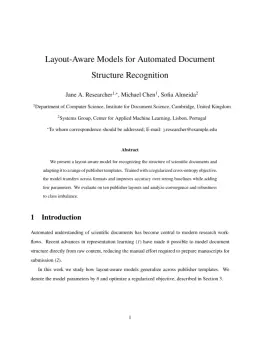
About the Urban Affairs Review format
Urban Affairs Review is a peer-reviewed journal published by SAGE, covering Urban, Neighborhood, and Segregation Studies, Urban Planning and Governance, Electoral Systems and Political Participation. Over its lifetime it has published 1,709 papers, which have received 50,003 citations.
| Publisher | SAGE |
|---|
| Reference style | Author–year (Harvard) Author–year — (Smith, 2023) in the text
Smith, A., Jones, B. and Lee, C. (2023) 'A representative article title', Urban Affairs Review, 12(3), pp. 45–58.
Formats any DOI in Urban Affairs Review style. No sign-up.
|
|---|
| Publishes research in | Urban, Neighborhood, and Segregation Studies Urban Planning and Governance Electoral Systems and Political Participation Public Policy and Administration Research Housing Market and Economics |
|---|
| ISSN | 1078-0874 |
|---|
| Citation impact (2-yr) | 1.67 |
|---|
| h-index | 104 |
|---|
| i10-index | 852 |
|---|
| Top institutions publishing here | University of Illinois Chicago |
|---|
| Journal website | uar.sagepub.com |
|---|
| You get | A submission-ready PDF and the editable LaTeX source — ready to submit. |
|---|
Papers published in Urban Affairs Review per year
Citation impact of Urban Affairs Review by publication year
Citations each year’s papers have accumulated so far — the most recent years are still building up.
Most-cited papers in Urban Affairs Review
Building Community Capacity
Robert J. Chaskin · 1 Jan 2001
The notion of community capacity building is both explicit and pervasive in the rhetoric, missions, and activities of a broad range of contemporary community development efforts. However, there is limited clarity about the meaning of capacity and capacity building at the neighbor-hood level. The author suggests a definitional framework for understanding and promoting community capacity,…
The Political Ecology of Uneven Urban Green Space
Nik Heynen, Harold A. Perkins, Parama Roy · 4 Aug 2006
This article investigates the role of urban political economy, private-public property relations, and race and ethnicity in the social production of Milwaukee's urban forest. By integrating urban-forest canopy-cover data from aerial photography, United States Census data, and qualitative data collected through in-depth interviews, this analysis suggests that there is an inequitable distribution of urban canopy…
Displacement or Succession?
Lance Freeman · 25 Jan 2005
This article examines the extent to which gentrification in U.S. neighborhoods is associated with displacement by comparing mobility and displacement in gentrifying neighborhoods with mobility and displacement in similar neighborhoods that did not undergo gentrification. The results suggest that displacement and higher mobility play minor if any roles as forces of change in gentrifying neighborhoods.…
New Directions in Planning Theory
Susan S. Fainstein · 1 Mar 2000
The author examines three approaches to planning theory: the communicative model, the new urbanism, and the just city. The first type emphasizes the planner’s role in mediating among “stakeholders,” the second paints a physical picture of a desirable planned city, and the third presents a model of spatial relations based on equity. Differences among the…
The Evolution of Urban Regime Theory
Karen Mossberger, Gerry Stoker · 1 Jul 2001
Urban regime theory came to prominence with the publication of Clarence Stone’s study of Atlanta in 1989, although earlier work by Fainstein and Fainstein (1983) and Elkin (1987) has also been influential. Since then, regime analysis has been extensively used to examine urban politics both inside North America and beyond. The authors argue that the…