SAGE

Belonging. Template

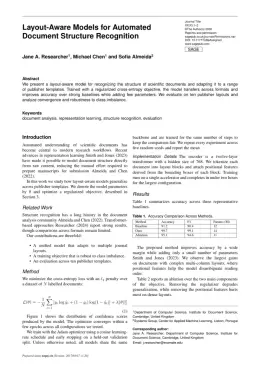
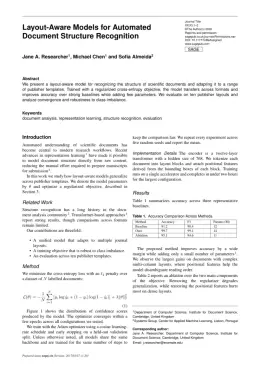
Write in a clean editor, then format for Belonging. in one click — DocuGuru applies the official SAGE template with author–year references and exports a submission-ready PDF plus the editable LaTeX source. Free to start.

About the Belonging. format

Belonging. is a peer-reviewed journal published by SAGE, covering LGBTQ Health, Identity, and Policy, Career Development and Diversity, Posthumanist Ethics and Activism.

PublisherSAGE
Reference styleAuthor–year (Harvard)
Author–year — (Smith, 2023) in the text
Smith, A., Jones, B. and Lee, C. (2023) 'A representative article title', Belonging., 12(3), pp. 45–58.

Formats any DOI in Belonging. style. No sign-up.

Publishes research inLGBTQ Health, Identity, and Policy Career Development and Diversity Posthumanist Ethics and Activism Community Health and Development Educational Leadership and Practices
ISSN3029-0805
Citation impact (2-yr)0.3
h-index2
i10-index1
Total citations30
Top institutions publishing hereBoston College
You getA submission-ready PDF and the editable LaTeX source — ready to submit.

Papers published in Belonging. per year

21
2009
21
2020
1
2023
1
2024
22
2025

Citation impact of Belonging. by publication year

17
2009
0
2020
0
2023
6
2024
6
2025

Citations each year’s papers have accumulated so far — the most recent years are still building up.

Most-cited papers in Belonging.

Rethinking Belonging: Queer Affect, Trauma, and Connection Beyond Conventional Frameworks

Mai Phuc Thinh · 1 Sep 2025

This conceptual paper re-examines traditional notions of belonging, which often emphasize stability and integration, arguing for a reconceptualization that accommodates fragmented and marginalized experiences. Drawing on Ocean Vuong's On Earth We're Briefly Gorgeous , the study posits belonging as an ephemeral, non-teleological, and unreciprocated affective experience. I argue that queer belonging is not a generic…

Promoting Student Teachers’ Engagement and Fostering Belonging Through Cooperative Learning in Peer Microteaching

Rosemarie A. Martin · 1 Jun 2025

Drawing on Social Learning Theory and the Universal Design for Learning Framework, this study explores the potential of cooperative learning in peer microteaching to enhance student engagement and foster belonging among student teachers. Microteaching is a teacher training technique that involves practicing specific teaching skills in short, focused sessions, allowing students to receive feedback to…

Gratitude Impact on Pre-Service Teacher Candidate Internship Experience

Emily Huff, Nalline Baliram · 1 Jun 2025

This study explores the impact of a gratitude journaling intervention on the internship experiences of pre-service teacher candidates, with the goal of mitigating burnout and enhancing emotional well-being during a critical phase of teacher preparation. Seventeen graduate students enrolled in a spring internship seminar participated in a month-long gratitude practice, during which they recorded at…

Community Belonging: LGBTQ+ Experiences in a Regional Australian Setting

Tait Sanders, Gavin Austin, Tania M. Phillips et al. · 1 Dec 2025

Belonging to community among lesbian, gay, bisexual, trans, queer, plus (LGBTQ+) peoples is predominantly considered in relation to identity and effects on wellbeing, rather than conceptualised as producing malleable, diverse, intersectional, and importantly constructed communities. This analysis seeks to better understand how knowledge of gender- and sexuality-based communities change when belonging is regarded to be…

Developing a Sense of Belonging Among Immigrant Students: The Case of Iceland

Sigríður Margrét Sigurðardóttir · 11 Feb 2026

This article employs a case-study approach to explore how immigrant populations, particularly children and youth, develop a sense of belonging within Icelandic society, with a focus on the educational system. Iceland offers a unique context due to its relatively recent immigration history, small population, and comprehensive yet homogenous educational system. By analysing secondary data, including…

Belonging. template — frequently asked questions

How do I write a paper in the Belonging. format?
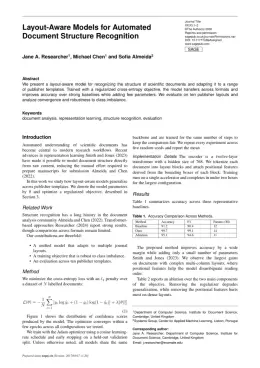
In DocuGuru you write your manuscript in a normal editor — no LaTeX setup required — and select the Belonging. template. When you export, DocuGuru compiles the paper into the official SAGE format and hands you a submission-ready PDF along with the editable LaTeX source.
What reference style does Belonging. use?
Belonging. uses Author–year (Harvard) references, shown as author–year markers such as (Smith, 2023) in the text. DocuGuru formats every in-text citation and the reference list in this exact style automatically. A reference appears like this: Smith, A., Jones, B. and Lee, C. (2023) 'A representative article title', Belonging., 12(3), pp. 45–58.
Do I need to know LaTeX to submit to Belonging.?
No. DocuGuru generates the sagej LaTeX class and compiles the PDF for you in the background, so you get a SAGE-ready Belonging. document without writing any LaTeX. If you do want it, the LaTeX source is included in the export.
Can I import an existing draft into the Belonging. template?
Yes. Paste or upload your current manuscript — Word, LaTeX, Markdown, or plain text — and DocuGuru reflows it into the Belonging. format with correct headings, figures, tables, and author–year citations.
Who publishes Belonging.?
Belonging. is a multidisciplinary journal published by SAGE. DocuGuru's Belonging. template matches SAGE's official submission format.
Can I export a submission-ready Belonging. PDF?
Yes — DocuGuru produces a PDF built with the official Belonging. template (the sagej class) that is ready to submit to SAGE, together with the matching LaTeX source files.
How much does the Belonging. template cost?
You can start writing in the Belonging. template for free. Exporting the final submission-ready Belonging. PDF and LaTeX source is part of DocuGuru's paid plans — see the app for current pricing.
Use the Belonging. template