IEEE

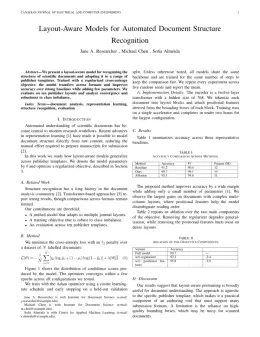
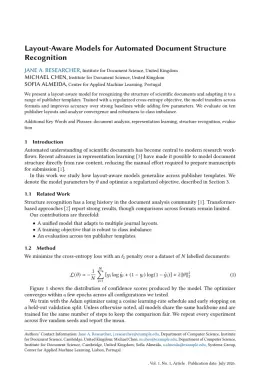
IEEE Transactions on Biomedical Circuits and Systems Template

Write in a clean editor, then format for IEEE Transactions on Biomedical Circuits and Systems in one click — DocuGuru applies the official IEEE template with numbered references and exports a submission-ready PDF plus the editable LaTeX source. Free to start.

About the IEEE Transactions on Biomedical Circuits and Systems format

IEEE Transactions on Biomedical Circuits and Systems is a peer-reviewed journal published by IEEE, covering Neuroscience and Neural Engineering, Analog and Mixed-Signal Circuit Design, Advanced Memory and Neural Computing. Over its lifetime it has published 2,507 papers, which have received 73,443 citations.

PublisherIEEE
Reference styleNumbered (IEEE)
Numbered — [1], [2] in the text
[1] A. Smith, B. Jones, and C. Lee, "A representative article title," IEEE Transactions on Biomedical Circuits and Systems, vol. 12, no. 3, pp. 45–58, 2023.

Formats any DOI in IEEE Transactions on Biomedical Circuits and Systems style. No sign-up.

Publishes research inNeuroscience and Neural Engineering Analog and Mixed-Signal Circuit Design Advanced Memory and Neural Computing EEG and Brain-Computer Interfaces Wireless Body Area Networks
ISSN1932-4545
Citation impact (2-yr)3.72
h-index120
i10-index1,352
Top institutions publishing hereImperial College London
Journal websiteieeexplore.ieee.org
You getA submission-ready PDF and the editable LaTeX source — ready to submit.

Papers published in IEEE Transactions on Biomedical Circuits and Systems per year

126
2014
125
2015
139
2016
168
2017
174
2018
181
2019
145
2020
155
2021
156
2022
177
2023
166
2024
87
2025

Citation impact of IEEE Transactions on Biomedical Circuits and Systems by publication year

3.7K
2014
5.7K
2015
4.4K
2016
5.6K
2017
6.2K
2018
6.8K
2019
4.1K
2020
3K
2021
2.7K
2022
1.9K
2023
948
2024
109
2025

Citations each year’s papers have accumulated so far — the most recent years are still building up.

Most-cited papers in IEEE Transactions on Biomedical Circuits and Systems

Design and Optimization of Resonance-Based Efficient Wireless Power Delivery Systems for Biomedical Implants

Anil Kumar RamRakhyani, Shahriar Mirabbasi, Mu Chiao · 8 Oct 2010

Resonance-based wireless power delivery is an efficient technique to transfer power over a relatively long distance. This technique typically uses four coils as opposed to two coils used in conventional inductive links. In the four-coil system, the adverse effects of a low coupling coefficient between primary and secondary coils are compensated by using high-quality (Q)…

A Scalable Multicore Architecture With Heterogeneous Memory Structures for Dynamic Neuromorphic Asynchronous Processors (DYNAPs)

Saber Moradi, Ning Qiao, Fabio Stefanini et al. · 3 Nov 2017

Neuromorphic computing systems comprise networks of neurons that use asynchronous events for both computation and communication. This type of representation offers several advantages in terms of bandwidth and power consumption in neuromorphic electronic systems. However, managing the traffic of asynchronous events in large scale systems is a daunting task, both in terms of circuit complexity…

Design and Optimization of Printed Spiral Coils for Efficient Transcutaneous Inductive Power Transmission

Uei-Ming Jow, Maysam Ghovanloo · 1 Sep 2007

The next generation of implantable high-power neuroprosthetic devices such as visual prostheses and brain computer interfaces are going to be powered by transcutaneous inductive power links formed between a pair of printed spiral coils (PSC) that are batch-fabricated using micromachining technology. Optimizing the power efficiency of the wireless link is imperative to minimize the size…

Design and Optimization of a 3-Coil Inductive Link for Efficient Wireless Power Transmission

Mehdi Kiani, Uei-Ming Jow, Maysam Ghovanloo · 20 Jul 2011

Inductive power transmission is widely used to energize implantable microelectronic devices (IMDs), recharge batteries, and energy harvesters. Power transfer efficiency (PTE) and power delivered to the load (PDL) are two key parameters in wireless links, which affect the energy source specifications, heat dissipation, power transmission range, and interference with other devices. To improve the PTE,…

A Frequency Control Method for Regulating Wireless Power to Implantable Devices

Ping Si, Aiguo Patrick Hu, Simon C. Malpas et al. · 1 Mar 2008

This paper presents a method to regulate the power transferred over a wireless link by adjusting the resonant operating frequency of the primary converter. A significant advantage of this method is that effective power regulation is maintained under variations in load, coupling and circuit parameters. This is particularly important when the wireless supply is used…

IEEE Transactions on Biomedical Circuits and Systems template — frequently asked questions

How do I write a paper in the IEEE Transactions on Biomedical Circuits and Systems format?
In DocuGuru you write your manuscript in a normal editor — no LaTeX setup required — and select the IEEE Transactions on Biomedical Circuits and Systems template. When you export, DocuGuru compiles the paper into the official IEEE format and hands you a submission-ready PDF along with the editable LaTeX source.
What reference style does IEEE Transactions on Biomedical Circuits and Systems use?
IEEE Transactions on Biomedical Circuits and Systems uses Numbered (IEEE) references, shown as numbered [1], [2] markers in the text. DocuGuru formats every in-text citation and the reference list in this exact style automatically. A reference appears like this: [1] A. Smith, B. Jones, and C. Lee, "A representative article title," IEEE Transactions on Biomedical Circuits and Systems, vol. 12, no. 3, pp. 45–58, 2023.
Do I need to know LaTeX to submit to IEEE Transactions on Biomedical Circuits and Systems?
No. DocuGuru generates the ieeecolor LaTeX class and compiles the PDF for you in the background, so you get a IEEE-ready IEEE Transactions on Biomedical Circuits and Systems document without writing any LaTeX. If you do want it, the LaTeX source is included in the export.
Can I import an existing draft into the IEEE Transactions on Biomedical Circuits and Systems template?
Yes. Paste or upload your current manuscript — Word, LaTeX, Markdown, or plain text — and DocuGuru reflows it into the IEEE Transactions on Biomedical Circuits and Systems format with correct headings, figures, tables, and numbered citations.
What is IEEE Transactions on Biomedical Circuits and Systems?
IEEE Transactions on Biomedical Circuits and Systems, published by IEEE. It is a engineering and computer science journal, published by IEEE.
Can I export a submission-ready IEEE Transactions on Biomedical Circuits and Systems PDF?
Yes — DocuGuru produces a PDF built with the official IEEE Transactions on Biomedical Circuits and Systems template (the ieeecolor class) that is ready to submit to IEEE, together with the matching LaTeX source files.
How much does the IEEE Transactions on Biomedical Circuits and Systems template cost?
You can start writing in the IEEE Transactions on Biomedical Circuits and Systems template for free. Exporting the final submission-ready IEEE Transactions on Biomedical Circuits and Systems PDF and LaTeX source is part of DocuGuru's paid plans — see the app for current pricing.
Use the IEEE Transactions on Biomedical Circuits and Systems template