IEEE

IEEE Transactions on Radar Systems Template

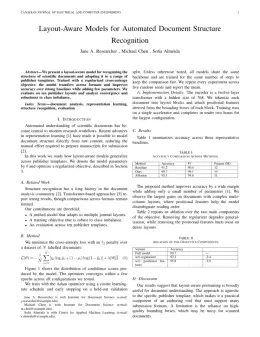
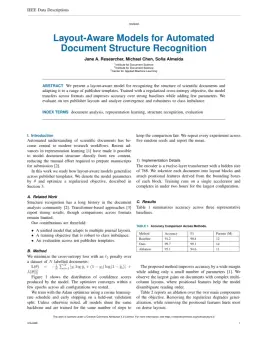
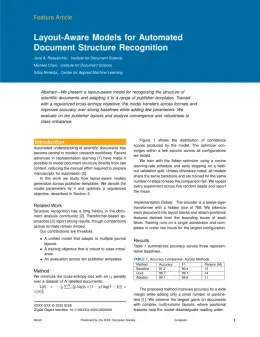
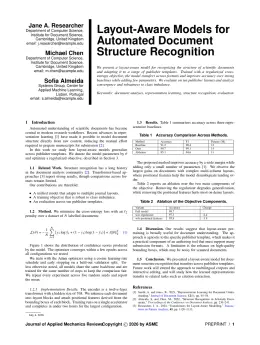
Write in a clean editor, then format for IEEE Transactions on Radar Systems in one click — DocuGuru applies the official IEEE template with numbered references and exports a submission-ready PDF plus the editable LaTeX source. Free to start.

About the IEEE Transactions on Radar Systems format

IEEE Transactions on Radar Systems is a peer-reviewed journal published by IEEE, covering Radar Systems and Signal Processing, Advanced SAR Imaging Techniques, Microwave Imaging and Scattering Analysis. Over its lifetime it has published 383 papers, which have received 1,615 citations.

PublisherIEEE
Reference styleNumbered (IEEE)
Numbered — [1], [2] in the text
[1] A. Smith, B. Jones, and C. Lee, "A representative article title," IEEE Transactions on Radar Systems, vol. 12, no. 3, pp. 45–58, 2023.

Formats any DOI in IEEE Transactions on Radar Systems style. No sign-up.

Abbreviation (ISO-4)TRS
Publishes research inRadar Systems and Signal Processing Advanced SAR Imaging Techniques Microwave Imaging and Scattering Analysis Direction-of-Arrival Estimation Techniques Target Tracking and Data Fusion in Sensor Networks
ISSN2832-7357
Citation impact (2-yr)2.67
h-index18
i10-index52
Top institutions publishing hereDelft University of Technology
You getA submission-ready PDF and the editable LaTeX source — ready to submit.

Papers published in IEEE Transactions on Radar Systems per year

78
2023
102
2024
125
2025

Citation impact of IEEE Transactions on Radar Systems by publication year

776
2023
567
2024
212
2025

Citations each year’s papers have accumulated so far — the most recent years are still building up.

Most-cited papers in IEEE Transactions on Radar Systems

Horus—A Fully Digital Polarimetric Phased Array Radar for Next-Generation Weather Observations

Robert D. Palmer, Mark Yeary, David Schvartzman et al. · 1 Jan 2023

Weather radars have become indispensable to meteorologists and the general public for both understanding and awareness of high-impact weather events and as part of the operational warning infrastructure. In the U.S., the operational weather radar network is composed of approximately 160 WSR-88D radars, which are S-band, dish-based, polarimetric Doppler radars. This work reports on the…

Low-PAPR OFDM Waveform Design for Radar and Communication Systems

Piyush Varshney, Prabhu Babu, Petre Stoica · 1 Jan 2023

In this correspondence we address the problem of designing OFDM waveforms with low peak-to-average power ratio (PAPR) for joint radar and communication (JRC) applications. The design problem is formulated as the minimization of PAPR with the constraint that the integrated periodic autocorrelation sidelobe level is zero. We propose an iterative algorithm based on the majorization-minimization…

Simultaneous Localization and Mapping (SLAM) for Synthetic Aperture Radar (SAR) Processing in the Field of Autonomous Driving

Timo Grebner, Ron Riekenbrauck, Christian Waldschmidt · 28 Dec 2023

Autonomous driving technology has made remarkable progress in recent years, revolutionizing transportation systems and paving the way for safer and more efficient journeys. One of the critical challenges in developing fully autonomous vehicles is accurate perception of the surrounding environment. Radar sensor networks provide a capability for robust environmental detection. It become apparent that the…

CV-SincNet: Learning Complex Sinc Filters From Raw Radar Data for Computationally Efficient Human Motion Recognition

Sabyasachi Biswas, Cemre Ömer Ayna, Sevgi Zübeyde Gürbüz et al. · 1 Jan 2023

The utilization of radio-frequency (RF) sensing in cyber-physical human systems, such as human-computer interfaces or smart environments, is an emerging application that requires real-time human motion recognition. However, current state-of-the-art radar-based recognition techniques rely on computing various RF data representations, such as range-Doppler or range-Angle maps, micro-Doppler signatures, or higher dimensional representations, which have great…

Wireless Distributed Frequency and Phase Synchronization for Mobile Platforms in Cooperative Digital Radar Networks

Russell H. Kenney, Justin G. Metcalf, Jay W. McDaniel · 1 Jan 2024

To continue improving the performance of modern communications and radar remote sensing systems, the implementation of distributed radio frequency (RF) systems has become an increasingly active area of research. One major obstacle to implementing such a distributed network is achieving highly accurate synchronization of all RF electrical states – time, carrier phase, and carrier frequency…

IEEE Transactions on Radar Systems template — frequently asked questions

How do I write a paper in the IEEE Transactions on Radar Systems format?
In DocuGuru you write your manuscript in a normal editor — no LaTeX setup required — and select the IEEE Transactions on Radar Systems template. When you export, DocuGuru compiles the paper into the official IEEE format and hands you a submission-ready PDF along with the editable LaTeX source.
What reference style does IEEE Transactions on Radar Systems use?
IEEE Transactions on Radar Systems uses Numbered (IEEE) references, shown as numbered [1], [2] markers in the text. DocuGuru formats every in-text citation and the reference list in this exact style automatically. A reference appears like this: [1] A. Smith, B. Jones, and C. Lee, "A representative article title," IEEE Transactions on Radar Systems, vol. 12, no. 3, pp. 45–58, 2023.
Do I need to know LaTeX to submit to IEEE Transactions on Radar Systems?
No. DocuGuru generates the IEEEtran LaTeX class and compiles the PDF for you in the background, so you get a IEEE-ready IEEE Transactions on Radar Systems document without writing any LaTeX. If you do want it, the LaTeX source is included in the export.
Can I import an existing draft into the IEEE Transactions on Radar Systems template?
Yes. Paste or upload your current manuscript — Word, LaTeX, Markdown, or plain text — and DocuGuru reflows it into the IEEE Transactions on Radar Systems format with correct headings, figures, tables, and numbered citations.
Who publishes IEEE Transactions on Radar Systems?
IEEE Transactions on Radar Systems is a engineering and computer science journal published by IEEE. DocuGuru's IEEE Transactions on Radar Systems template matches IEEE's official submission format.
Can I export a submission-ready IEEE Transactions on Radar Systems PDF?
Yes — DocuGuru produces a PDF built with the official IEEE Transactions on Radar Systems template (the IEEEtran class) that is ready to submit to IEEE, together with the matching LaTeX source files.
How much does the IEEE Transactions on Radar Systems template cost?
You can start writing in the IEEE Transactions on Radar Systems template for free. Exporting the final submission-ready IEEE Transactions on Radar Systems PDF and LaTeX source is part of DocuGuru's paid plans — see the app for current pricing.
Use the IEEE Transactions on Radar Systems template