IEEE

IEEE Intelligent Systems Template

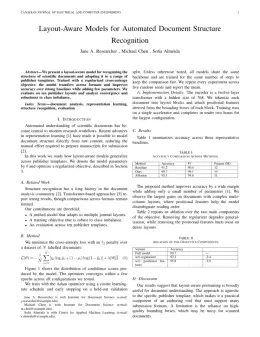
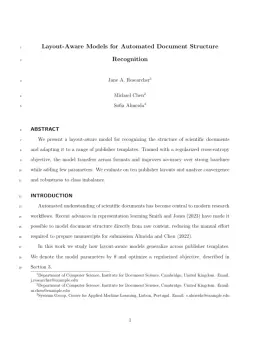
Write in a clean editor, then format for IEEE Intelligent Systems in one click — DocuGuru applies the official IEEE template with numbered references and exports a submission-ready PDF plus the editable LaTeX source. Free to start.

About the IEEE Intelligent Systems format

IEEE Intelligent Systems is a peer-reviewed journal published by IEEE, covering Diverse Scientific and Economic Studies, Semantic Web and Ontologies, Human auditory perception and evaluation. Over its lifetime it has published 3,270 papers, which have received 99,488 citations.

PublisherIEEE
Reference styleNumbered (IEEE)
Numbered — [1], [2] in the text
[1] A. Smith, B. Jones, and C. Lee, "A representative article title," IEEE Intelligent Systems, vol. 12, no. 3, pp. 45–58, 2023.

Formats any DOI in IEEE Intelligent Systems style. No sign-up.

Publishes research inDiverse Scientific and Economic Studies Semantic Web and Ontologies Human auditory perception and evaluation Educational Robotics and Engineering Big Data and Digital Economy
ISSN1541-1672
Citation impact (2-yr)1.95
h-index148
i10-index1,236
Top institutions publishing hereChinese Academy of Sciences
Journal websitewww.computer.org
You getA submission-ready PDF and the editable LaTeX source — ready to submit.

Papers published in IEEE Intelligent Systems per year

103
2014
112
2015
114
2016
138
2017
107
2018
94
2019
174
2020
99
2021
165
2022
127
2023
142
2024
145
2025

Citation impact of IEEE Intelligent Systems by publication year

2.2K
2014
2.3K
2015
4.7K
2016
3.8K
2017
1.4K
2018
1.9K
2019
4.2K
2020
1.2K
2021
1.6K
2022
1K
2023
401
2024
250
2025

Citations each year’s papers have accumulated so far — the most recent years are still building up.

Most-cited papers in IEEE Intelligent Systems

Semantic Web services

Sheila A. McIlraith, Tran Cao Son, Honglei Zeng · 1 Mar 2001

The authors propose the markup of Web services in the DAML family of Semantic Web markup languages. This markup enables a wide variety of agent technologies for automated Web service discovery, execution, composition and interoperation. The authors present one such technology for automated Web service composition.

1,891 citations Cite SaveGo to paper →
The Semantic Web Revisited

Nigel Shadbolt, Tim Berners‐Lee, Wendy Hall · 1 May 2006

The article included many scenarios in which intelligent agents and bots undertook tasks on behalf of their human or corporate owners. Of course, shopbots and auction bots abound on the Web, but these are essentially handcrafted for particular tasks: they have little ability to interact with heterogeneous data and information types. Because we haven't yet…

1,812 citations Cite SaveGo to paper →
The Unreasonable Effectiveness of Data

Alon Halevy, Peter Norvig, Fernando Pereira · 1 Mar 2009

Problems that involve interacting with humans, such as natural language understanding, have not proven to be solvable by concise, neat formulas like F = ma. Instead, the best approach appears to be to embrace the complexity of the domain and address it by harnessing the power of data: if other humans engage in the tasks…

1,799 citations Cite SaveGo to paper →
New Avenues in Opinion Mining and Sentiment Analysis

Erik Cambria, Björn W. Schuller, Yunqing Xia et al. · 1 Mar 2013

The Web holds valuable, vast, and unstructured information about public opinion. Here, the history, current use, and future of opinion mining and sentiment analysis are discussed, along with relevant techniques and tools.

1,277 citations Cite SaveGo to paper →
Affective Computing and Sentiment Analysis

Erik Cambria · 1 Mar 2016

Understanding emotions is an important aspect of personal development and growth, and as such it is a key tile for the emulation of human intelligence. Besides being important for the advancement of AI, emotion processing is also important for the closely related task of polarity detection. The opportunity to automatically capture the general public's sentiments…


1,198 citations Cite SaveGo to paper →

IEEE Intelligent Systems template — frequently asked questions

How do I write a paper in the IEEE Intelligent Systems format?
In DocuGuru you write your manuscript in a normal editor — no LaTeX setup required — and select the IEEE Intelligent Systems template. When you export, DocuGuru compiles the paper into the official IEEE format and hands you a submission-ready PDF along with the editable LaTeX source.
What reference style does IEEE Intelligent Systems use?
IEEE Intelligent Systems uses Numbered (IEEE) references, shown as numbered [1], [2] markers in the text. DocuGuru formats every in-text citation and the reference list in this exact style automatically. A reference appears like this: [1] A. Smith, B. Jones, and C. Lee, "A representative article title," IEEE Intelligent Systems, vol. 12, no. 3, pp. 45–58, 2023.
Do I need to know LaTeX to submit to IEEE Intelligent Systems?
No. DocuGuru generates the IEEEcsmag LaTeX class and compiles the PDF for you in the background, so you get a IEEE-ready IEEE Intelligent Systems document without writing any LaTeX. If you do want it, the LaTeX source is included in the export.
Can I import an existing draft into the IEEE Intelligent Systems template?
Yes. Paste or upload your current manuscript — Word, LaTeX, Markdown, or plain text — and DocuGuru reflows it into the IEEE Intelligent Systems format with correct headings, figures, tables, and numbered citations.
What is IEEE Intelligent Systems?
IEEE Intelligent Systems, an IEEE Computer Society magazine. It is a engineering and computer science journal, published by IEEE.
Can I export a submission-ready IEEE Intelligent Systems PDF?
Yes — DocuGuru produces a PDF built with the official IEEE Intelligent Systems template (the IEEEcsmag class) that is ready to submit to IEEE, together with the matching LaTeX source files.
How much does the IEEE Intelligent Systems template cost?
You can start writing in the IEEE Intelligent Systems template for free. Exporting the final submission-ready IEEE Intelligent Systems PDF and LaTeX source is part of DocuGuru's paid plans — see the app for current pricing.
Use the IEEE Intelligent Systems template