ASCE

Journal of Transportation Engineering, Part A: Systems Template

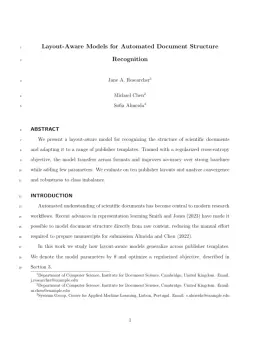
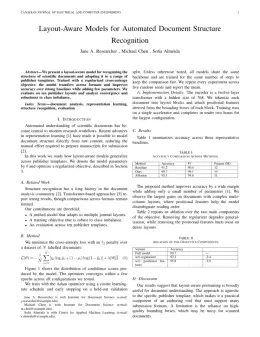
Write in a clean editor, then format for Journal of Transportation Engineering, Part A: Systems in one click — DocuGuru applies the official ASCE template with author–year references and exports a submission-ready PDF plus the editable LaTeX source. Free to start.

About the Journal of Transportation Engineering, Part A: Systems format

Journal of Transportation Engineering, Part A: Systems is a peer-reviewed journal published by ASCE, covering Traffic control and management, Transportation Planning and Optimization, Traffic Prediction and Management Techniques. Over its lifetime it has published 1,404 papers, which have received 11,959 citations.

PublisherASCE
Reference styleAuthor–year (ASCE)
Author–year — (Smith, 2023) in the text
Smith, A., B. Jones, and C. Lee. (2023). "A representative article title." Journal of Transportation Engineering, Part A: Systems, 12(3), 45–58.

Formats any DOI in Journal of Transportation Engineering, Part A: Systems style. No sign-up.

Publishes research inTraffic control and management Transportation Planning and Optimization Traffic Prediction and Management Techniques Traffic and Road Safety Urban Transport and Accessibility
ISSN2473-2893
Citation impact (2-yr)1.32
h-index39
i10-index418
Top institutions publishing hereORCID
Journal websiteascelibrary.org
You getA submission-ready PDF and the editable LaTeX source — ready to submit.

Papers published in Journal of Transportation Engineering, Part A: Systems per year

120
2017
99
2018
93
2019
185
2020
144
2021
178
2022
164
2023
142
2024
176
2025

Citation impact of Journal of Transportation Engineering, Part A: Systems by publication year

1.8K
2017
1.6K
2018
1.6K
2019
2.5K
2020
1.3K
2021
1.5K
2022
1.1K
2023
399
2024
116
2025

Citations each year’s papers have accumulated so far — the most recent years are still building up.

Most-cited papers in Journal of Transportation Engineering, Part A: Systems

Integrated Approach to Vehicle Scheduling and Bus Timetabling for an Electric Bus Line

Jing Teng, Tong Chen, Wei Fan · 9 Dec 2019

Timetable and vehicle scheduling are important for transit operations. Electric buses are more environmentally friendly compared with conventional buses, and have been developing rapidly and may replace conventional buses in many cities worldwide. This paper focuses on the bus timetabling and vehicle scheduling problem for electric buses and develops a multiobjective optimization model for a…

Resilience of Regional Transportation Networks Subjected to Hazard-Induced Bridge Damages

Richard Twumasi-Boakye, John Sobanjo · 13 Aug 2018

The comprehension of network-level consequences resulting from disruptive events is a main gray area in the evaluation of transportation network resilience at the regional level. Explaining hazard impacts on regional network infrastructures and identifying significantly affected areas are important for communicating the need for building resilient infrastructure. This paper presents a framework for assessing the…

Stability Analysis of Connected and Automated Vehicles to Reduce Fuel Consumption and Emissions

Yanyan Qin, Hao Wang, Bin Ran · 23 Aug 2018

Obtaining an optimal stability condition is very important to benefit traffic flow operations for a mix of connected and automated vehicles (CAVs) and regular vehicles. In view of multiple spatial anticipations of CAV car-following models, this paper presents a stability analysis method for mixed CAV flow from the perspective of the uniform local platoon. Transfer…

The COVID-19 Pandemic and Transportation Engineering

Chris Hendrickson, Laurence R. Rilett · 5 May 2020

The COVID-19 pandemic has been an enormous global disruption with immense economic, environmental, and social impacts throughout the world. Only world wars and the flu pandemic of 1918 are comparable in the wide range of consequences, including fatalities, over a relatively short period of time. Unfortunately, we can expect other major disruptions to occur in…

Traffic Modeling for Wildland–Urban Interface Fire Evacuation

Paolo Intini, Enrico Ronchi, S. Gwynne et al. · 12 Jan 2019

Several traffic modeling tools are currently available for evacuation planning and real-time decision support during emergencies. This paper reviews potential traffic-modeling approaches in the context of wildland–urban interface (WUI) fire-evacuation applications. Existing modeling approaches and features are evaluated pertaining to fire-related, spatial, and demographic factors; intended application (planning or decision support); and temporal issues. This…

Journal of Transportation Engineering, Part A: Systems template — frequently asked questions

How do I write a paper in the Journal of Transportation Engineering, Part A: Systems format?
In DocuGuru you write your manuscript in a normal editor — no LaTeX setup required — and select the Journal of Transportation Engineering, Part A: Systems template. When you export, DocuGuru compiles the paper into the official ASCE format and hands you a submission-ready PDF along with the editable LaTeX source.
What reference style does Journal of Transportation Engineering, Part A: Systems use?
Journal of Transportation Engineering, Part A: Systems uses Author–year (ASCE) references, shown as author–year markers such as (Smith, 2023) in the text. DocuGuru formats every in-text citation and the reference list in this exact style automatically. A reference appears like this: Smith, A., B. Jones, and C. Lee. (2023). "A representative article title." Journal of Transportation Engineering, Part A: Systems, 12(3), 45–58.
Do I need to know LaTeX to submit to Journal of Transportation Engineering, Part A: Systems?
No. DocuGuru generates the ascelike-new LaTeX class and compiles the PDF for you in the background, so you get a ASCE-ready Journal of Transportation Engineering, Part A: Systems document without writing any LaTeX. If you do want it, the LaTeX source is included in the export.
Can I import an existing draft into the Journal of Transportation Engineering, Part A: Systems template?
Yes. Paste or upload your current manuscript — Word, LaTeX, Markdown, or plain text — and DocuGuru reflows it into the Journal of Transportation Engineering, Part A: Systems format with correct headings, figures, tables, and author–year citations.
What is Journal of Transportation Engineering, Part A: Systems?
ASCE journal. It is a engineering and computer science journal, published by ASCE.
Can I export a submission-ready Journal of Transportation Engineering, Part A: Systems PDF?
Yes — DocuGuru produces a PDF built with the official Journal of Transportation Engineering, Part A: Systems template (the ascelike-new class) that is ready to submit to ASCE, together with the matching LaTeX source files.
How much does the Journal of Transportation Engineering, Part A: Systems template cost?
You can start writing in the Journal of Transportation Engineering, Part A: Systems template for free. Exporting the final submission-ready Journal of Transportation Engineering, Part A: Systems PDF and LaTeX source is part of DocuGuru's paid plans — see the app for current pricing.
Use the Journal of Transportation Engineering, Part A: Systems template