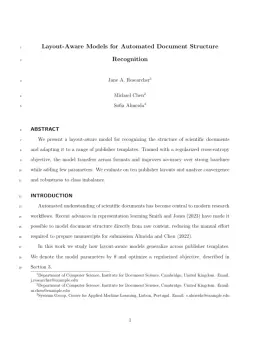
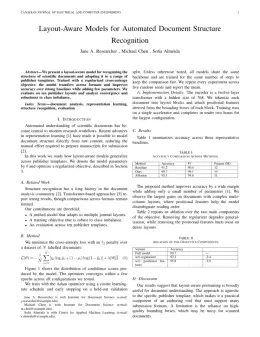
About the Journal of Architectural Engineering format
Journal of Architectural Engineering is a peer-reviewed journal published by ASCE, covering BIM and Construction Integration, Building Energy and Comfort Optimization, Sustainable Building Design and Assessment. Over its lifetime it has published 1,267 papers, which have received 16,403 citations.
| Publisher | ASCE |
|---|
| Reference style | Author–year (ASCE) Author–year — (Smith, 2023) in the text
Smith, A., B. Jones, and C. Lee. (2023). "A representative article title." Journal of Architectural Engineering, 12(3), 45–58.
Formats any DOI in Journal of Architectural Engineering style. No sign-up.
|
|---|
| Publishes research in | BIM and Construction Integration Building Energy and Comfort Optimization Sustainable Building Design and Assessment Wind and Air Flow Studies Structural Analysis of Composite Materials |
|---|
| ISSN | 1076-0431 |
|---|
| Citation impact (2-yr) | 1.86 |
|---|
| h-index | 54 |
|---|
| i10-index | 440 |
|---|
| Top institutions publishing here | Pennsylvania State University |
|---|
| You get | A submission-ready PDF and the editable LaTeX source — ready to submit. |
|---|
Papers published in Journal of Architectural Engineering per year
Citation impact of Journal of Architectural Engineering by publication year
Citations each year’s papers have accumulated so far — the most recent years are still building up.
Most-cited papers in Journal of Architectural Engineering
Application of Modular Construction in High-Rise Buildings
R. Mark Lawson, Ray Ogden, Rory Bergin · 21 Jul 2011
Modular construction is widely used in Europe for multi-story residential buildings. A review of modular technologies is presented, which shows how the basic cellular approach in modular construction may be applied to a wide range of building forms and heights. Case studies on 12-, 17-, and 25-story modular buildings give design and constructional information for…
Effects of Lean Construction on Sustainability of Modular Homebuilding
Isabelina Nahmens, Laura H. Ikuma · 21 Jul 2011
Construction activities and the built environment have an enormous effect on the environment, human health, and the overall economy. Sustainable homebuilding in all three dimensions of economic, environmental, and social effects is attainable through practical innovations and technologies. However, the greatest barrier to the widespread application of sustainable homebuilding is the higher initial costs largely…
Decision-Support Tool for Assessing the Environmental Effects of Constructing Commercial Buildings
Angela Acree Guggemos, Arpad Horvath · 16 Nov 2006
Construction of commercial buildings consumes significant amounts of energy and produces lots of emissions and waste. Where should environmental improvement efforts be focused during design and construction? The Construction Environmental Decision-Support Tool allows designers and industry practitioners to quantify energy use, emissions, and waste generation rates due to the construction phase of commercial buildings. A…
Tool to Design for Construction Worker Safety
John Gambatese, Jimmie Hinze, Carl T. Haas · 1 Mar 1997
Improving construction worker safety continues to be a major goal in the construction industry. While significant improvements in safety performance have been made in the past few decades, one party within the project team, the designer, has not been directly involved in the safety effort. Designers have been identified as parties who have a significant…
Review of Life-Cycle Assessment Applications in Building Construction
Amanjeet Singh, George Berghorn, Satish Joshi et al. · 21 Jun 2010
Life-cycle assessment (LCA) has been used to assess product development processes “from cradle to grave” for many years. With the current push toward sustainable construction, LCA has gained importance as an objective method to evaluate the environmental impact of construction practices. A substantial amount of construction-related LCA work has been published recently; however, most of…