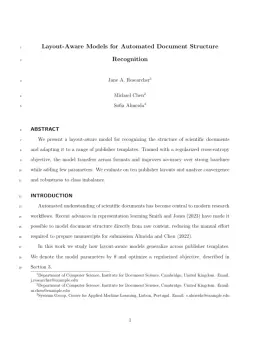
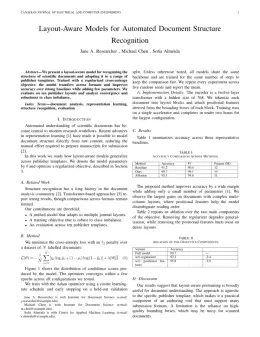
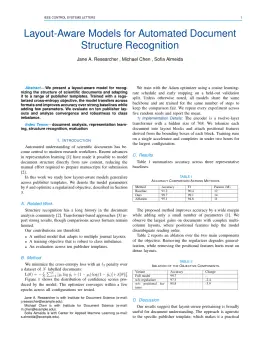
About the Journal of Sustainable Water in the Built Environment format
Journal of Sustainable Water in the Built Environment is a peer-reviewed journal published by ASCE, covering Urban Stormwater Management Solutions, Flood Risk Assessment and Management, Hydrology and Watershed Management Studies. Over its lifetime it has published 308 papers, which have received 3,468 citations.
| Publisher | ASCE |
|---|
| Reference style | Author–year (ASCE) Author–year — (Smith, 2023) in the text
Smith, A., B. Jones, and C. Lee. (2023). "A representative article title." Journal of Sustainable Water in the Built Environment, 12(3), 45–58.
Formats any DOI in Journal of Sustainable Water in the Built Environment style. No sign-up.
|
|---|
| Publishes research in | Urban Stormwater Management Solutions Flood Risk Assessment and Management Hydrology and Watershed Management Studies Urban Heat Island Mitigation Constructed Wetlands for Wastewater Treatment |
|---|
| ISSN | 2379-6111 |
|---|
| Citation impact (2-yr) | 1.24 |
|---|
| h-index | 26 |
|---|
| i10-index | 112 |
|---|
| Top institutions publishing here | ORCID |
|---|
| Journal website | ascelibrary.org |
|---|
| You get | A submission-ready PDF and the editable LaTeX source — ready to submit. |
|---|
Papers published in Journal of Sustainable Water in the Built Environment per year
Citation impact of Journal of Sustainable Water in the Built Environment by publication year
Citations each year’s papers have accumulated so far — the most recent years are still building up.
Most-cited papers in Journal of Sustainable Water in the Built Environment
Storm Water Management Model: Performance Review and Gap Analysis
Mehran Niazi, Christopher T. Nietch, Mahdi Maghrebi et al. · 25 Jan 2017
The storm water management model (SWMM) is a widely used tool for urban drainage design and planning. Hundreds of peer-reviewed articles and conference proceedings have been written describing applications of SWMM. This review focuses on collecting information on model performance with respect to calibration and validation in the peer-reviewed literature. The major developmental history and…
Multiyear Water Quality Performance and Mass Accumulation of PCBs, Mercury, Methylmercury, Copper, and Microplastics in a Bioretention Rain Garden
Alicia N. Gilbreath, Lester J . McKee, Ila Shimabuku et al. · 30 Jul 2019
A multiyear water quality performance study of a bioretention rain garden located along a major urban transit corridor east of San Francisco Bay was conducted to assess the efficacy of bioretention rain gardens to remove pollutants. Based on data collected in three years between 2012 and 2017, polychlorinated biphenyls (PCBs) and suspended sediment concentrations (SSCs)…
Nutrient Leaching from Compost: Implications for Bioretention and Other Green Stormwater Infrastructure
Stephanie E. Hurley, Paliza Shrestha, Amanda Cording · 6 Mar 2017
Compost is often used as a soil amendment in gardens, agricultural fields, and other landscaped systems to alter soil biophysical characteristics and increase availability of valuable nutrients including nitrogen (N), phosphorus (P), and carbon (C). However, leaching of soluble nutrients from compost is of concern, particularly in wet settings, such as within green stormwater infrastructure,…
Understanding the Role of Evapotranspiration in Bioretention: Mesocosm Study
Bridget Wadzuk, J. Mark Hickman, Robert G. Traver · 1 May 2015
Many regions are turning toward sustainable green infrastructure practices, such as bioretention to mitigate urban stormwater runoff. Currently, the designed volume control in bioretention stormwater control measures (SCMs) is attributed to infiltration, although evapotranspiration (ET) can be considered a viable mechanism. From a water cycle perspective, reduced ET in urban spaces is a primary source…
Performance and Cost-Based Comparison of Green and Gray Infrastructure to Control Combined Sewer Overflows
Hassan Davani, Steven J. Burian, Jay Devkota et al. · 27 Oct 2015
Rainwater harvesting (RWH) is being used more often today as a water supply and stormwater management green infrastructure (GI). In recent years, GIs in urban water engineering have gained attention due to their lower lifecycle costs—in both implementation and operation phases—rather than traditional gray approaches. The research described in the present paper compared implementation of…