ASCE

ASCE OPEN: Multidisciplinary Journal of Civil Engineering Template

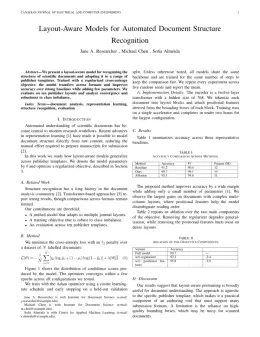
Write in a clean editor, then format for ASCE OPEN: Multidisciplinary Journal of Civil Engineering in one click — DocuGuru applies the official ASCE template with author–year references and exports a submission-ready PDF plus the editable LaTeX source. Free to start.

About the ASCE OPEN: Multidisciplinary Journal of Civil Engineering format

ASCE OPEN: Multidisciplinary Journal of Civil Engineering is a peer-reviewed journal published by ASCE, covering Flood Risk Assessment and Management, BIM and Construction Integration, Infrastructure Maintenance and Monitoring. Over its lifetime it has published 53 papers, which have received 142 citations.

PublisherASCE
Reference styleAuthor–year (ASCE)
Author–year — (Smith, 2023) in the text
Smith, A., B. Jones, and C. Lee. (2023). "A representative article title." ASCE OPEN: Multidisciplinary Journal of Civil Engineering, 12(3), 45–58.

Formats any DOI in ASCE OPEN: Multidisciplinary Journal of Civil Engineering style. No sign-up.

Publishes research inFlood Risk Assessment and Management BIM and Construction Integration Infrastructure Maintenance and Monitoring Infrastructure Resilience and Vulnerability Analysis Innovations in Concrete and Construction Materials
ISSN2995-4266
Citation impact (2-yr)2.7
h-index6
i10-index5
Open accessYes — indexed in DOAJ
Top institutions publishing hereMitchell Institute
You getA submission-ready PDF and the editable LaTeX source — ready to submit.

Papers published in ASCE OPEN: Multidisciplinary Journal of Civil Engineering per year

10
2023
12
2024
19
2025

Citation impact of ASCE OPEN: Multidisciplinary Journal of Civil Engineering by publication year

26
2023
77
2024
27
2025

Citations each year’s papers have accumulated so far — the most recent years are still building up.

Most-cited papers in ASCE OPEN: Multidisciplinary Journal of Civil Engineering

Climate Change Impacts on the Risk Assessment of Concrete Civil Infrastructures

De‐Cheng Feng, Jiayi Ding, Si-Cong Xie et al. · 8 Feb 2024

The service life and performance of the civil infrastructure are affected by the changing climate, and the changing climate features significant uncertainties that require rigorous consideration and quantification so they can be incorporated into the reliability assessment and risk management. A lack of quantification makes it difficult for the stakeholders, designers, and operators of the…

Regional Building Damage Survey Data on the 2023 Kahramanmaraş, Türkiye, Earthquakes

Zafer Yılmaz, Ahmet Can Altunışık, Ertuǧrul Taciroğlu et al. · 13 Dec 2024

On February 6, 2023, two major earthquakes with magnitudes 7.7 and 7.6 Mw struck within 9 h near the towns of Pazarcık and Elbistan, respectively, in the province of Kahramanmaraş, Türkiye. The main regions affected by these earthquakes were 11 provinces of Türkiye, home to approximately 16% of the country’s total population. Carrying out rapid…

Deep Learning in Earthquake Engineering: A Comprehensive Review

Yazhou Xie · 7 Oct 2025

This paper surveys the growing interest in utilizing deep learning (DL) as a powerful tool to address challenging problems in earthquake engineering. Despite decades of advancement in domain knowledge, issues such as uncertainty in earthquake occurrence, unpredictable seismic loads, nonlinear structural responses, and community engagement remain difficult to tackle using domain-specific methods. DL offers promising…

Quantifying Social Inequalities in Flood Risk

Brett F. Sanders, David Brady, Jochen E. Schubert et al. · 15 Apr 2024

The distribution and inequalities of flood risks across space and social groups are important considerations for infrastructure design and adaptation. However, neither civil infrastructure practitioners nor researchers routinely assess inequalities quantitatively, which limits opportunities to address them. The Lorenz curve method has been used in many fields to study inequalities in both resource and risk…

Knowledge–Behavior Gap in Tap Water Consumption in Puerto Rico: Implications for Water Utilities

Toby N. T. Nelson, Cristina Poleacovschi, Kaoru Ikuma et al. · 12 Sep 2023

The impacts of climate-related hazards are becoming a major concern for many people worldwide, especially those in vulnerable areas such as Puerto Rico. In September 2017, Hurricane Maria caused severe disruption to the island’s drinking water supply due to power outages, causing major problems for utility companies. This led to water insecurity, particularly among residents,…

ASCE OPEN: Multidisciplinary Journal of Civil Engineering template — frequently asked questions

How do I write a paper in the ASCE OPEN: Multidisciplinary Journal of Civil Engineering format?
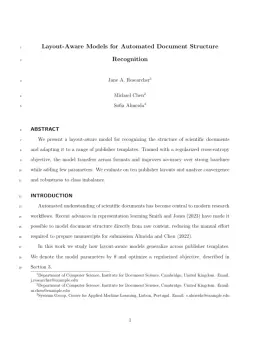
In DocuGuru you write your manuscript in a normal editor — no LaTeX setup required — and select the ASCE OPEN: Multidisciplinary Journal of Civil Engineering template. When you export, DocuGuru compiles the paper into the official ASCE format and hands you a submission-ready PDF along with the editable LaTeX source.
What reference style does ASCE OPEN: Multidisciplinary Journal of Civil Engineering use?
ASCE OPEN: Multidisciplinary Journal of Civil Engineering uses Author–year (ASCE) references, shown as author–year markers such as (Smith, 2023) in the text. DocuGuru formats every in-text citation and the reference list in this exact style automatically. A reference appears like this: Smith, A., B. Jones, and C. Lee. (2023). "A representative article title." ASCE OPEN: Multidisciplinary Journal of Civil Engineering, 12(3), 45–58.
Do I need to know LaTeX to submit to ASCE OPEN: Multidisciplinary Journal of Civil Engineering?
No. DocuGuru generates the ascelike-new LaTeX class and compiles the PDF for you in the background, so you get a ASCE-ready ASCE OPEN: Multidisciplinary Journal of Civil Engineering document without writing any LaTeX. If you do want it, the LaTeX source is included in the export.
Can I import an existing draft into the ASCE OPEN: Multidisciplinary Journal of Civil Engineering template?
Yes. Paste or upload your current manuscript — Word, LaTeX, Markdown, or plain text — and DocuGuru reflows it into the ASCE OPEN: Multidisciplinary Journal of Civil Engineering format with correct headings, figures, tables, and author–year citations.
What is ASCE OPEN: Multidisciplinary Journal of Civil Engineering?
ASCE journal. It is a engineering and computer science journal, published by ASCE.
Can I export a submission-ready ASCE OPEN: Multidisciplinary Journal of Civil Engineering PDF?
Yes — DocuGuru produces a PDF built with the official ASCE OPEN: Multidisciplinary Journal of Civil Engineering template (the ascelike-new class) that is ready to submit to ASCE, together with the matching LaTeX source files.
How much does the ASCE OPEN: Multidisciplinary Journal of Civil Engineering template cost?
You can start writing in the ASCE OPEN: Multidisciplinary Journal of Civil Engineering template for free. Exporting the final submission-ready ASCE OPEN: Multidisciplinary Journal of Civil Engineering PDF and LaTeX source is part of DocuGuru's paid plans — see the app for current pricing.
Use the ASCE OPEN: Multidisciplinary Journal of Civil Engineering template