American Astronomical Society

The Astrophysical Journal Supplement Series Template

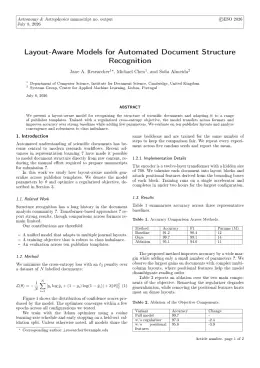
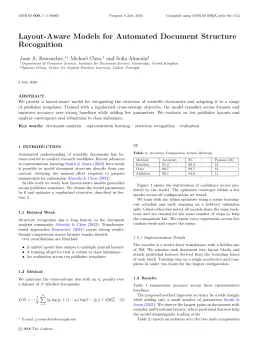
Write in a clean editor, then format for The Astrophysical Journal Supplement Series in one click — DocuGuru applies the official American Astronomical Society template with author–year references and exports a submission-ready PDF plus the editable LaTeX source. Free to start.

About the The Astrophysical Journal Supplement Series format

The Astrophysical Journal Supplement Series is a peer-reviewed journal published by American Astronomical Society, covering Stellar, planetary, and galactic studies, Astronomy and Astrophysical Research, Galaxies: Formation, Evolution, Phenomena. Over its lifetime it has published 8,381 papers, which have received 790,742 citations.

PublisherAmerican Astronomical Society
Reference styleAuthor–year (AAS)
Author–year — (Smith, 2023) in the text
Smith, A., Jones, B., & Lee, C. 2023, The Astrophysical Journal Supplement Series, 12, 45

Formats any DOI in The Astrophysical Journal Supplement Series style. No sign-up.

Publishes research inStellar, planetary, and galactic studies Astronomy and Astrophysical Research Galaxies: Formation, Evolution, Phenomena Astrophysics and Star Formation Studies Gamma-ray bursts and supernovae
ISSN0067-0049
Citation impact (2-yr)5.39
h-index378
i10-index6,131
Article processing charge$4,499
Open accessYes — indexed in DOAJ
Top institutions publishing hereCalifornia Institute of Technology
Journal websiteiopscience.iop.org
You getA submission-ready PDF and the editable LaTeX source — ready to submit.

Papers published in The Astrophysical Journal Supplement Series per year

173
2014
203
2015
188
2016
176
2017
255
2018
226
2019
288
2020
286
2021
314
2022
333
2023
287
2024
404
2025

Citation impact of The Astrophysical Journal Supplement Series by publication year

20K
2014
23.9K
2015
18.4K
2016
11.7K
2017
20.8K
2018
13.4K
2019
18K
2020
10.3K
2021
9.2K
2022
7.5K
2023
3.1K
2024
1.7K
2025

Citations each year’s papers have accumulated so far — the most recent years are still building up.

Most-cited papers in The Astrophysical Journal Supplement Series

First‐Year <i>Wilkinson Microwave Anisotropy Probe</i> ( <i>WMAP</i> ) Observations: Determination of Cosmological Parameters

David N. Spergel, Licia Verde, Hiranya V. Peiris et al. · 19 Aug 2003

WMAP precision data enables accurate testing of cosmological models. We find that the emerging standard model of cosmology, a flat Lambda-dominated universe seeded by nearly scale-invariant adiabatic Gaussian fluctuations, fits the WMAP data. With parameters fixed only by WMAP data, we can fit finer scale CMB measurements and measurements of large scle structure (galaxy surveys…

11,042 citations Cite SaveGo to paper →
SEVEN-YEAR<i>WILKINSON MICROWAVE ANISOTROPY PROBE</i>(<i>WMAP</i>) OBSERVATIONS: COSMOLOGICAL INTERPRETATION

Eiichiro Komatsu, Kendrick M. Smith, J. Dunkley et al. · 11 Jan 2011

(Abridged) The 7-year WMAP data and improved astrophysical data rigorously test the standard cosmological model and its extensions. By combining WMAP with the latest distance measurements from BAO and H0 measurement, we determine the parameters of the simplest LCDM model. The power-law index of the primordial power spectrum is n_s=0.968+-0.012, a measurement that excludes the…

8,856 citations Cite SaveGo to paper →
Three‐Year<i>Wilkinson Microwave Anisotropy Probe</i>(<i>WMAP</i>) Observations: Implications for Cosmology

David N. Spergel, Rachel Bean, Olivier Doré et al. · 31 May 2007

A simple cosmological model with only six parameters (matter density,mh 2, baryon density,bh 2, Hubble con-stant, H0, amplitude of fluctuations, 8, optical depth, , and a slope for the scalar perturbation spectrum, ns) fits not only the 3 yearWMAP temperature and polarization data, but also small-scale CMB data, light element abundances, large-scale structure observations, and…

6,660 citations Cite SaveGo to paper →
FIVE-YEAR<i>WILKINSON MICROWAVE ANISOTROPY PROBE</i>OBSERVATIONS: COSMOLOGICAL INTERPRETATION

Eiichiro Komatsu, J. Dunkley, Michael R. Nolta et al. · 1 Feb 2009

(Abridged) The WMAP 5-year data strongly limit deviations from the minimal LCDM model. We constrain the physics of inflation via Gaussianity, adiabaticity, the power spectrum shape, gravitational waves, and spatial curvature. We also constrain the properties of dark energy, parity-violation, and neutrinos. We detect no convincing deviations from the minimal model. The parameters of the…

5,724 citations Cite SaveGo to paper →
THE SEVENTH DATA RELEASE OF THE SLOAN DIGITAL SKY SURVEY

Kevork N. Abazajian, Jennifer Adelman-McCarthy, Marcel A. Agüeros et al. · 18 May 2009

This paper describes the Seventh Data Release of the Sloan Digital Sky Survey (SDSS), marking the completion of the original goals of the SDSS and the end of the phase known as SDSS-II. It includes 11,663 deg2 of imaging data, with most of the ~2000 deg2 increment over the previous data release lying in regions…

5,439 citations Cite SaveGo to paper →

The Astrophysical Journal Supplement Series template — frequently asked questions

How do I write a paper in the The Astrophysical Journal Supplement Series format?
In DocuGuru you write your manuscript in a normal editor — no LaTeX setup required — and select the The Astrophysical Journal Supplement Series template. When you export, DocuGuru compiles the paper into the official American Astronomical Society format and hands you a submission-ready PDF along with the editable LaTeX source.
What reference style does The Astrophysical Journal Supplement Series use?
The Astrophysical Journal Supplement Series uses Author–year (AAS) references, shown as author–year markers such as (Smith, 2023) in the text. DocuGuru formats every in-text citation and the reference list in this exact style automatically. A reference appears like this: Smith, A., Jones, B., & Lee, C. 2023, The Astrophysical Journal Supplement Series, 12, 45
Do I need to know LaTeX to submit to The Astrophysical Journal Supplement Series?
No. DocuGuru generates the aastex701 LaTeX class and compiles the PDF for you in the background, so you get a American Astronomical Society-ready The Astrophysical Journal Supplement Series document without writing any LaTeX. If you do want it, the LaTeX source is included in the export.
Can I import an existing draft into the The Astrophysical Journal Supplement Series template?
Yes. Paste or upload your current manuscript — Word, LaTeX, Markdown, or plain text — and DocuGuru reflows it into the The Astrophysical Journal Supplement Series format with correct headings, figures, tables, and author–year citations.
What is The Astrophysical Journal Supplement Series?
ApJS, AAS journal for extensive data sets and catalogues.
Can I export a submission-ready The Astrophysical Journal Supplement Series PDF?
Yes — DocuGuru produces a PDF built with the official The Astrophysical Journal Supplement Series template (the aastex701 class) that is ready to submit to American Astronomical Society, together with the matching LaTeX source files.
How much does the The Astrophysical Journal Supplement Series template cost?
You can start writing in the The Astrophysical Journal Supplement Series template for free. Exporting the final submission-ready The Astrophysical Journal Supplement Series PDF and LaTeX source is part of DocuGuru's paid plans — see the app for current pricing.
Use the The Astrophysical Journal Supplement Series template