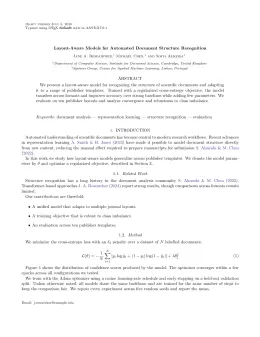
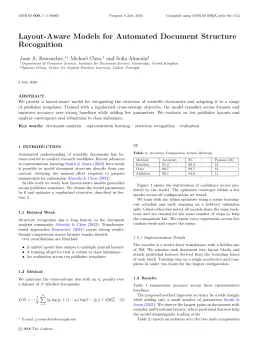
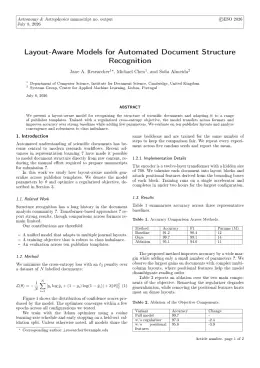
About the The Astronomical Journal format
The Astronomical Journal is a peer-reviewed journal published by American Astronomical Society, covering Stellar, planetary, and galactic studies, Astronomy and Astrophysical Research, Astro and Planetary Science. Over its lifetime it has published 32,708 papers, which have received 1,157,210 citations.
| Publisher | American Astronomical Society |
|---|
| Reference style | Author–year (AAS) Author–year — (Smith, 2023) in the text
Smith, A., Jones, B., & Lee, C. 2023, The Astronomical Journal, 12, 45
Formats any DOI in The Astronomical Journal style. No sign-up.
|
|---|
| Publishes research in | Stellar, planetary, and galactic studies Astronomy and Astrophysical Research Astro and Planetary Science Astrophysics and Star Formation Studies Galaxies: Formation, Evolution, Phenomena |
|---|
| ISSN | 0004-6256 |
|---|
| Citation impact (2-yr) | 4.67 |
|---|
| h-index | 353 |
|---|
| i10-index | 15,606 |
|---|
| Article processing charge | $4,499 |
|---|
| Open access | Yes — indexed in DOAJ |
|---|
| Top institutions publishing here | California Institute of Technology |
|---|
| Journal website | iopscience.org |
|---|
| You get | A submission-ready PDF and the editable LaTeX source — ready to submit. |
|---|
Papers published in The Astronomical Journal per year
Citation impact of The Astronomical Journal by publication year
Citations each year’s papers have accumulated so far — the most recent years are still building up.
Most-cited papers in The Astronomical Journal
Observational Evidence from Supernovae for an Accelerating Universe and a Cosmological Constant
Adam G. Riess, A. V. Filippenko, P. Challis et al. · 1 Sep 1998
We present spectral and photometric observations of 10 Type Ia supernovae (SNe Ia) in the redshift range 0.16 z 0.62. The luminosity distances of these objects are determined by methods that employ relations between SN Ia luminosity and light curve shape. Combined with previous data from our High-z Supernova Search Team and recent results by…
The Two Micron All Sky Survey (2MASS)
Michael F. Skrutskie, R. M. Cutri, R. Stiening et al. · 24 Jan 2006
Between 1997 June and 2001 February the Two Micron All Sky Survey (2MASS) collected 25.4 Tbytes of raw imaging data covering 99.998% of the celestial sphere in the near-infrared J (1.25 μm), H (1.65 μm), and Ks (2.16 μm) bandpasses. Observations were conducted from two dedicated 1.3 m diameter telescopes located at Mount Hopkins, Arizona,…
The Sloan Digital Sky Survey: Technical Summary
Donald G. York, Jennifer Adelman, John E. Anderson et al. · 1 Sep 2000
The Sloan Digital Sky Survey (SDSS) will provide the data to support detailed investigations of the distribution of luminous and non- luminous matter in the Universe: a photometrically and astrometrically calibrated digital imaging survey of pi steradians above about Galactic latitude 30 degrees in five broad optical bands to a depth of g' about 23…
THE WIDE-FIELD INFRARED SURVEY EXPLORER (WISE): MISSION DESCRIPTION AND INITIAL ON-ORBIT PERFORMANCE
E. L. Wright, Peter Eisenhardt, Amy Mainzer et al. · 9 Nov 2010
The all sky surveys done by the Palomar Observatory Schmidt, the European Southern Observatory Schmidt, and \nthe United Kingdom Schmidt, the InfraRed Astronomical Satellite, and the Two Micron All Sky Survey have \nproven to be extremely useful tools for astronomy with value that lasts for decades. The Wide-field Infrared \nSurvey Explorer (WISE) is mapping the whole sky following…
The Astropy Project: Building an Open-science Project and Status of the v2.0 Core Package<sup>*</sup>
Adrian M. Price-Whelan, Brigitta Sipőcz, Hans Moritz Günther et al. · 23 Aug 2018
Abstract The Astropy Project supports and fosters the development of open-source and openly developed Python packages that provide commonly needed functionality to the astronomical community. A key element of the Astropy Project is the core package astropy , which serves as the foundation for more specialized projects and packages. In this article, we provide an…