American Astronomical Society

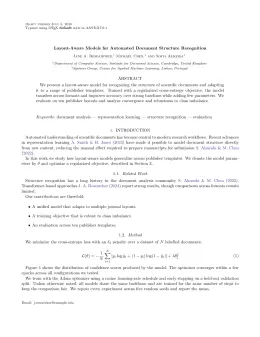
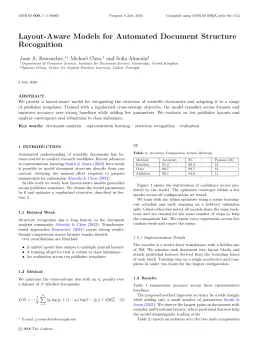
Research Notes of the AAS Template

Write in a clean editor, then format for Research Notes of the AAS in one click — DocuGuru applies the official American Astronomical Society template with author–year references and exports a submission-ready PDF plus the editable LaTeX source. Free to start.

About the Research Notes of the AAS format

Research Notes of the AAS is a peer-reviewed journal published by American Astronomical Society, covering Stellar, planetary, and galactic studies, Astronomy and Astrophysical Research, Astrophysics and Star Formation Studies. Over its lifetime it has published 2,440 papers, which have received 7,690 citations.

PublisherAmerican Astronomical Society
Reference styleAuthor–year (AAS)
Author–year — (Smith, 2023) in the text
Smith, A., Jones, B., & Lee, C. 2023, Research Notes of the AAS, 12, 45

Formats any DOI in Research Notes of the AAS style. No sign-up.

Publishes research inStellar, planetary, and galactic studies Astronomy and Astrophysical Research Astrophysics and Star Formation Studies Gamma-ray bursts and supernovae Astro and Planetary Science
ISSN2515-5172
Citation impact (2-yr)0.94
h-index35
i10-index162
Top institutions publishing hereSorbonne Université
Journal websiteiopscience.iop.org
You getA submission-ready PDF and the editable LaTeX source — ready to submit.

Papers published in Research Notes of the AAS per year

56
2017
237
2018
199
2019
252
2020
288
2021
279
2022
283
2023
325
2024
352
2025

Citation impact of Research Notes of the AAS by publication year

323
2017
1.5K
2018
929
2019
1.8K
2020
905
2021
727
2022
747
2023
501
2024
277
2025

Citations each year’s papers have accumulated so far — the most recent years are still building up.

Most-cited papers in Research Notes of the AAS

Photometry of 10 Million Stars from the First Two Years of TESS Full Frame Images: Part I

Chelsea X. Huang, Andrew Vanderburg, András Pál et al. · 1 Nov 2020

Abstract The Transiting Exoplanet Survey Satellite (TESS) is the first high-precision full-sky photometric survey in space. We extracted light curves from a magnitude limited set of stars and other stationary luminous objects from the TESS Full Frame Images using the MIT Quick Look Pipeline. Here, we describe the techniques used to create light curves.

Photometry of 10 Million Stars from the First Two Years of TESS Full Frame Images: Part II

Chelsea X. Huang, Andrew Vanderburg, András Pál et al. · 1 Nov 2020

Abstract We present light curves from a magnitude limited set of stars and other stationary luminous objects from the TESS Full Frame Images, as reduced by the MIT Quick Look Pipeline (QLP). Our light curves cover the full two-year TESS Primary Mission and include ∼14,770,000 and ∼9,600,000 individual light curve segments in the Southern and…

Python Leap Second Management and Implementation of Precise Barycentric Correction (barycorrpy)

Shubham Kanodia, Jason Wright · 1 Jan 2018

We announce barycorrpy (BCPy) , a Python implementation to calculate precise barycentric corrections well below the 1 cm/s level, following the algorithm of Wright and Eastman (2014). This level of precision is required in the search for 1 Earth mass planets in the Habitable Zones of Sun-like stars by the Radial Velocity (RV) method, where…

Lasair: The Transient Alert Broker for LSST:UK

K. Smith, R. Williams, D. R. Young et al. · 1 Jan 2019

When LSST begins surveying the sky, it is expected to produce a stream of up to 10^7 transients per night. This time domain stream of data will need to be rapidly mined, with digestible alerts produced in a timely manner. Since early 2018, the Zwicky Transient Factory (ZTF) has been producing alerts at a rate…

Research Notes of the AAS template — frequently asked questions

How do I write a paper in the Research Notes of the AAS format?
In DocuGuru you write your manuscript in a normal editor — no LaTeX setup required — and select the Research Notes of the AAS template. When you export, DocuGuru compiles the paper into the official American Astronomical Society format and hands you a submission-ready PDF along with the editable LaTeX source.
What reference style does Research Notes of the AAS use?
Research Notes of the AAS uses Author–year (AAS) references, shown as author–year markers such as (Smith, 2023) in the text. DocuGuru formats every in-text citation and the reference list in this exact style automatically. A reference appears like this: Smith, A., Jones, B., & Lee, C. 2023, Research Notes of the AAS, 12, 45
Do I need to know LaTeX to submit to Research Notes of the AAS?
No. DocuGuru generates the aastex701 LaTeX class and compiles the PDF for you in the background, so you get a American Astronomical Society-ready Research Notes of the AAS document without writing any LaTeX. If you do want it, the LaTeX source is included in the export.
Can I import an existing draft into the Research Notes of the AAS template?
Yes. Paste or upload your current manuscript — Word, LaTeX, Markdown, or plain text — and DocuGuru reflows it into the Research Notes of the AAS format with correct headings, figures, tables, and author–year citations.
What is Research Notes of the AAS?
RNAAS, AAS non-peer-reviewed short research notes.
Can I export a submission-ready Research Notes of the AAS PDF?
Yes — DocuGuru produces a PDF built with the official Research Notes of the AAS template (the aastex701 class) that is ready to submit to American Astronomical Society, together with the matching LaTeX source files.
How much does the Research Notes of the AAS template cost?
You can start writing in the Research Notes of the AAS template for free. Exporting the final submission-ready Research Notes of the AAS PDF and LaTeX source is part of DocuGuru's paid plans — see the app for current pricing.
Use the Research Notes of the AAS template