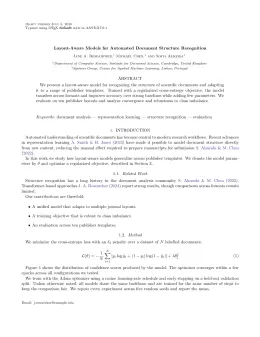
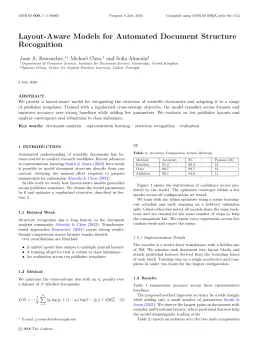
About the The Planetary Science Journal format
The Planetary Science Journal is a peer-reviewed journal published by American Astronomical Society, covering Astro and Planetary Science, Planetary Science and Exploration, Stellar, planetary, and galactic studies. Over its lifetime it has published 1,597 papers, which have received 14,941 citations.
| Publisher | American Astronomical Society |
|---|
| Reference style | Author–year (AAS) Author–year — (Smith, 2023) in the text
Smith, A., Jones, B., & Lee, C. 2023, The Planetary Science Journal, 12, 45
Formats any DOI in The Planetary Science Journal style. No sign-up.
|
|---|
| Publishes research in | Astro and Planetary Science Planetary Science and Exploration Stellar, planetary, and galactic studies Astrophysics and Star Formation Studies Geology and Paleoclimatology Research |
|---|
| ISSN | 2632-3338 |
|---|
| Citation impact (2-yr) | 3.61 |
|---|
| h-index | 45 |
|---|
| i10-index | 473 |
|---|
| Article processing charge | $1,800 |
|---|
| Open access | Yes — indexed in DOAJ |
|---|
| Top institutions publishing here | Planetary Science Institute |
|---|
| Journal website | iopscience.iop.org |
|---|
| You get | A submission-ready PDF and the editable LaTeX source — ready to submit. |
|---|
Papers published in The Planetary Science Journal per year
Citation impact of The Planetary Science Journal by publication year
Citations each year’s papers have accumulated so far — the most recent years are still building up.
Most-cited papers in The Planetary Science Journal
Refining the Transit-timing and Photometric Analysis of TRAPPIST-1: Masses, Radii, Densities, Dynamics, and Ephemerides
Eric Agol, Caroline Dorn, Simon L. Grimm et al. · 22 Jan 2021
Abstract We have collected transit times for the TRAPPIST-1 system with the Spitzer Space Telescope over four years. We add to these ground-based, HST, and K2 transit-time measurements, and revisit an N -body dynamical analysis of the seven-planet system using our complete set of times from which we refine the mass ratios of the planets…
The ESA Hera Mission: Detailed Characterization of the DART Impact Outcome and of the Binary Asteroid (65803) Didymos
Patrick Michel, M. Küppers, Adriano Campo Bagatín et al. · 1 Jul 2022
Abstract Hera is a planetary defense mission under development in the Space Safety and Security Program of the European Space Agency for launch in 2024 October. It will rendezvous in late 2026 December with the binary asteroid (65803) Didymos and in particular its moon, Dimorphos, which will be impacted by NASA’s DART spacecraft on 2022…
The Double Asteroid Redirection Test (DART): Planetary Defense Investigations and Requirements
A. S. Rivkin, N. L. Chabot, A. M. Stickle et al. · 25 Aug 2021
Abstract The Double Asteroid Redirection Test (DART) is a Planetary Defense mission, designed to demonstrate the kinetic impactor technique on (65803) Didymos I Dimorphos, the secondary of the (65803) Didymos system. DART has four level 1 requirements to meet in order to declare mission success: (1) impact Dimorphos between 2022 September 25 and October 2,…
Science Goals and Objectives for the Dragonfly Titan Rotorcraft Relocatable Lander
Jason W. Barnes, E. P. Turtle, M. G. Trainer et al. · 19 Jul 2021
Abstract NASA’s Dragonfly mission will send a rotorcraft lander to the surface of Titan in the mid-2030s. Dragonfly's science themes include investigation of Titan’s prebiotic chemistry, habitability, and potential chemical biosignatures from both water-based “life as we know it” (as might occur in the interior mantle ocean, potential cryovolcanic flows, and/or impact melt deposits) and…
Revealing the Mysteries of Venus: The DAVINCI Mission
J. B. Garvin, Stephanie Getty, Giada Arney et al. · 1 May 2022
Abstract The Deep Atmosphere Venus Investigation of Noble gases, Chemistry, and Imaging (DAVINCI) mission described herein has been selected for flight to Venus as part of the NASA Discovery Program. DAVINCI will be the first mission to Venus to incorporate science-driven flybys and an instrumented descent sphere into a unified architecture. The anticipated scientific outcome…