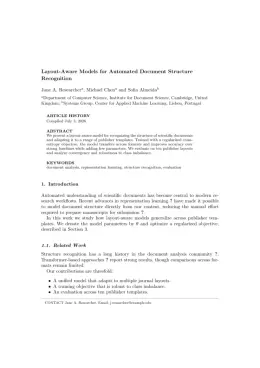
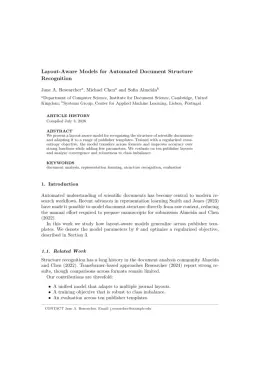
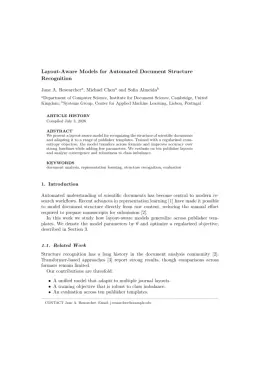
About the Philosophical Magazine format
Philosophical Magazine is a peer-reviewed journal published by Taylor & Francis, covering Microstructure and mechanical properties, Surface and Thin Film Phenomena, Aluminum Alloy Microstructure Properties. Over its lifetime it has published 4,843 papers, which have received 240,117 citations.
| Publisher | Taylor & Francis |
|---|
| Reference style | Numbered (Vancouver/NLM) Numbered — [1], [2] in the text
1. Smith A, Jones B, Lee C. A representative article title. Philosophical Magazine. 2023;12(3):45–58.
Formats any DOI in Philosophical Magazine style. No sign-up.
|
|---|
| Publishes research in | Microstructure and mechanical properties Surface and Thin Film Phenomena Aluminum Alloy Microstructure Properties nanoparticles nucleation surface interactions Thermodynamic and Structural Properties of Metals and Alloys |
|---|
| ISSN | 0031-8086 |
|---|
| h-index | 186 |
|---|
| i10-index | 3,376 |
|---|
| Top institutions publishing here | Cavendish Hospital |
|---|
| Journal website | www.tandfonline.com |
|---|
| You get | A submission-ready PDF and the editable LaTeX source — ready to submit. |
|---|
Papers published in Philosophical Magazine per year
Citation impact of Philosophical Magazine by publication year
Citations each year’s papers have accumulated so far — the most recent years are still building up.
Most-cited papers in Philosophical Magazine
Conduction in non-crystalline systems V. Conductivity, optical absorption and photoconductivity in amorphous semiconductors
E. A. Davis, N. F. Mott · 1 Nov 1970
Abstract The experimental evidence concerning the density of states in amorphous semiconductors and the ranges of energy in which states are localized is reviewed; this includes d.c. and a.c. conductivity, drift mobility and optical absorption. There is evidence that for some chalcogenide semiconductors the model proposed by Cohen, Fritzsche and Ovshinsky (1969) should be modified…
The deformation of plastically non-homogeneous materials
Michael F. Ashby · 1 Feb 1970
Abstract Many two-phase alloys work-harden much faster than do pure single crystals. This is because the two phases are not equally easy to deform. One component (often dispersed as small particles) deforms less than the other, or not at all, so that gradients of deformation form with a wavelength equal to the spacing between the…
Conduction in non-crystalline materials
N. F. Mott · 1 Apr 1969
Abstract If the distance between atoms in a crystalline lattice is increased, an energy gap appears, which in a divalent material will separate occupied from unoccupied states of an electron. In a non-crystalline substance, a minimum is expected in the density of states (a ‘pseudogap’). An approximate theoretical estimate is given of the depth of…
Anomalous low-temperature thermal properties of glasses and spin glasses
Philip W. Anderson, B. I. Halperin, C. M. Varma · 1 Jan 1972
Abstract We show that a linear specific heat at low temperatures for glass follows naturally from general considerations on the glassy state. From the same considerations we obtain the experimentally observed anomalous low-temperature thermal conductivity, and we predict an ultrasonic attenuation which increases at low temperatures. Possible relationships with the linear specific heat in magnetic…
III. Dislocation densities in some annealed and cold-worked metals from measurements on the X-ray debye-scherrer spectrum
G.K. Williamson, R.E. Smallman · 1 Jan 1956
Abstract Two basic equations are derived for deducing the dislocation density in powdered materials from the particle size and strain breadth measured from the Debye-Schemer spectrum. In the particle size estimate, it is assumed that the material has a block structure similar to that found in microbeam studies and that the dislocations lie along the…