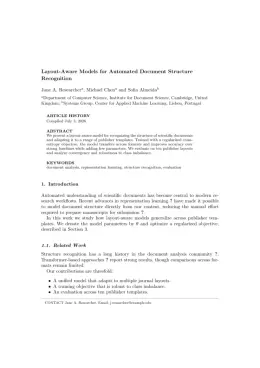
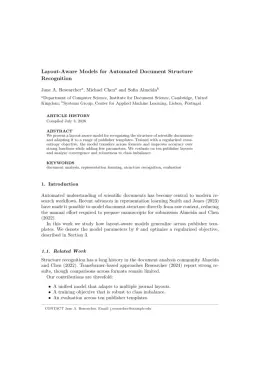
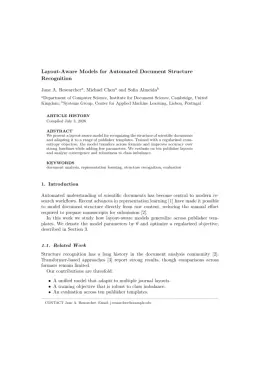
About the Spatial Economic Analysis format
Spatial Economic Analysis is a peer-reviewed journal published by Taylor & Francis, covering Regional Economics and Spatial Analysis, Spatial and Panel Data Analysis, Fiscal Policy and Economic Growth. Over its lifetime it has published 633 papers, which have received 13,836 citations.
| Publisher | Taylor & Francis |
|---|
| Reference style | Author–year (APA) Author–year — (Smith, 2023) in the text
Smith, A., Jones, B., & Lee, C. (2023). A representative article title. Spatial Economic Analysis, 12(3), 45–58.
Formats any DOI in Spatial Economic Analysis style. No sign-up.
|
|---|
| Publishes research in | Regional Economics and Spatial Analysis Spatial and Panel Data Analysis Fiscal Policy and Economic Growth Economic Growth and Productivity Housing Market and Economics |
|---|
| ISSN | 1742-1772 |
|---|
| Citation impact (2-yr) | 1.98 |
|---|
| h-index | 54 |
|---|
| i10-index | 269 |
|---|
| Top institutions publishing here | Schlumberger (Ireland) |
|---|
| Journal website | www.tandfonline.com |
|---|
| You get | A submission-ready PDF and the editable LaTeX source — ready to submit. |
|---|
Papers published in Spatial Economic Analysis per year
Citation impact of Spatial Economic Analysis by publication year
Citations each year’s papers have accumulated so far — the most recent years are still building up.
Most-cited papers in Spatial Economic Analysis
Applied Spatial Econometrics: Raising the Bar
J. Paul Elhorst · 27 Feb 2010
Abstract This paper places the key issues and implications of the new ‘introductory’ book on spatial econometrics by James LeSage & Kelley Pace (2009) in a broader perspective: the argument in favour of the spatial Durbin model, the use of indirect effects as a more valid basis for testing whether spatial spillovers are significant, the…
On the Specification of the Gravity Model of Trade: Zeros, Excess Zeros and Zero-inflated Estimation
Martijn Burger, Frank van Oort, Gert‐Jan Linders · 1 Jun 2009
Abstract Conventional studies of bilateral trade patterns specify a log-normal gravity equation for empirical estimation. However, the log-normal gravity equation suffers from three problems: the bias created by the logarithmic transformation, the failure of the homoskedasticity assumption, and the way zero values are treated. These problems normally result in biased and inefficient estimates. Recently, the…
“Theory and Practice of Spatial Econometrics”
3 Jul 2015
This text provides an introduction to spatial econometric theory along withnumerous applied illustrations of the models and methods described. The ap-plications utilize a set of MATLAB functions that implement a host of spatialeconometric estimation methods. The intended audience is faculty,students andpractitioners involved in modeling spatial data sets. The MATLAB functionsdescribed in this book have been…
Spatial Growth Regressions: Model Specification, Estimation and Interpretation
James P. LeSage, Manfréd M. Fischer · 1 Nov 2008
Abstract We attempt to clarify a number of points regarding use of spatial regression models for regional growth analysis. We show that as in the case of non-spatial growth regressions, the effect of initial regional income levels wears off over time. Unlike the non-spatial case, long-run regional income levels depend on: own region as well…
Measuring Regional Economic Resilience across Europe: Operationalizing a complex concept
Marianne Sensier, Gillian Bristow, Adrian Healy · 21 Jan 2016
This paper describes an approach developed to measure regional economic resilience across Europe which is novel in three key dimensions. Firstly, it seeks to date regional downturns as opposed to assuming that all regional economies are affected by economic shocks at the same point in time; secondly, it measures the amplitude and duration of economic…