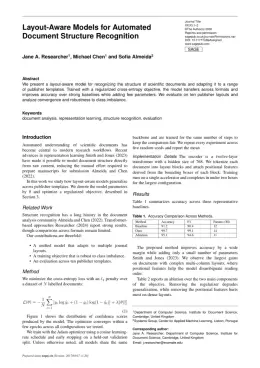
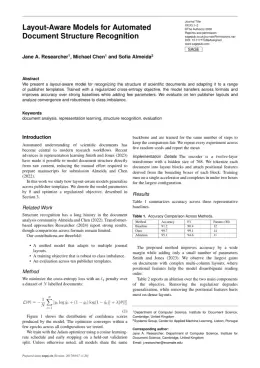
About the Molecular Physics format
Molecular Physics is a peer-reviewed journal published by Taylor & Francis, covering Advanced Chemical Physics Studies, Spectroscopy and Quantum Chemical Studies, Phase Equilibria and Thermodynamics. Over its lifetime it has published 20,401 papers, which have received 575,046 citations.
| Publisher | Taylor & Francis |
|---|
| Reference style | Numbered (Vancouver/NLM) Numbered — [1], [2] in the text
1. Smith A, Jones B, Lee C. A representative article title. Molecular Physics. 2023;12(3):45–58.
Formats any DOI in Molecular Physics style. No sign-up.
|
|---|
| Publishes research in | Advanced Chemical Physics Studies Spectroscopy and Quantum Chemical Studies Phase Equilibria and Thermodynamics Material Dynamics and Properties Spectroscopy and Laser Applications |
|---|
| ISSN | 0026-8976 |
|---|
| Citation impact (2-yr) | 1.91 |
|---|
| h-index | 235 |
|---|
| i10-index | 10,768 |
|---|
| Top institutions publishing here | Centre National de la Recherche Scientifique |
|---|
| Journal website | www.tandfonline.com |
|---|
| You get | A submission-ready PDF and the editable LaTeX source — ready to submit. |
|---|
Papers published in Molecular Physics per year
Citation impact of Molecular Physics by publication year
Citations each year’s papers have accumulated so far — the most recent years are still building up.
Most-cited papers in Molecular Physics
The calculation of small molecular interactions by the differences of separate total energies. Some procedures with reduced errors
Samuel Francis Boys, Fernando Bernardi · 1 Oct 1970
A new direct difference method for the computation of molecular interactions has been based on a bivariational transcorrelated treatment, together with special methods for the balancing of other errors. It appears that these new features can give a strong reduction in the error of the interaction energy, and they seem to be particularly suitable for…
A molecular dynamics method for simulations in the canonical ensemble
Shūichi Nosé · 10 Jun 1984
A molecular dynamics simulation method which can generate configurations belonging to the canonical (T, V, N) ensemble or the constant temperature constant pressure (T, P, N) ensemble, is proposed. The physical system of interest consists of N particles (f degrees of freedom), to which an external, macroscopic variable and its conjugate momentum are added. This…
Self-consistent perturbation theory of diamagnetism
R. Ditchfield · 1 Apr 1974
An ab initio gauge-invariant molecular orbital theory is developed for nuclear magnetic shielding. The molecular orbitals are written as linear combinations of gauge-invariant atomic orbitals, the wavefunctions in the presence of a uniform external magnetic field being determined by self-consistent field perturbation theory. The final magnetic shielding result is broken up into contributions which can…
Constant pressure molecular dynamics for molecular systems
Shūichi Nosé, Michael L. Klein · 10 Dec 1983
Abstract Technical aspects of the constant pressure molecular dynamics (MD) method proposed by Andersen and extended by Parrinello and Rahman to allow changes in the shape of the MD cell are discussed. The new MD method is extended to treat molecular systems and to include long range charge-charge interactions. Results on the conservation laws, the…
Advances in molecular quantum chemistry contained in the Q-Chem 4 program package
Yihan Shao, Zhengting Gan, Evgeny Epifanovsky et al. · 3 Sep 2014
A summary of the technical advances that are incorporated in the fourth major release of the Q-Chem quantum chemistry program is provided, covering approximately the last seven years. These include developments in density functional theory methods and algorithms, nuclear magnetic resonance (NMR) property evaluation, coupled cluster and perturbation theories, methods for electronically excited and open-shell…