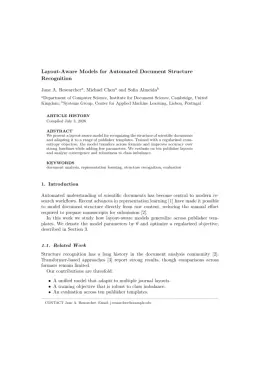
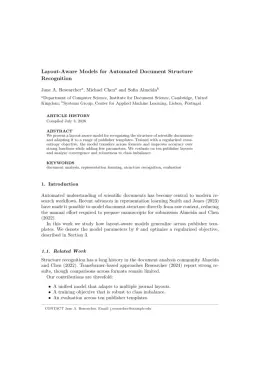
About the Nuclear Technology format
Nuclear Technology is a peer-reviewed journal published by Taylor & Francis, covering Nuclear reactor physics and engineering, Nuclear Materials and Properties, Nuclear and radioactivity studies. Over its lifetime it has published 9,667 papers, which have received 96,446 citations.
| Publisher | Taylor & Francis |
|---|
| Reference style | Numbered (Vancouver/NLM) Numbered — [1], [2] in the text
1. Smith A, Jones B, Lee C. A representative article title. Nuclear Technology. 2023;12(3):45–58.
Formats any DOI in Nuclear Technology style. No sign-up.
|
|---|
| Publishes research in | Nuclear reactor physics and engineering Nuclear Materials and Properties Nuclear and radioactivity studies Nuclear Engineering Thermal-Hydraulics Graphite, nuclear technology, radiation studies |
|---|
| ISSN | 0029-5450 |
|---|
| Citation impact (2-yr) | 1.11 |
|---|
| h-index | 98 |
|---|
| i10-index | 2,413 |
|---|
| Top institutions publishing here | Idaho National Laboratory |
|---|
| Journal website | www.tandfonline.com |
|---|
| You get | A submission-ready PDF and the editable LaTeX source — ready to submit. |
|---|
Papers published in Nuclear Technology per year
Citation impact of Nuclear Technology by publication year
Citations each year’s papers have accumulated so far — the most recent years are still building up.
Most-cited papers in Nuclear Technology
Initial MCNP6 Release Overview
Tim Goorley, Michael R. James, Tom Booth et al. · 1 Dec 2012
MCNP6 is simply and accurately described as the merger of MCNP5 and MCNPX capabilities, but it is much more than the sum of those two computer codes. MCNP6 is the result of five years of effort by the MCNP5 and MCNPX code development teams. These groups of people, residing in Los Alamos National Laboratory’s (LANL)…
Nuclear Tracks in Solids (Principles & Applications)
Robert L. Fleisher, P. Buford Price, R. M. Walker · 1 Jul 1981
An extensive discussion of particle tracks in solids, quantitative methods for particle identification from them, and applications of the techniques in a number of fields are presented. Applications in geochronology, cosmic ray physics, meteoritic and lunar science, nuclear physics, chemical analysis, micro-chemical mapping, and radiation dosimetry are included. Each chapter contains numerous photographs and a…
ORIGEN2: A Versatile Computer Code for Calculating the Nuclide Compositions and Characteristics of Nuclear Materials
A.G. Croff · 1 Sep 1983
ORIGEN2 is a versatile point-depletion and radioactive-decay computer code for use in simulating nuclear fuel cycles and calculating the nuclide compositions and characteristics of materials contained therein. It represents a revision and update of the original ORIGEN computer code, which was developed at the Oak Ridge National Laboratory (ORNL) and distributed worldwide beginning in the…
The Physical Metallurgy of Steels
John A. Shields · 1 Oct 1982
High-Performance Supercritical Carbon Dioxide Cycle for Next-Generation Nuclear Reactors
Václav Dostál, Pavel Hejzlar, Michael J. Driscoll · 1 Jun 2006
Supercritical carbon dioxide cycles are a promising power conversion option for future nuclear reactors operating with a reactor outlet temperature in the range of 550 to 650°C. The recompression cycle version operating with ~20-MPa turbine inlet pressure achieves similar cycle efficiencies as helium Brayton cycles operating at ~250°C higher turbine inlet temperature. The simplicity and…