SAGE

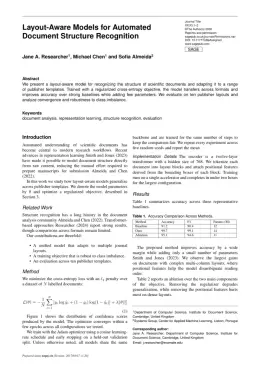
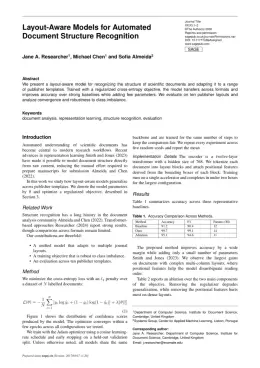
Organization Theory Template

Write in a clean editor, then format for Organization Theory in one click — DocuGuru applies the official SAGE template with author–year references and exports a submission-ready PDF plus the editable LaTeX source. Free to start.

About the Organization Theory format

Organization Theory is a peer-reviewed journal published by SAGE, covering Management and Organizational Studies, Management Theory and Practice, Complex Systems and Decision Making.

PublisherSAGE
Reference styleAuthor–year (Harvard)
Author–year — (Smith, 2023) in the text
Smith, A., Jones, B. and Lee, C. (2023) 'A representative article title', Organization Theory, 12(3), pp. 45–58.

Formats any DOI in Organization Theory style. No sign-up.

Publishes research inManagement and Organizational Studies Management Theory and Practice Complex Systems and Decision Making Innovation and Knowledge Management Information Systems Theories and Implementation
ISSN2631-7877
Citation impact (2-yr)10.55
h-index51
i10-index110
Total citations7,236
Open accessYes
Top institutions publishing hereCopenhagen Business School
Journal websiteus.sagepub.com
You getA submission-ready PDF and the editable LaTeX source — ready to submit.

Papers published in Organization Theory per year

13
1995
12
2008
17
2016
9
2018
3
2019
25
2020
29
2021
38
2022
19
2023
22
2024
15
2025

Citation impact of Organization Theory by publication year

483
1995
9
2008
13
2016
228
2018
98
2019
2.3K
2020
1.9K
2021
1.3K
2022
371
2023
396
2024
25
2025

Citations each year’s papers have accumulated so far — the most recent years are still building up.

Most-cited papers in Organization Theory

What Makes a Process Theoretical Contribution?

Charlotte Cloutier, Ann Langley · 1 Jan 2020

In recent years, there have been many calls for scholars to innovate in their styles of conceptual work, and in particular to develop process theoretical contributions that consider the dynamic unfolding of phenomena over time. Yet, while there are templates for constructing conceptual contributions structured in the form variance theories, approaches to developing process models,…

Sensemaking Reconsidered: Towards a broader understanding through phenomenology

Jörgen Sandberg, Haridimos Tsoukas · 1 Jan 2020

We develop a typology of sensemaking in organizations that reconsiders existing sensemaking research by providing a more coherent and integrative conceptualization of what defines sensemaking and how it is connected with organizing. Drawing on existential phenomenology, we make the following core claims: (1) sensemaking is not a singular phenomenon but comprises four major types: immanent,…

Surveillance Capitalism or Democracy? The Death Match of Institutional Orders and the Politics of Knowledge in Our Information Civilization

Shoshana Zuboff · 1 Jul 2022

Surveillance capitalism is what happened when US democracy stood down. Two decades later, it fails any reasonable test of responsible global stewardship of digital information and communications. The abdication of the world’s information spaces to surveillance capitalism has become the meta-crisis of every republic because it obstructs solutions to all other crises. The surveillance capitalist…

Decentralized vs. Distributed Organization: Blockchain, Machine Learning and the Future of the Digital Platform

Jean‐Philippe Vergne · 1 Oct 2020

The terms decentralized organization and distributed organization are often used interchangeably, despite describing two distinct phenomena. I propose distinguishing decentralization , as the dispersion of organizational communications, from distribution , as the dispersion of organizational decision-making. Organizations can be distributed without being decentralized (and vice versa), and having multiple management layers directly affects only distribution…

The Biography of an Algorithm: Performing algorithmic technologies in organizations

Vern Glaser, Neil Pollock, Luciana D’Adderio · 1 Apr 2021

Algorithms are ubiquitous in modern organizations. Typically, researchers have viewed algorithms as self-contained computational tools that either magnify organizational capabilities or generate unintended negative consequences. To overcome this limited understanding of algorithms as stable entities, we propose two moves. The first entails building on a performative perspective to theorize algorithms as entangled, relational, emergent, and…

Organization Theory template — frequently asked questions

How do I write a paper in the Organization Theory format?
In DocuGuru you write your manuscript in a normal editor — no LaTeX setup required — and select the Organization Theory template. When you export, DocuGuru compiles the paper into the official SAGE format and hands you a submission-ready PDF along with the editable LaTeX source.
What reference style does Organization Theory use?
Organization Theory uses Author–year (Harvard) references, shown as author–year markers such as (Smith, 2023) in the text. DocuGuru formats every in-text citation and the reference list in this exact style automatically. A reference appears like this: Smith, A., Jones, B. and Lee, C. (2023) 'A representative article title', Organization Theory, 12(3), pp. 45–58.
Do I need to know LaTeX to submit to Organization Theory?
No. DocuGuru generates the sagej LaTeX class and compiles the PDF for you in the background, so you get a SAGE-ready Organization Theory document without writing any LaTeX. If you do want it, the LaTeX source is included in the export.
Can I import an existing draft into the Organization Theory template?
Yes. Paste or upload your current manuscript — Word, LaTeX, Markdown, or plain text — and DocuGuru reflows it into the Organization Theory format with correct headings, figures, tables, and author–year citations.
Who publishes Organization Theory?
Organization Theory is a multidisciplinary journal published by SAGE. DocuGuru's Organization Theory template matches SAGE's official submission format.
Can I export a submission-ready Organization Theory PDF?
Yes — DocuGuru produces a PDF built with the official Organization Theory template (the sagej class) that is ready to submit to SAGE, together with the matching LaTeX source files.
How much does the Organization Theory template cost?
You can start writing in the Organization Theory template for free. Exporting the final submission-ready Organization Theory PDF and LaTeX source is part of DocuGuru's paid plans — see the app for current pricing.

Use the Organization Theory template