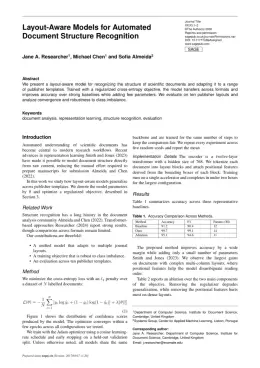
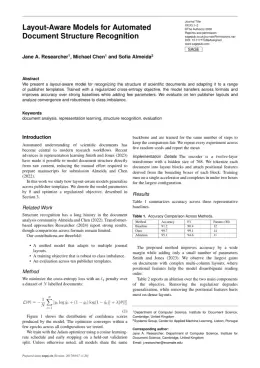
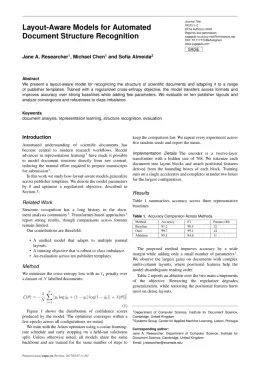
About the Criminology & Criminal Justice format
Criminology & Criminal Justice is a peer-reviewed journal published by SAGE, covering Criminal Justice and Corrections Analysis, Crime Patterns and Interventions, Policing Practices and Perceptions. Over its lifetime it has published 1,050 papers, which have received 21,125 citations.
| Publisher | SAGE |
|---|
| Reference style | Author–year (Harvard) Author–year — (Smith, 2023) in the text
Smith, A., Jones, B. and Lee, C. (2023) 'A representative article title', Criminology & Criminal Justice, 12(3), pp. 45–58.
Formats any DOI in Criminology & Criminal Justice style. No sign-up.
|
|---|
| Publishes research in | Criminal Justice and Corrections Analysis Crime Patterns and Interventions Policing Practices and Perceptions Psychopathy, Forensic Psychiatry, Sexual Offending Homelessness and Social Issues |
|---|
| ISSN | 1748-8958 |
|---|
| Citation impact (2-yr) | 1.72 |
|---|
| h-index | 72 |
|---|
| i10-index | 445 |
|---|
| Top institutions publishing here | University of Leicester |
|---|
| Journal website | www.sagepub.com |
|---|
| You get | A submission-ready PDF and the editable LaTeX source — ready to submit. |
|---|
Papers published in Criminology & Criminal Justice per year
Citation impact of Criminology & Criminal Justice by publication year
Citations each year’s papers have accumulated so far — the most recent years are still building up.
Most-cited papers in Criminology & Criminal Justice
A desistance paradigm for offender management
Fergus McNeill · 24 Jan 2006
In an influential article published in the British Journal of Social Work in 1979, Anthony Bottoms and Bill McWilliams proposed the adoption of a ‘non-treatment paradigm’ for probation practice. Their argument rested on a careful and considered analysis not only of empirical evidence about the ineffectiveness of rehabilitative treatment but also of theoretical, moral and…
Youth crime and justice: Key messages from the Edinburgh Study of Youth Transitions and Crime
Lesley McAra, Susan McVie · 1 May 2010
Based on findings from the Edinburgh Study of Youth Transitions and Crime, this article challenges the evidence-base which policy-makers have drawn on to justify the evolving models of youth justice across the UK (both in Scotland and England/Wales). It argues that to deliver justice, systems need to address four key facts about youth crime: serious…
The pains of desistance
Briege Nugent, Marguerite Schinkel · 17 Mar 2016
Desistance is generally presented in a positive light, with themes of ‘making good’ and generativity recurring in the literature. This article reports on two qualitative studies exploring the desistance journeys of two different groups of ex-offenders, drawing attention to the pains of this process. It examines the possible consequences of these ‘pains of desistance’ and…
Lost on the <i>Silk Road</i> : Online drug distribution and the ‘cryptomarket’
James Martin · 7 Oct 2013
The illicit drugs website, Silk Road, presents an ideal case study for how online communication technologies are transforming crime. This article seeks to locate the offences committed via Silk Road within existing cybercrime literature, and presents a new criminological concept – the cryptomarket – to outline the contours of this new generation of online illicit…
Cannabis normalization and stigma: Contemporary practices of moral regulation
Andrew Hathaway, Natalie C. Comeau, Patricia G. Erickson · 1 Aug 2011
Cannabis (marijuana) has undergone a normalizing process as indicated by high use rates, social tolerance, and broader cultural acceptance of its use in many countries. Yet, consistent with its status as a banned drug, users still face the threat of legal sanctions and experiences of stigma that challenge the assumptions of the normalization thesis. In…