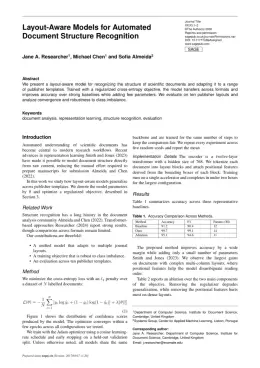
About the Entrepreneurship Theory and Practice format
Entrepreneurship Theory and Practice is a peer-reviewed journal published by SAGE, covering Entrepreneurship Studies and Influences, Family Business Performance and Succession, Corporate Finance and Governance. Over its lifetime it has published 1,869 papers, which have received 319,859 citations.
| Publisher | SAGE |
|---|
| Reference style | Author–year (Harvard) Author–year — (Smith, 2023) in the text
Smith, A., Jones, B. and Lee, C. (2023) 'A representative article title', Entrepreneurship Theory and Practice, 12(3), pp. 45–58.
Formats any DOI in Entrepreneurship Theory and Practice style. No sign-up.
|
|---|
| Publishes research in | Entrepreneurship Studies and Influences Family Business Performance and Succession Corporate Finance and Governance Private Equity and Venture Capital Innovation and Socioeconomic Development |
|---|
| ISSN | 1042-2587 |
|---|
| Citation impact (2-yr) | 5.92 |
|---|
| h-index | 301 |
|---|
| i10-index | 1,432 |
|---|
| Top institutions publishing here | Entrepreneurial Ecosystems |
|---|
| Journal website | journals.sagepub.com |
|---|
| You get | A submission-ready PDF and the editable LaTeX source — ready to submit. |
|---|
Papers published in Entrepreneurship Theory and Practice per year
Citation impact of Entrepreneurship Theory and Practice by publication year
Citations each year’s papers have accumulated so far — the most recent years are still building up.
Most-cited papers in Entrepreneurship Theory and Practice
A Conceptual Model of Entrepreneurship as Firm Behavior
Jeffrey G. Covin, Dennis P. Slevin · 1 Oct 1991
This article outlines a conceptual model of entrepreneurship as an organizational-level phenomenon. The model is intended to depict the organizational system elements that relate to entrepreneurial behavior among larger, established firms, but may also be applicable in varying degrees to many smaller firms. Entrepreneurship is described as a dimension of strategic posture represented by a…
Development and Cross–Cultural Application of a Specific Instrument to Measure Entrepreneurial Intentions
Francisco Liñán, Yi–Wen Chen · 27 Apr 2009
This article uses Ajzen's theory of planned behavior to build an entrepreneurial intention questionnaire (EIQ) and analyzes its psychometric properties. The entrepreneurial intention model is then tested on a 519–individual sample from two rather diverse countries: Spain and Taiwan. EIQ and structural equation techniques have been used to try to overcome previous research limitations. The…
Entrepreneurial Orientation and Business Performance: An Assessment of past Research and Suggestions for the Future
Andreas Rauch, Johan Wiklund, G. T. Lumpkin et al. · 8 Apr 2009
Entrepreneurial orientation (EO) has received substantial conceptual and empirical attention, representing one of the few areas in entrepreneurship research where a cumulative body of knowledge is developing. The time is therefore ripe to document, to review, and to evaluate the cumulative knowledge on the relationship between EO and business performance. Extending beyond qualitative assessment, we…
Social and Commercial Entrepreneurship: Same, Different, or Both?
James E. Austin, Howard H. Stevenson, Jane Wei–Skillern · 1 Jan 2006
Entrepreneurship has been the engine propelling much of the growth of the business sector as well as a driving force behind the rapid expansion of the social sector. This article offers a comparative analysis of commercial and social entrepreneurship using a prevailing analytical model from commercial entrepreneurship. The analysis highlights key similarities and differences between…
Defining the Family Business by Behavior
Jess H. Chua, James J. Chrisman, Pramodita Sharma · 1 Jul 1999
It is generally accepted that a family's involvement in the business makes the family business unique; but the literature continues to have difficulty defining the family business. We argue for a distinction between theoretical and operational definitions. A theoretical definition must identify the esence that distinguishes the family business from other businesses. It is the…