SAGE

Journal of Intellectual Disabilities Template

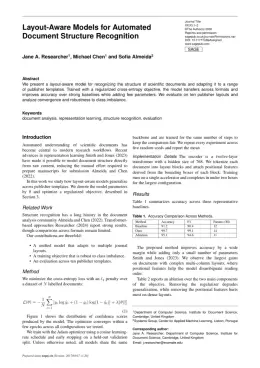
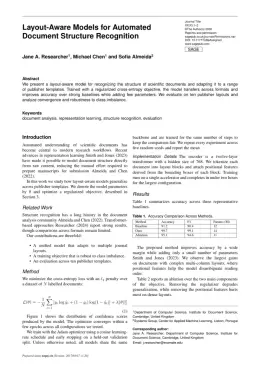
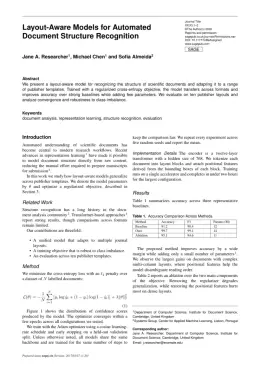
Write in a clean editor, then format for Journal of Intellectual Disabilities in one click — DocuGuru applies the official SAGE template with author–year references and exports a submission-ready PDF plus the editable LaTeX source. Free to start.

About the Journal of Intellectual Disabilities format

Journal of Intellectual Disabilities is a peer-reviewed journal published by SAGE, covering Family and Disability Support Research, Down syndrome and intellectual disability research, Disability Rights and Representation.

PublisherSAGE
Reference styleAuthor–year (Harvard)
Author–year — (Smith, 2023) in the text
Smith, A., Jones, B. and Lee, C. (2023) 'A representative article title', Journal of Intellectual Disabilities, 12(3), pp. 45–58.

Formats any DOI in Journal of Intellectual Disabilities style. No sign-up.

Publishes research inFamily and Disability Support Research Down syndrome and intellectual disability research Disability Rights and Representation Disability Education and Employment Healthcare innovation and challenges
ISSN1744-6295
Citation impact (2-yr)1.71
h-index50
i10-index400
Total citations14,168
Top institutions publishing hereUniversity of Ulster
Journal websitejid.sagepub.com
You getA submission-ready PDF and the editable LaTeX source — ready to submit.

Papers published in Journal of Intellectual Disabilities per year

45
2014
54
2015
44
2016
57
2017
34
2018
45
2019
40
2020
54
2021
88
2022
79
2023
76
2024
30
2025

Citation impact of Journal of Intellectual Disabilities by publication year

737
2014
809
2015
1K
2016
1K
2017
715
2018
763
2019
371
2020
636
2021
677
2022
383
2023
174
2024
25
2025

Citations each year’s papers have accumulated so far — the most recent years are still building up.

Most-cited papers in Journal of Intellectual Disabilities

The barriers to social inclusion as perceived by people with intellectual disabilities

Suzanne Abbott, Roy McConkey · 17 Aug 2006

Very little research has been done on social inclusion from the perspective of people with intellectual disabilities, including perceived barriers and remedies. Focus groups were held with 68 persons, mostly tenants in supported living or shared group homes. Qualitative data were obtained using a mix of workshop activities and small group discussions. Four main barriers…

Levels of anxiety and sources of stress in adults with autism

Alinda Gillott, Penny Standen · 20 Nov 2007

Clinical reports suggest that anxiety is a pertinent issue for adults with autism. We compared 34 adults with autism with 20 adults with intellectual disabilities, utilizing informant-based measures of anxiety and stress. Groups were matched by age, gender and intellectual ability. Adults with autism were almost three times more anxious than the comparison group and…

Adolescents with intellectual disabilities as victims of abuse

Shunit Reiter, Diane Nelson Bryen, Ifat Shachar · 20 Nov 2007

Abuse of persons with disabilities continues to remain largely invisible, in spite of estimates suggesting that it is perpetrated against them more frequently than against those without disabilities. The aim of this study was to conduct an exploratory investigation regarding the frequency and type of abuse of a selected group of students with intellectual disabilities…

Prevalence and psychological sequelae of sexual abuse among individuals with an intellectual disability: A review of the recent literature

Gary Byrne · 16 Mar 2017

The impact of sexual abuse among those with an intellectual disability is an area in need of further research. The current article provides an in-depth narrative review of the sexual abuse literature relevant to individuals with an intellectual disability. The 29 articles included in this study focused on (a) the prevalence of sexual abuse, (b)…

Patterns of leisure participation among adolescents with a mild intellectual disability

John Buttimer, Edel Tierney · 1 Mar 2005

The aim of this study was to investigate the leisure and recreational activities of a cohort of 34 students attending a full-time special school as reported by the students and their parents. Leisure activities which were mostly solitary and passive in nature were identified as those being most commonly engaged in. Barriers to leisure were…

Journal of Intellectual Disabilities template — frequently asked questions

How do I write a paper in the Journal of Intellectual Disabilities format?
In DocuGuru you write your manuscript in a normal editor — no LaTeX setup required — and select the Journal of Intellectual Disabilities template. When you export, DocuGuru compiles the paper into the official SAGE format and hands you a submission-ready PDF along with the editable LaTeX source.
What reference style does Journal of Intellectual Disabilities use?
Journal of Intellectual Disabilities uses Author–year (Harvard) references, shown as author–year markers such as (Smith, 2023) in the text. DocuGuru formats every in-text citation and the reference list in this exact style automatically. A reference appears like this: Smith, A., Jones, B. and Lee, C. (2023) 'A representative article title', Journal of Intellectual Disabilities, 12(3), pp. 45–58.
Do I need to know LaTeX to submit to Journal of Intellectual Disabilities?
No. DocuGuru generates the sagej LaTeX class and compiles the PDF for you in the background, so you get a SAGE-ready Journal of Intellectual Disabilities document without writing any LaTeX. If you do want it, the LaTeX source is included in the export.
Can I import an existing draft into the Journal of Intellectual Disabilities template?
Yes. Paste or upload your current manuscript — Word, LaTeX, Markdown, or plain text — and DocuGuru reflows it into the Journal of Intellectual Disabilities format with correct headings, figures, tables, and author–year citations.
Who publishes Journal of Intellectual Disabilities?
Journal of Intellectual Disabilities is a multidisciplinary journal published by SAGE. DocuGuru's Journal of Intellectual Disabilities template matches SAGE's official submission format.
Can I export a submission-ready Journal of Intellectual Disabilities PDF?
Yes — DocuGuru produces a PDF built with the official Journal of Intellectual Disabilities template (the sagej class) that is ready to submit to SAGE, together with the matching LaTeX source files.
How much does the Journal of Intellectual Disabilities template cost?
You can start writing in the Journal of Intellectual Disabilities template for free. Exporting the final submission-ready Journal of Intellectual Disabilities PDF and LaTeX source is part of DocuGuru's paid plans — see the app for current pricing.

Use the Journal of Intellectual Disabilities template