SAGE

Journal of Biomaterials Applications Template

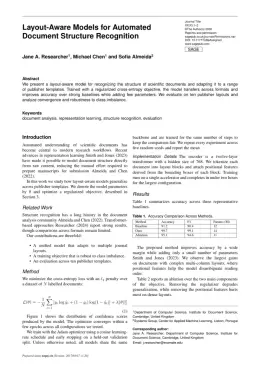
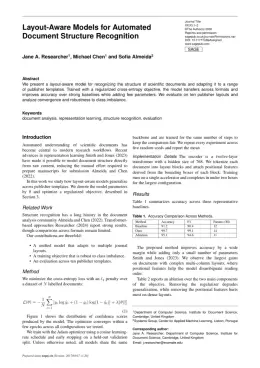
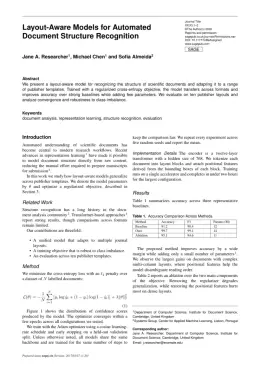
Write in a clean editor, then format for Journal of Biomaterials Applications in one click — DocuGuru applies the official SAGE template with author–year references and exports a submission-ready PDF plus the editable LaTeX source. Free to start.

About the Journal of Biomaterials Applications format

Journal of Biomaterials Applications is a peer-reviewed journal published by SAGE, covering Bone Tissue Engineering Materials, Electrospun Nanofibers in Biomedical Applications, Orthopaedic implants and arthroplasty.

PublisherSAGE
Reference styleAuthor–year (Harvard)
Author–year — (Smith, 2023) in the text
Smith, A., Jones, B. and Lee, C. (2023) 'A representative article title', Journal of Biomaterials Applications, 12(3), pp. 45–58.

Formats any DOI in Journal of Biomaterials Applications style. No sign-up.

Publishes research inBone Tissue Engineering Materials Electrospun Nanofibers in Biomedical Applications Orthopaedic implants and arthroplasty Dental Implant Techniques and Outcomes Tissue Engineering and Regenerative Medicine
ISSN0885-3282
Citation impact (2-yr)2.46
h-index85
i10-index1,422
Total citations53,228
Top institutions publishing hereSree Chitra Thirunal Institute for Medical Sciences and Technology
Journal websitewww.sagepub.com
You getA submission-ready PDF and the editable LaTeX source — ready to submit.

Papers published in Journal of Biomaterials Applications per year

104
2014
116
2015
113
2016
125
2017
116
2018
135
2019
139
2020
118
2021
151
2022
97
2023
91
2024
120
2025

Citation impact of Journal of Biomaterials Applications by publication year

3.1K
2014
2.8K
2015
3.5K
2016
2.8K
2017
2.7K
2018
2.6K
2019
2.6K
2020
1.6K
2021
1.6K
2022
659
2023
431
2024
174
2025

Citations each year’s papers have accumulated so far — the most recent years are still building up.

Most-cited papers in Journal of Biomaterials Applications

Biomedical Applications of Polyurethanes: A Review of Past Promises, Present Realities, and a Vibrant Future

Richard J. Zdrahala, Ivanka J. Zdrahala · 1 Jul 1999

Polyurethanes, having extensive structure/property diversity, are one of the most bio- and blood-compatible materials known today. These materials played a major role in the development of many medical devices ranging from catheters to total artificial heart. Properties such as durability, elasticity, elastomer-like character, fatigue resistance, compliance, and acceptance or tolerance in the body during the…

Review paper: Surface Modification for Bioimplants: The Role of Laser Surface Engineering

Anil Kurella, Narendra B. Dahotre · 21 Jun 2005

Often hard implants undergo detachment from the host tissue due to inadequate biocompatibility and poor osteointegration. Changing surface chemistry and physical topography of the surface influences biocompatibility. At present, the understanding of biocompatibility of both virgin and modified surfaces of bioimplant materials is limited and a great deal of research is being dedicated to this…

The Mechanical Behavior of Vascular Grafts: A Review

Henryk J. Salacinski, Sean Goldner, Alberto Giudiceandrea et al. · 1 Jan 2001

The development of intimal hyperplasia (IH) near the anastomosis of a vascular graft to artery is directly related to changes in the wall shear rate distribution. Mismatch in compliance and diameter at the end-to-end anastomosis of a compliant artery and rigid graft cause shear rate disturbances that may induce intimal hyperplasia and ultimately graft failure.…

Effect of Surface Wettability and Topography on the Adhesion of Osteosarcoma Cells on Plasma-modified Polystyrene

Denis P. Dowling, Ian S. Miller, Malika Ardhaoui et al. · 21 Jun 2010

Biomaterials interact with the biological environment at their surface, making accurate biophysical characterization of the surface crucially important for understanding subsequent biological effects. In this study, the surface of polystyrene (PS) was systematically altered in order to determine the effect of plasma treatment and surface roughness on cell adhesion and spreading. Surfaces with water contact…

Review Paper: Chitosan Derivatives as Promising Materials for Controlled Drug Delivery

M. Prabaharan · 14 Jan 2008

Chitosan, a natural based-polymer obtained by alkaline deacetylation of chitin, is nontoxic, biocompatible, and biodegradable. These properties make chitosan a good candidate for the development of conventional and novel drug delivery systems. Chitosan has been found to be used as a support material for gene delivery, cell culture, and tissue engineering. However, practical use of…

Journal of Biomaterials Applications template — frequently asked questions

How do I write a paper in the Journal of Biomaterials Applications format?
In DocuGuru you write your manuscript in a normal editor — no LaTeX setup required — and select the Journal of Biomaterials Applications template. When you export, DocuGuru compiles the paper into the official SAGE format and hands you a submission-ready PDF along with the editable LaTeX source.
What reference style does Journal of Biomaterials Applications use?
Journal of Biomaterials Applications uses Author–year (Harvard) references, shown as author–year markers such as (Smith, 2023) in the text. DocuGuru formats every in-text citation and the reference list in this exact style automatically. A reference appears like this: Smith, A., Jones, B. and Lee, C. (2023) 'A representative article title', Journal of Biomaterials Applications, 12(3), pp. 45–58.
Do I need to know LaTeX to submit to Journal of Biomaterials Applications?
No. DocuGuru generates the sagej LaTeX class and compiles the PDF for you in the background, so you get a SAGE-ready Journal of Biomaterials Applications document without writing any LaTeX. If you do want it, the LaTeX source is included in the export.
Can I import an existing draft into the Journal of Biomaterials Applications template?
Yes. Paste or upload your current manuscript — Word, LaTeX, Markdown, or plain text — and DocuGuru reflows it into the Journal of Biomaterials Applications format with correct headings, figures, tables, and author–year citations.
Who publishes Journal of Biomaterials Applications?
Journal of Biomaterials Applications is a multidisciplinary journal published by SAGE. DocuGuru's Journal of Biomaterials Applications template matches SAGE's official submission format.
Can I export a submission-ready Journal of Biomaterials Applications PDF?
Yes — DocuGuru produces a PDF built with the official Journal of Biomaterials Applications template (the sagej class) that is ready to submit to SAGE, together with the matching LaTeX source files.
How much does the Journal of Biomaterials Applications template cost?
You can start writing in the Journal of Biomaterials Applications template for free. Exporting the final submission-ready Journal of Biomaterials Applications PDF and LaTeX source is part of DocuGuru's paid plans — see the app for current pricing.

Use the Journal of Biomaterials Applications template