SAGE

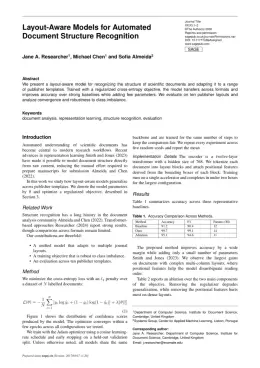
Gene Regulation and Systems Biology Template

Write in a clean editor, then format for Gene Regulation and Systems Biology in one click — DocuGuru applies the official SAGE template with author–year references and exports a submission-ready PDF plus the editable LaTeX source. Free to start.

About the Gene Regulation and Systems Biology format

Gene Regulation and Systems Biology is a peer-reviewed journal published by SAGE, covering Gene Regulatory Network Analysis, Bioinformatics and Genomic Networks, Gene expression and cancer classification.

PublisherSAGE
Reference styleAuthor–year (Harvard)
Author–year — (Smith, 2023) in the text
Smith, A., Jones, B. and Lee, C. (2023) 'A representative article title', Gene Regulation and Systems Biology, 12(3), pp. 45–58.

Formats any DOI in Gene Regulation and Systems Biology style. No sign-up.

Publishes research inGene Regulatory Network Analysis Bioinformatics and Genomic Networks Gene expression and cancer classification Genomics and Chromatin Dynamics Epigenetics and DNA Methylation
ISSN1177-6250
h-index29
i10-index86
Total citations3,709
Open accessYes
Top institutions publishing hereNational Cancer Institute
Journal websitela-press.com
You getA submission-ready PDF and the editable LaTeX source — ready to submit.

Papers published in Gene Regulation and Systems Biology per year

24
2008
16
2009
12
2010
8
2011
10
2012
10
2013
12
2014
3
2015
15
2016
11
2017
2
2018
3
2019

Citation impact of Gene Regulation and Systems Biology by publication year

782
2008
356
2009
186
2010
104
2011
190
2012
362
2013
301
2014
110
2015
334
2016
166
2017
19
2018
14
2019

Citations each year’s papers have accumulated so far — the most recent years are still building up.

Most-cited papers in Gene Regulation and Systems Biology

Centrality Analysis Methods for Biological Networks and Their Application to Gene Regulatory Networks

Dirk Koschützki, Falk Schreiber · 1 Jan 2008

The structural analysis of biological networks includes the ranking of the vertices based on the connection structure of a network. To support this analysis we discuss centrality measures which indicate the importance of vertices, and demonstrate their applicability on a gene regulatory network. We show that common centrality measures result in different valuations of the…

MicroRNA Expression in Alzheimer Blood Mononuclear Cells

Hyman M. Schipper, Olivier Maës, Howard Chertkow et al. · 1 Jan 2007

Various coding genes representing multiple functional categories are downregulated in blood mononuclear cells (BMC) of patients with sporadic Alzheimer disease (AD). Noncoding microRNAs (miRNA) regulate gene expression by degrading messages or inhibiting translation. Using BMC as a paradigm for the study of systemic alterations in AD, we investigated whether peripheral miRNA expression is altered in…

Pathway Analysis of ChIP-Seq-Based NRF1 Target Genes Suggests a Logical Hypothesis of their Involvement in the Pathogenesis of Neurodegenerative Diseases

Jun‐ichi Satoh, Natsuki Kawana, Yoji Yamamoto · 1 Jan 2013

Nuclear respiratory factor 1 (NRF1) serves as a transcription factor that activates the expression of a wide range of nuclear genes essential for mitochondrial biogenesis and function, including mitochondrial respiratory complex subunits, heme biosynthetic enzymes, and regulatory factors involved in the replication and transcription of mitochondrial DNA. Increasing evidence indicates that mitochondrial function is severely…

NEAT1 is Required for Survival of Breast Cancer Cells through FUS and miR-548

Ke Hao, Limin Zhao, Feng Xu et al. · 1 Jan 2016

Increasing evidence shows that long noncoding RNAs (lncRNAs) have important roles in the regulation of multiple cellular processes, including cell division, cell growth, and apoptosis, as well as cancer metastasis and neurological disease progression; however, the mechanism of how lncRNAs regulate these processes is not well established. In this study, we demonstrated that downregulating the…

Sigma Factors for Cyanobacterial Transcription

S. Imamura, Munehiko Asayama · 1 Jan 2009

Cyanobacteria are photosynthesizing microorganisms that can be used as a model for analyzing gene expression. The expression of genes involves transcription and translation. Transcription is performed by the RNA polymerase (RNAP) holoenzyme, comprising a core enzyme and a sigma (sigma) factor which confers promoter selectivity. The unique structure, expression, and function of cyanobacterial sigma factors…

Gene Regulation and Systems Biology template — frequently asked questions

How do I write a paper in the Gene Regulation and Systems Biology format?
In DocuGuru you write your manuscript in a normal editor — no LaTeX setup required — and select the Gene Regulation and Systems Biology template. When you export, DocuGuru compiles the paper into the official SAGE format and hands you a submission-ready PDF along with the editable LaTeX source.
What reference style does Gene Regulation and Systems Biology use?
Gene Regulation and Systems Biology uses Author–year (Harvard) references, shown as author–year markers such as (Smith, 2023) in the text. DocuGuru formats every in-text citation and the reference list in this exact style automatically. A reference appears like this: Smith, A., Jones, B. and Lee, C. (2023) 'A representative article title', Gene Regulation and Systems Biology, 12(3), pp. 45–58.
Do I need to know LaTeX to submit to Gene Regulation and Systems Biology?
No. DocuGuru generates the sagej LaTeX class and compiles the PDF for you in the background, so you get a SAGE-ready Gene Regulation and Systems Biology document without writing any LaTeX. If you do want it, the LaTeX source is included in the export.
Can I import an existing draft into the Gene Regulation and Systems Biology template?
Yes. Paste or upload your current manuscript — Word, LaTeX, Markdown, or plain text — and DocuGuru reflows it into the Gene Regulation and Systems Biology format with correct headings, figures, tables, and author–year citations.
Who publishes Gene Regulation and Systems Biology?
Gene Regulation and Systems Biology is a multidisciplinary journal published by SAGE. DocuGuru's Gene Regulation and Systems Biology template matches SAGE's official submission format.
Can I export a submission-ready Gene Regulation and Systems Biology PDF?
Yes — DocuGuru produces a PDF built with the official Gene Regulation and Systems Biology template (the sagej class) that is ready to submit to SAGE, together with the matching LaTeX source files.
How much does the Gene Regulation and Systems Biology template cost?
You can start writing in the Gene Regulation and Systems Biology template for free. Exporting the final submission-ready Gene Regulation and Systems Biology PDF and LaTeX source is part of DocuGuru's paid plans — see the app for current pricing.

Use the Gene Regulation and Systems Biology template