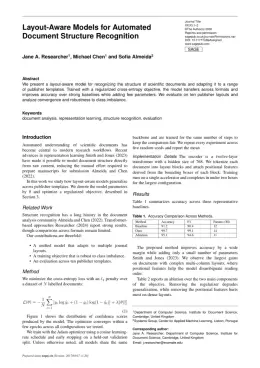
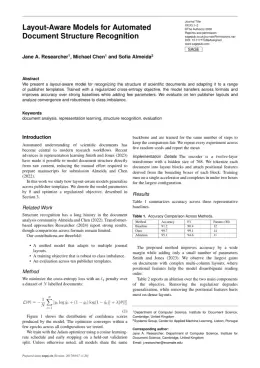
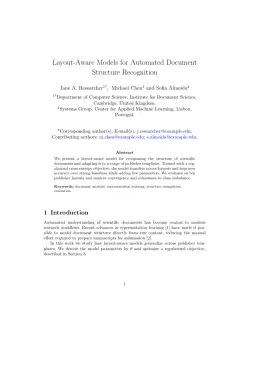
About the Exceptional Children format
Exceptional Children is a peer-reviewed journal published by SAGE, covering Disability Education and Employment, Family and Disability Support Research, Behavioral and Psychological Studies. Over its lifetime it has published 5,654 papers, which have received 147,067 citations.
| Publisher | SAGE |
|---|
| Reference style | Author–year (Harvard) Author–year — (Smith, 2023) in the text
Smith, A., Jones, B. and Lee, C. (2023) 'A representative article title', Exceptional Children, 12(3), pp. 45–58.
Formats any DOI in Exceptional Children style. No sign-up.
|
|---|
| Publishes research in | Disability Education and Employment Family and Disability Support Research Behavioral and Psychological Studies Human auditory perception and evaluation Collaborative Teaching and Inclusion |
|---|
| ISSN | 0014-4029 |
|---|
| Citation impact (2-yr) | 2.22 |
|---|
| h-index | 168 |
|---|
| i10-index | 1,941 |
|---|
| Top institutions publishing here | Vanderbilt University |
|---|
| Journal website | www.sagepub.com |
|---|
| You get | A submission-ready PDF and the editable LaTeX source — ready to submit. |
|---|
Papers published in Exceptional Children per year
Citation impact of Exceptional Children by publication year
Citations each year’s papers have accumulated so far — the most recent years are still building up.
Most-cited papers in Exceptional Children
The Use of Single-Subject Research to Identify Evidence-Based Practice in Special Education
Robert H. Horner, Edward G. Carr, James W. Halle et al. · 1 Jan 2005
Single-subject research plays an important role in the development of evidence-based practice in special education. The defining features of single-subject research are presented, the contributions of single-subject research for special education are reviewed, and a specific proposal is offered for using single-subject research to document evidence-based practice. This article allows readers to determine if a…
Qualitative Studies in Special Education
Ellen Brantlinger, Robert T. Jiménez, Janette K. Klingner et al. · 1 Jan 2005
An overview of the many types of studies that fall into the qualitative design genre is provided. Strategies that qualitative researchers use to establish the authors' studies as credible and trustworthy are listed and defined. So that readers will recognize the important contribution qualitative studies have made in the field of special education, a range…
Curriculum-Based Measurement: The Emerging Alternative
Stanley L. Deno · 1 Nov 1985
Despite general agreement that we should routinely assess the student performance outcomes of instruction, general agreement regarding how this should be done does not exist. Commercially distributed achievement tests are not always congruent with curriculum objectives and teachers tend not to value the information obtained from them. Informal observation of performance is the approach used…
Special Education for the Mildly Retarded—Is Much of it Justifiable?
Lloyd M. Dunn · 1 Sep 1968
In lieu of an abstract to this article, I would like to preface it by saying this is my swan song for now—as I leave special education and this country for probably the next two years. I have been honored to be a past president of The Council for Exceptional Children. I have loyally supported…
Quality Indicators for Group Experimental and Quasi-Experimental Research in Special Education
Russell Gersten, Lynn S. Fuchs, Donald L. Compton et al. · 1 Jan 2005
This article presents quality indicators for experimental and quasi-experimental studies for special education. These indicators are intended not only to evaluate the merits of a completed research report or article but also to serve as an organizer of critical issues for consideration in research. We believe these indicators can be used widely, from assisting in…