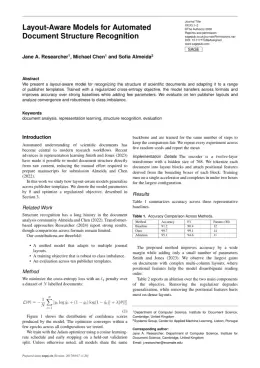
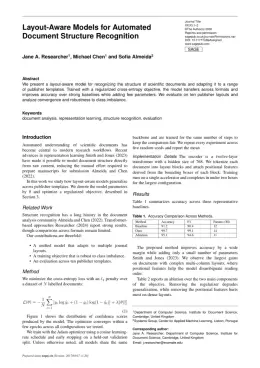
About the Journal of Applied Gerontology format
Journal of Applied Gerontology is a peer-reviewed journal published by SAGE, covering Geriatric Care and Nursing Homes, Health disparities and outcomes, Intergenerational Family Dynamics and Caregiving. Over its lifetime it has published 3,255 papers, which have received 54,657 citations.
| Publisher | SAGE |
|---|
| Reference style | Author–year (Harvard) Author–year — (Smith, 2023) in the text
Smith, A., Jones, B. and Lee, C. (2023) 'A representative article title', Journal of Applied Gerontology, 12(3), pp. 45–58.
Formats any DOI in Journal of Applied Gerontology style. No sign-up.
|
|---|
| Publishes research in | Geriatric Care and Nursing Homes Health disparities and outcomes Intergenerational Family Dynamics and Caregiving Dementia and Cognitive Impairment Research Aging and Gerontology Research |
|---|
| ISSN | 0733-4648 |
|---|
| Citation impact (2-yr) | 1.62 |
|---|
| h-index | 93 |
|---|
| i10-index | 1,351 |
|---|
| Top institutions publishing here | Johns Hopkins University |
|---|
| Journal website | journals.sagepub.com |
|---|
| You get | A submission-ready PDF and the editable LaTeX source — ready to submit. |
|---|
Papers published in Journal of Applied Gerontology per year
Citation impact of Journal of Applied Gerontology by publication year
Citations each year’s papers have accumulated so far — the most recent years are still building up.
Most-cited papers in Journal of Applied Gerontology
Older Adults’ Internet Use for Health Information: Digital Divide by Race/Ethnicity and Socioeconomic Status
Hyunwoo Yoon, Yuri Jang, Phillip W. Vaughan et al. · 16 Apr 2018
Building upon literature suggesting low Internet use among racial/ethnic minorities and socioeconomically disadvantaged groups, this study examined how race/ethnicity and socioeconomic status (SES) influence the Internet use for health information, addressing both independent and interactive effects. Using data from 17,704 older adults in the California Health Interview Survey, logistic regression models were estimated with race/ethnicity…
Can Digital Technology Enhance Social Connectedness Among Older Adults? A Feasibility Study
Bárbara Barbosa Neves, Rachel L. Franz, Rebecca A. Judges et al. · 22 Nov 2017
This study examined the feasibility of a novel communication technology to enhance social connectedness among older adults in residential care. Research suggests that technology can create opportunities for social connectedness, helping alleviate social isolation and loneliness. Studies on implementation and feasibility of such technological interventions, particularly among frail and institutionalized older adults, are scant. Data…
Ageism: A Threat to “Aging Well” in the 21st Century
Jocelyn Angus, Patricia A. Reeve · 1 Mar 2006
At the beginning of the 21st century, the new mantra—“successful” and “resourceful” aging—is used interchangeably and intoned often unreflectively by a society eager to find ways to reduce aged-related losses. Yet despite numerous empirical studies and public health promotion strategies directed at ways of aging well, negative images of aging have an enduring vitality. This…
The Life Space Questionnaire: A Measure of the Extent of Mobility of Older Adults
Beth T. Stalvey, Cynthia Owsley, Michael E. Sloane et al. · 1 Dec 1999
Mobility in older adults is typically discussed in terms of component maneuvers including analy sis of gait and postural instability; activities that depend on mobility such as bathing, dressing, or shopping; or adverse events during mobility such as falls or motor vehicle crashes. None of these approaches reflects a key aspect of mobility-the extent of…
Stress, Social Support, and Burnout Among Long-Term Care Nursing Staff
Erin L. Woodhead, Lynn Northrop, Barry A. Edelstein · 6 Aug 2014
Long-term care nursing staff are subject to considerable occupational stress and report high levels of burnout, yet little is known about how stress and social support are associated with burnout in this population. The present study utilized the job demands-resources model of burnout to examine relations between job demands (occupational and personal stress), job resources…