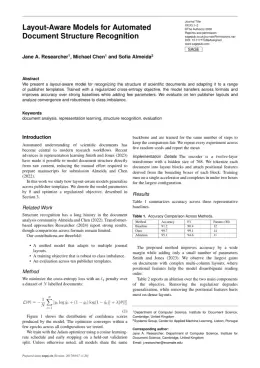
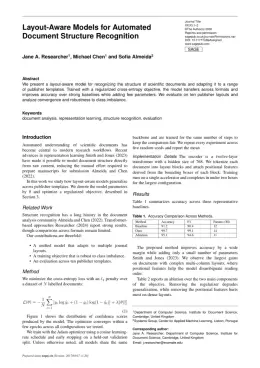
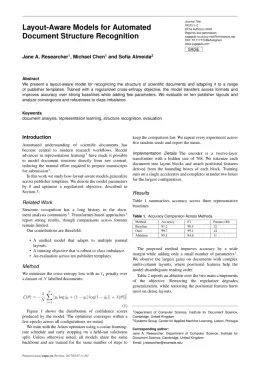
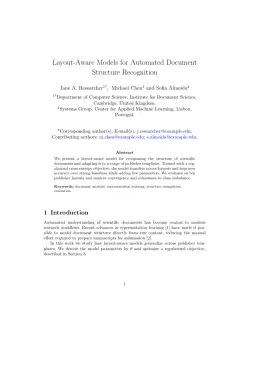
About the Journal of Marketing format
Journal of Marketing is a peer-reviewed journal published by SAGE, covering Management and Marketing Education, Consumer Behavior in Brand Consumption and Identification, Marketing and Advertising Strategies. Over its lifetime it has published 15,184 papers, which have received 1,289,149 citations.
| Publisher | SAGE |
|---|
| Reference style | Author–year (Harvard) Author–year — (Smith, 2023) in the text
Smith, A., Jones, B. and Lee, C. (2023) 'A representative article title', Journal of Marketing, 12(3), pp. 45–58.
Formats any DOI in Journal of Marketing style. No sign-up.
|
|---|
| Publishes research in | Management and Marketing Education Consumer Behavior in Brand Consumption and Identification Marketing and Advertising Strategies Consumer Market Behavior and Pricing Digital Marketing and Social Media |
|---|
| ISSN | 0022-2429 |
|---|
| Citation impact (2-yr) | 6.21 |
|---|
| h-index | 530 |
|---|
| i10-index | 4,400 |
|---|
| Top institutions publishing here | College of Business Administration |
|---|
| Journal website | us.sagepub.com |
|---|
| You get | A submission-ready PDF and the editable LaTeX source — ready to submit. |
|---|
Papers published in Journal of Marketing per year
Citation impact of Journal of Marketing by publication year
Citations each year’s papers have accumulated so far — the most recent years are still building up.
Most-cited papers in Journal of Marketing
The Competitive Advantage of Nations
Terry Clark, Michael Porter · 1 Oct 1991
The Need for a New Paradigm - PART I: FOUNDATIONS - The Competitive Advantage of Firms in Global Industries - Determinants of National Competitive Advantage - The Dynamics of National Advantage - PART II: INDUSTRIES - Four Studies in National Competitive Advantage - National Competitive Advantage in Services - PART III: NATIONS - Patterns of…
The Commitment-Trust Theory of Relationship Marketing
Robert M. Morgan, Shelby D. Hunt · 1 Jul 1994
Relationship marketing—establishing, developing, and maintaining successful relational exchanges—constitutes a major shift in marketing theory and practice. After conceptualizing relationship marketing and discussing its ten forms, the authors (1) theorize that successful relationship marketing requires relationship commitment and trust, (2) model relationship commitment and trust as key mediating variables, (3) test this key mediating variable model…
A Conceptual Model of Service Quality and Its Implications for Future Research
A. Parasuraman, Valarie A. Zeithaml, Leonard L. Berry · 1 Jan 1985
The attainment of quality in products and services has become a pivotal concern of the 1980s. While quality in tangible goods has been described and measured by marketers, quality in services is largely undefined and unresearched. The authors attempt to rectify this situation by reporting the insights obtained in an extensive exploratory investigation of quality…
Evolving to a New Dominant Logic for Marketing
Stephen L. Vargo, Robert F. Lusch · 22 Dec 2003
Marketing inherited a model of exchange from economics, which had a dominant logic based on the exchange of “goods,” which usually are manufactured output. The dominant logic focused on tangible resources, embedded value, and transactions. Over the past several decades, new perspectives have emerged that have a revised logic focused on intangible resources, the cocreation…
Consumer Perceptions of Price, Quality, and Value: A Means-End Model and Synthesis of Evidence
Valarie A. Zeithaml · 1 Jul 1988
Evidence from past research and insights from an exploratory investigation are combined in a conceptual model that defines and relates price, perceived quality, and perceived value. Propositions about the concepts and their relationships are presented, then supported with evidence from the literature. Discussion centers on directions for research and implications for managing price, quality, and…