SAGE

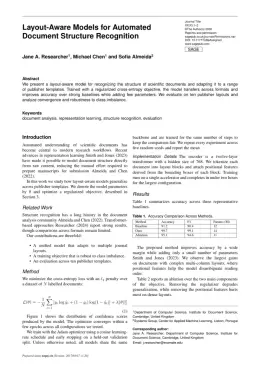
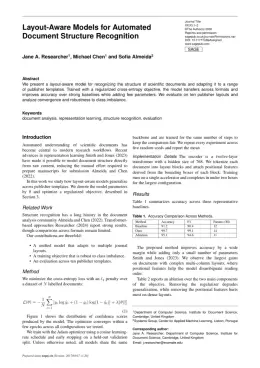
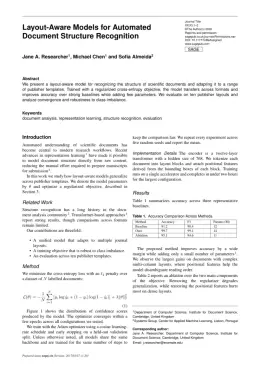
Complementary health practice review Template

Write in a clean editor, then format for Complementary health practice review in one click — DocuGuru applies the official SAGE template with author–year references and exports a submission-ready PDF plus the editable LaTeX source. Free to start.

About the Complementary health practice review format

Complementary health practice review is a peer-reviewed journal published by SAGE, covering Complementary and Alternative Medicine Studies, Empathy and Medical Education, Mindfulness and Compassion Interventions.

PublisherSAGE
Reference styleAuthor–year (Harvard)
Author–year — (Smith, 2023) in the text
Smith, A., Jones, B. and Lee, C. (2023) 'A representative article title', Complementary health practice review, 12(3), pp. 45–58.

Formats any DOI in Complementary health practice review style. No sign-up.

Publishes research inComplementary and Alternative Medicine Studies Empathy and Medical Education Mindfulness and Compassion Interventions Herbal Medicine Research Studies Phytochemistry Medicinal Plant Applications
ISSN1533-2101
h-index30
i10-index67
Total citations4,212
Top institutions publishing hereUnion College
You getA submission-ready PDF and the editable LaTeX source — ready to submit.

Papers published in Complementary health practice review per year

24
2000
95
2001
11
2002
35
2003
34
2004
20
2005
22
2006
21
2007
11
2008
12
2009
15
2010
1
2016

Citation impact of Complementary health practice review by publication year

33
2000
94
2001
60
2002
189
2003
340
2004
150
2005
361
2006
1.1K
2007
477
2008
457
2009
452
2010
1
2016

Citations each year’s papers have accumulated so far — the most recent years are still building up.

Most-cited papers in Complementary health practice review

Mindfulness Meditation May Lessen Anxiety, Promote Social Skills, and Improve Academic Performance Among Adolescents With Learning Disabilities

James Beauchemin, Tiffany Hutchins, Fiona M. Patterson · 18 Dec 2007

Students with learning disabilities (LD; defined by compromised academic performance) often have higher levels of anxiety, school-related stress, and less optimal social skills compared with their typically developing peers. Previous health research indicates that meditation and relaxation training may be effective in reducing anxiety and promoting social skills. This pilot study used a pre—post no-control…

Mechanisms of Action in the Inverse Relationship Between Mindfulness and Psychological Distress

Kimberly A. Coffey, Marilyn Hartman · 1 Apr 2008

Both dispositional mindfulness and mindfulness-based interventions have been found to be associated with less psychological distress. The current study investigated three mechanisms by which mindfulness might exert its beneficial effects: emotion regulation, nonattachment, and reduced rumination. Correlational self-report data were collected from two independent, nonclinical samples of undergraduates. Structural equation modeling was then used to…

Mindfulness Research Update: 2008

Jeffrey M. Greeson · 1 Jan 2009

OBJECTIVE: To briefly review the effects of mindfulness on the mind, the brain, the body, and behavior. METHODS: Selective review of MEDLINE, PsycINFO, and Google Scholar databases (2003-2008) using the terms "mindfulness", "meditation", "mental health", "physical health", "quality of life", and "stress reduction." A total of 52 exemplars of empirical and theoretical work were selected…

Health Benefits of Animal-Assisted Interventions

Michele L. Morrison · 1 Jan 2007

The use of animals in the promotion or improvement of health is long-standing, yet this complementary healing modality is not widely integrated into mainstream health care. This article describes the history of animals in therapeutic healing, defines animal-assisted interventions (AAIs), and reviews current research. Indications and contraindications for use with patients and clients and issues…

Mind-Body Interventions to Reduce Risk for Health Disparities Related to Stress and Strength Among African American Women: The Potential of Mindfulness-Based Stress Reduction, Loving-Kindness, and the NTU Therapeutic Framework

Cheryl L. Woods‐Giscombé, Angela Rose Black · 1 Oct 2010

In the current article, the authors examine the potential role of mind-body interventions for preventing or reducing health disparities in a specific group-African American women. The authors first discuss how health disparities affect this group, including empirical evidence regarding the influence of biopsychosocial processes (e.g., psychological stress and social context) on disparate health outcomes. They…

Complementary health practice review template — frequently asked questions

How do I write a paper in the Complementary health practice review format?
In DocuGuru you write your manuscript in a normal editor — no LaTeX setup required — and select the Complementary health practice review template. When you export, DocuGuru compiles the paper into the official SAGE format and hands you a submission-ready PDF along with the editable LaTeX source.
What reference style does Complementary health practice review use?
Complementary health practice review uses Author–year (Harvard) references, shown as author–year markers such as (Smith, 2023) in the text. DocuGuru formats every in-text citation and the reference list in this exact style automatically. A reference appears like this: Smith, A., Jones, B. and Lee, C. (2023) 'A representative article title', Complementary health practice review, 12(3), pp. 45–58.
Do I need to know LaTeX to submit to Complementary health practice review?
No. DocuGuru generates the sagej LaTeX class and compiles the PDF for you in the background, so you get a SAGE-ready Complementary health practice review document without writing any LaTeX. If you do want it, the LaTeX source is included in the export.
Can I import an existing draft into the Complementary health practice review template?
Yes. Paste or upload your current manuscript — Word, LaTeX, Markdown, or plain text — and DocuGuru reflows it into the Complementary health practice review format with correct headings, figures, tables, and author–year citations.
Who publishes Complementary health practice review?
Complementary health practice review is a multidisciplinary journal published by SAGE. DocuGuru's Complementary health practice review template matches SAGE's official submission format.
Can I export a submission-ready Complementary health practice review PDF?
Yes — DocuGuru produces a PDF built with the official Complementary health practice review template (the sagej class) that is ready to submit to SAGE, together with the matching LaTeX source files.
How much does the Complementary health practice review template cost?
You can start writing in the Complementary health practice review template for free. Exporting the final submission-ready Complementary health practice review PDF and LaTeX source is part of DocuGuru's paid plans — see the app for current pricing.

Use the Complementary health practice review template