SAGE

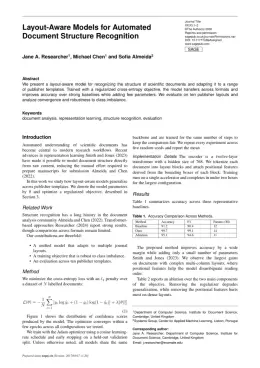
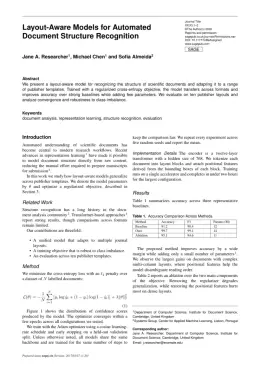
Cellular Polymers Template

Write in a clean editor, then format for Cellular Polymers in one click — DocuGuru applies the official SAGE template with author–year references and exports a submission-ready PDF plus the editable LaTeX source. Free to start.

About the Cellular Polymers format

Cellular Polymers is a peer-reviewed journal published by SAGE, covering Polymer Foaming and Composites, Polymer composites and self-healing, Human auditory perception and evaluation.

PublisherSAGE
Reference styleAuthor–year (Harvard)
Author–year — (Smith, 2023) in the text
Smith, A., Jones, B. and Lee, C. (2023) 'A representative article title', Cellular Polymers, 12(3), pp. 45–58.

Formats any DOI in Cellular Polymers style. No sign-up.

Publishes research inPolymer Foaming and Composites Polymer composites and self-healing Human auditory perception and evaluation Diverse Scientific and Economic Studies biodegradable polymer synthesis and properties
ISSN0262-4893
Citation impact (2-yr)1.83
h-index34
i10-index196
Total citations6,482
Top institutions publishing hereUniversité Laval
Journal websiteus.sagepub.com
You getA submission-ready PDF and the editable LaTeX source — ready to submit.

Papers published in Cellular Polymers per year

13
2014
14
2015
16
2016
17
2017
10
2018
15
2019
13
2020
16
2021
10
2022
11
2023
12
2024
6
2025

Citation impact of Cellular Polymers by publication year

90
2014
266
2015
147
2016
184
2017
87
2018
236
2019
147
2020
127
2021
60
2022
62
2023
29
2024
1
2025

Citations each year’s papers have accumulated so far — the most recent years are still building up.

Most-cited papers in Cellular Polymers

Handbook of Polypropylene and Polypropylene Composites

Harutun G. Karian · 1 Sep 1999

Growth in polypropylene usage as a cost effective replacement of engineering polymers polypropylene - structure, properties, applications chemical coupling agents for filled and GR-PP composites stabilization of flame retarded polypropylene effects of processing and microstructuring in recycled polypropylene and its blends impact behaviour of polypropylene, its blends and composites plastomers as polypropylene impact modifiers talc…

Design of a Fastener Based on Negative Poisson's Ratio Foam

J. B. Choi, R.S. Lakes · 1 May 1991

In this article we make use of the negative Poisson's ratio of recently developed cellular solids in the design of a press-fit fastener. Insertion of the fastener is facilitated by the lateral contraction which negative Poisson's ratio materials exhibit under compression. Removal of the fastener is resisted by the corre¬sponding elastic expansion under tension.

Current Issues and Challenges in Polypropylene Foaming: A Review

Abolfazl Mohebbi, Frej Mighri, Abdellah Ajji et al. · 1 Nov 2015

Thermoplastic foams have several advantages in comparison with unfoamed polymers such as lightweight, high strength to weight ratio, excellent insulation property, high thermal stability, high impact strength and toughness, as well as high fatigue life. These outstanding properties lead cellular plastics to various industrial applications in packaging, automotive parts, absorbents, and sporting equipment. Nowadays, polypropylene…

Advances in Thermal Insulation of Extruded Polystyrene Foams

Cameron Vo, Friedhelm Bunge, John J. Duffy et al. · 1 May 2011

Since their discovery in the early 40's extruded polystyrene foams (XPS) have been produced with various organic and inorganic blowing agents, and are now widely used as thermal insulators in building and construction. Blowing agent regulations have forced foam suppliers to look for new polymer - blowing agent - additive combinations. These must deliver high…

Mechanical Performance of Auxetic Polyurethane Foam for Antivibration Glove Applications

Fabrizio Scarpa, Joseph Giacomin, Y Zhang et al. · 1 Sep 2005

In this study the static and dynamic characteristics of conventional open cell polyurethane (PU), of auxetic (negative Poisson's ratio) and of iso-density foams were analysed. The specimens were produced from conventional gray open-cells polyurethane foam with 30–35 pores/inch and 0.0027 g/cm 3 density, by means of process which has been previously defined by the authors.…

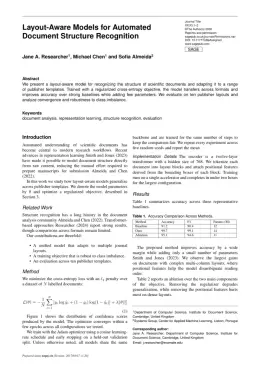
Cellular Polymers template — frequently asked questions

How do I write a paper in the Cellular Polymers format?
In DocuGuru you write your manuscript in a normal editor — no LaTeX setup required — and select the Cellular Polymers template. When you export, DocuGuru compiles the paper into the official SAGE format and hands you a submission-ready PDF along with the editable LaTeX source.
What reference style does Cellular Polymers use?
Cellular Polymers uses Author–year (Harvard) references, shown as author–year markers such as (Smith, 2023) in the text. DocuGuru formats every in-text citation and the reference list in this exact style automatically. A reference appears like this: Smith, A., Jones, B. and Lee, C. (2023) 'A representative article title', Cellular Polymers, 12(3), pp. 45–58.
Do I need to know LaTeX to submit to Cellular Polymers?
No. DocuGuru generates the sagej LaTeX class and compiles the PDF for you in the background, so you get a SAGE-ready Cellular Polymers document without writing any LaTeX. If you do want it, the LaTeX source is included in the export.
Can I import an existing draft into the Cellular Polymers template?
Yes. Paste or upload your current manuscript — Word, LaTeX, Markdown, or plain text — and DocuGuru reflows it into the Cellular Polymers format with correct headings, figures, tables, and author–year citations.
Who publishes Cellular Polymers?
Cellular Polymers is a multidisciplinary journal published by SAGE. DocuGuru's Cellular Polymers template matches SAGE's official submission format.
Can I export a submission-ready Cellular Polymers PDF?
Yes — DocuGuru produces a PDF built with the official Cellular Polymers template (the sagej class) that is ready to submit to SAGE, together with the matching LaTeX source files.
How much does the Cellular Polymers template cost?
You can start writing in the Cellular Polymers template for free. Exporting the final submission-ready Cellular Polymers PDF and LaTeX source is part of DocuGuru's paid plans — see the app for current pricing.
Use the Cellular Polymers template