
3,696 citations
Cite
SaveGo to paper →
SAGE
British Journal of Occupational Therapy Template
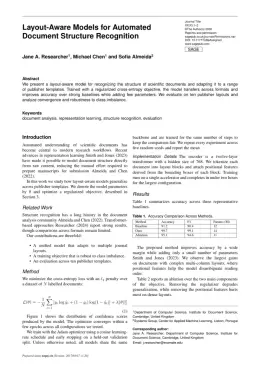
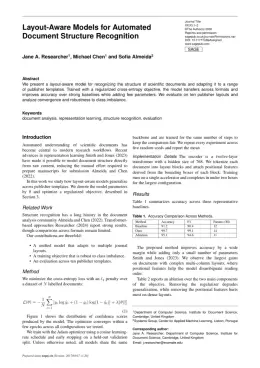
Write in a clean editor, then format for British Journal of Occupational Therapy in one click — DocuGuru applies the official SAGE template with author–year references and exports a submission-ready PDF plus the editable LaTeX source. Free to start.
About the British Journal of Occupational Therapy format
British Journal of Occupational Therapy is a peer-reviewed journal published by SAGE, covering Occupational Therapy Practice and Research, Cerebral Palsy and Movement Disorders, Diverse Scientific and Economic Studies.
| Publisher | SAGE |
|---|---|
| Reference style | Author–year (Harvard) Author–year — (Smith, 2023) in the text Smith, A., Jones, B. and Lee, C. (2023) 'A representative article title', British Journal of Occupational Therapy, 12(3), pp. 45–58.
Formats any DOI in British Journal of Occupational Therapy style. No sign-up. |
| Publishes research in | Occupational Therapy Practice and Research Cerebral Palsy and Movement Disorders Diverse Scientific and Economic Studies Human auditory perception and evaluation Stroke Rehabilitation and Recovery |
| ISSN | 0308-0226 |
| Citation impact (2-yr) | 1.03 |
| h-index | 71 |
| i10-index | 1,526 |
| Total citations | 53,679 |
| Top institutions publishing here | The University of Queensland |
| Journal website | us.sagepub.com |
| You get | A submission-ready PDF and the editable LaTeX source — ready to submit. |
Papers published in British Journal of Occupational Therapy per year
Citation impact of British Journal of Occupational Therapy by publication year
Citations each year’s papers have accumulated so far — the most recent years are still building up.
Most-cited papers in British Journal of Occupational Therapy
The Delphi technique is one type of research methodology that is growing in popularity. This paper introduces this technique to therapists searching for a user-friendly method of conducting research. The Delphi process is explained and several issues that the researcher must consider are presented. These issues include the identification of participants and the number of…
520 citations
Cite
SaveGo to paper →
Occupational deprivation is a relatively new term which describes a state in which people are precluded from opportunities to engage in occupations of meaning due to factors outside their control. As we face the new millennium, it seems likely that, due to widespread social and economic change as well as increasing civil unrest, occupational deprivation…
466 citations
Cite
SaveGo to paper →
This article explains how reflexivity offers us a way to turn the problem of subjectivity in research into an opportunity. Examples of personal reflexivity, in the form of subjective analysis of some research encounters which have occurred during my own research, are presented to illustrate how the reflexive process can unfold new understandings. The discussion…
232 citations
Cite
SaveGo to paper →
Qualitative researchers contest and reject the criteria used by quantitative researchers when evaluating their work: those of reliability, validity and generalisability. Instead, qualitative researchers have developed alternative criteria responsive to their specific research ideals. These criteria encompass various dimensions of ‘rigour’, ‘ethical integrity’ and ‘artistry’. This article attempts to show something of the range of…
214 citations
Cite
SaveGo to paper →
Related journal templates
British Journal of Occupational Therapy template — frequently asked questions
How do I write a paper in the British Journal of Occupational Therapy format?
In DocuGuru you write your manuscript in a normal editor — no LaTeX setup required — and select the British Journal of Occupational Therapy template. When you export, DocuGuru compiles the paper into the official SAGE format and hands you a submission-ready PDF along with the editable LaTeX source.
What reference style does British Journal of Occupational Therapy use?
British Journal of Occupational Therapy uses Author–year (Harvard) references, shown as author–year markers such as (Smith, 2023) in the text. DocuGuru formats every in-text citation and the reference list in this exact style automatically. A reference appears like this: Smith, A., Jones, B. and Lee, C. (2023) 'A representative article title', British Journal of Occupational Therapy, 12(3), pp. 45–58.
Do I need to know LaTeX to submit to British Journal of Occupational Therapy?
No. DocuGuru generates the sagej LaTeX class and compiles the PDF for you in the background, so you get a SAGE-ready British Journal of Occupational Therapy document without writing any LaTeX. If you do want it, the LaTeX source is included in the export.
Can I import an existing draft into the British Journal of Occupational Therapy template?
Yes. Paste or upload your current manuscript — Word, LaTeX, Markdown, or plain text — and DocuGuru reflows it into the British Journal of Occupational Therapy format with correct headings, figures, tables, and author–year citations.
Who publishes British Journal of Occupational Therapy?
British Journal of Occupational Therapy is a multidisciplinary journal published by SAGE. DocuGuru's British Journal of Occupational Therapy template matches SAGE's official submission format.
Can I export a submission-ready British Journal of Occupational Therapy PDF?
Yes — DocuGuru produces a PDF built with the official British Journal of Occupational Therapy template (the sagej class) that is ready to submit to SAGE, together with the matching LaTeX source files.
How much does the British Journal of Occupational Therapy template cost?
You can start writing in the British Journal of Occupational Therapy template for free. Exporting the final submission-ready British Journal of Occupational Therapy PDF and LaTeX source is part of DocuGuru's paid plans — see the app for current pricing.