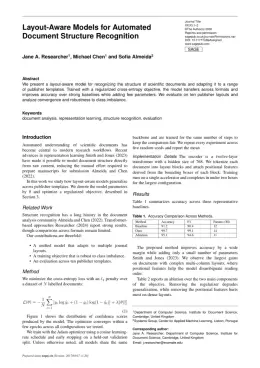
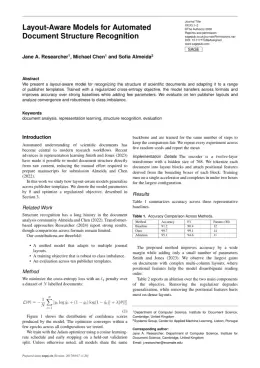
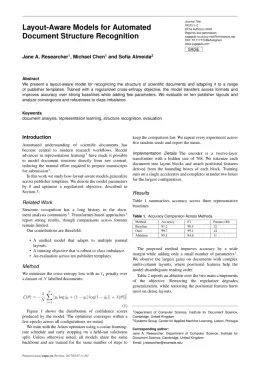
About the Journal of Psychopharmacology format
Journal of Psychopharmacology is a peer-reviewed journal published by SAGE, covering Neurotransmitter Receptor Influence on Behavior, Schizophrenia research and treatment, Treatment of Major Depression. Over its lifetime it has published 4,678 papers, which have received 179,045 citations.
| Publisher | SAGE |
|---|
| Reference style | Author–year (Harvard) Author–year — (Smith, 2023) in the text
Smith, A., Jones, B. and Lee, C. (2023) 'A representative article title', Journal of Psychopharmacology, 12(3), pp. 45–58.
Formats any DOI in Journal of Psychopharmacology style. No sign-up.
|
|---|
| Publishes research in | Neurotransmitter Receptor Influence on Behavior Schizophrenia research and treatment Treatment of Major Depression Neuroscience and Neuropharmacology Research Psychedelics and Drug Studies |
|---|
| ISSN | 0269-8811 |
|---|
| Citation impact (2-yr) | 4.07 |
|---|
| h-index | 169 |
|---|
| i10-index | 2,914 |
|---|
| Top institutions publishing here | King's College London |
|---|
| Journal website | www.uk.sagepub.com |
|---|
| You get | A submission-ready PDF and the editable LaTeX source — ready to submit. |
|---|
Papers published in Journal of Psychopharmacology per year
Citation impact of Journal of Psychopharmacology by publication year
Citations each year’s papers have accumulated so far — the most recent years are still building up.
Most-cited papers in Journal of Psychopharmacology
Psilocybin produces substantial and sustained decreases in depression and anxiety in patients with life-threatening cancer: A randomized double-blind trial
Roland R. Griffiths, Matthew W. Johnson, Michael A. Carducci et al. · 30 Nov 2016
Cancer patients often develop chronic, clinically significant symptoms of depression and anxiety. Previous studies suggest that psilocybin may decrease depression and anxiety in cancer patients. The effects of psilocybin were studied in 51 cancer patients with life-threatening diagnoses and symptoms of depression and/or anxiety. This randomized, double-blind, cross-over trial investigated the effects of a very…
Rapid and sustained symptom reduction following psilocybin treatment for anxiety and depression in patients with life-threatening cancer: a randomized controlled trial
Stephen Ross, Anthony P. Bossis, Jeffrey Guss et al. · 30 Nov 2016
BACKGROUND: Clinically significant anxiety and depression are common in patients with cancer, and are associated with poor psychiatric and medical outcomes. Historical and recent research suggests a role for psilocybin to treat cancer-related anxiety and depression. METHODS: In this double-blind, placebo-controlled, crossover trial, 29 patients with cancer-related anxiety and depression were randomly assigned and received…
Evidence-based guidelines for treating bipolar disorder: Revised third edition recommendations from the British Association for Psychopharmacology
GM Goodwin, Peter Haddad, I. Nicol Ferrier et al. · 15 Mar 2016
The British Association for Psychopharmacology guidelines specify the scope and targets of treatment for bipolar disorder. The third version is based explicitly on the available evidence and presented, like previous Clinical Practice Guidelines, as recommendations to aid clinical decision making for practitioners: it may also serve as a source of information for patients and carers,…
Human hallucinogen research: guidelines for safety
MW Johnson, WA Richards, R. R. Griffiths · 30 May 2008
There has recently been a renewal of human research with classical hallucinogens (psychedelics). This paper first briefly discusses the unique history of human hallucinogen research, and then reviews the risks of hallucinogen administration and safeguards for minimizing these risks. Although hallucinogens are relatively safe physiologically and are not considered drugs of dependence, their administration involves…
Psilocybin-assisted treatment for alcohol dependence: A proof-of-concept study
Michael P. Bogenschutz, Alyssa A. Forcehimes, Jessica A. Pommy et al. · 13 Jan 2015
UNLABELLED: Several lines of evidence suggest that classic (5HT2A agonist) hallucinogens have clinically relevant effects in alcohol and drug addiction. Although recent studies have investigated the effects of psilocybin in various populations, there have been no studies on the efficacy of psilocybin for alcohol dependence. We conducted a single-group proof-of-concept study to quantify acute effects…