SAGE

Advances in Structural Engineering Template

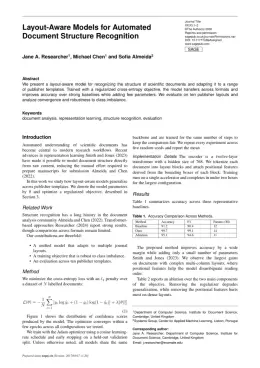
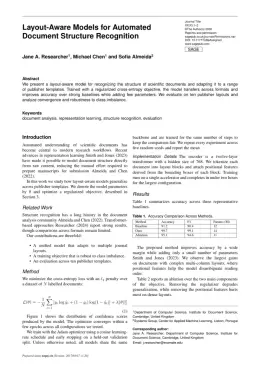
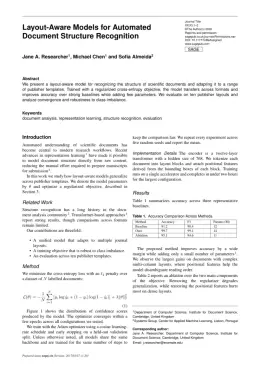
Write in a clean editor, then format for Advances in Structural Engineering in one click — DocuGuru applies the official SAGE template with author–year references and exports a submission-ready PDF plus the editable LaTeX source. Free to start.

About the Advances in Structural Engineering format

Advances in Structural Engineering is a peer-reviewed journal published by SAGE, covering Structural Behavior of Reinforced Concrete, Structural Load-Bearing Analysis, Seismic Performance and Analysis.

PublisherSAGE
Reference styleAuthor–year (Harvard)
Author–year — (Smith, 2023) in the text
Smith, A., Jones, B. and Lee, C. (2023) 'A representative article title', Advances in Structural Engineering, 12(3), pp. 45–58.

Formats any DOI in Advances in Structural Engineering style. No sign-up.

Publishes research inStructural Behavior of Reinforced Concrete Structural Load-Bearing Analysis Seismic Performance and Analysis Structural Health Monitoring Techniques Structural Engineering and Vibration Analysis
ISSN1369-4332
Citation impact (2-yr)2.19
h-index70
i10-index1,572
Total citations50,101
Top institutions publishing hereTongji University
Journal websiteus.sagepub.com
You getA submission-ready PDF and the editable LaTeX source — ready to submit.

Papers published in Advances in Structural Engineering per year

357
2014
126
2015
229
2016
155
2017
196
2018
251
2019
268
2020
183
2021
244
2022
162
2023
217
2024
216
2025

Citation impact of Advances in Structural Engineering by publication year

4.3K
2014
2.2K
2015
4.4K
2016
2.4K
2017
3.2K
2018
4.7K
2019
4.2K
2020
2K
2021
2.4K
2022
1.2K
2023
864
2024
257
2025

Citations each year’s papers have accumulated so far — the most recent years are still building up.

Most-cited papers in Advances in Structural Engineering

Review of the current practices in blast-resistant analysis and design of concrete structures

Hong Hao, Yifei Hao, Jun Li et al. · 5 Jul 2016

In contemporary society, industrialization and rising of terrorism threats highlight the necessity and importance of structural protection against accidental and intentionally malicious blast loads. Consequences of these extreme loading events are known to be catastrophic, involving personnel injuries and fatalities, economic loss and immeasurable social disruption. These impacts are generated not only from direct explosion…

Development and mechanical behaviour of ultra-high-performance seawater sea-sand concrete

Jinguang Teng, Yu Xiang, Tao Yu et al. · 3 Jul 2019

Ultra-high-performance concrete is typically defined as an advanced cementitious material that has a compressive strength of over 150 MPa and superior durability. This article presents the development of a new type of ultra-high-performance concrete, namely, ultra-high-performance seawater sea-sand concrete. The development of ultra-high-performance seawater sea-sand concrete addresses the challenges associated with the shortage of freshwater,…

Quality Assessment of Unmanned Aerial Vehicle (UAV) Based Visual Inspection of Structures

Guido Morgenthal, Norman Hallermann · 1 Mar 2014

This paper discusses the application of Unmanned Aerial Vehicles (UAV) for visual inspection and damage detection on civil structures. The quality of photos and videos taken by using such airborne vehicles is strongly influenced by numerous parameters such as lighting conditions, distance to the object and vehicle motion induced by environmental effects. Whilst such devices…

Axial Loading Behavior of CFRP Strengthened Concrete-Filled Steel Tubular Stub Columns

Zhong Tao, Lin‐Hai Han, Jinping Zhuang · 1 Feb 2007

This paper presents the axial compression test results of concrete-filled steel tubular (CFST) stub columns strengthened with carbon fiber reinforced polymer (CFRP) composites. Both circular and rectangular specimens were tested to investigate the retrofitting effects of CFRP composites on them. The test results showed that the CFRP jackets enhanced the load bearing capacity of the…

State-of-the-art review on bridge weigh-in-motion technology

Yang Yu, C.S. Cai, Lu Deng · 23 Jun 2016

Weigh-in-motion technology is an effective tool that has been extensively used to monitor traffic on highways. Pavement-based weigh-in-motion systems usually have poor durability and will cause traffic interruption during their installation and maintenance process. The recently developed bridge weigh-in-motion technology provides a more convenient and cost-effective alternative to the pavement-based weigh-in-motion technology. Bridge weigh-in-motion systems…

Advances in Structural Engineering template — frequently asked questions

How do I write a paper in the Advances in Structural Engineering format?
In DocuGuru you write your manuscript in a normal editor — no LaTeX setup required — and select the Advances in Structural Engineering template. When you export, DocuGuru compiles the paper into the official SAGE format and hands you a submission-ready PDF along with the editable LaTeX source.
What reference style does Advances in Structural Engineering use?
Advances in Structural Engineering uses Author–year (Harvard) references, shown as author–year markers such as (Smith, 2023) in the text. DocuGuru formats every in-text citation and the reference list in this exact style automatically. A reference appears like this: Smith, A., Jones, B. and Lee, C. (2023) 'A representative article title', Advances in Structural Engineering, 12(3), pp. 45–58.
Do I need to know LaTeX to submit to Advances in Structural Engineering?
No. DocuGuru generates the sagej LaTeX class and compiles the PDF for you in the background, so you get a SAGE-ready Advances in Structural Engineering document without writing any LaTeX. If you do want it, the LaTeX source is included in the export.
Can I import an existing draft into the Advances in Structural Engineering template?
Yes. Paste or upload your current manuscript — Word, LaTeX, Markdown, or plain text — and DocuGuru reflows it into the Advances in Structural Engineering format with correct headings, figures, tables, and author–year citations.
Who publishes Advances in Structural Engineering?
Advances in Structural Engineering is a multidisciplinary journal published by SAGE. DocuGuru's Advances in Structural Engineering template matches SAGE's official submission format.
Can I export a submission-ready Advances in Structural Engineering PDF?
Yes — DocuGuru produces a PDF built with the official Advances in Structural Engineering template (the sagej class) that is ready to submit to SAGE, together with the matching LaTeX source files.
How much does the Advances in Structural Engineering template cost?
You can start writing in the Advances in Structural Engineering template for free. Exporting the final submission-ready Advances in Structural Engineering PDF and LaTeX source is part of DocuGuru's paid plans — see the app for current pricing.

Use the Advances in Structural Engineering template