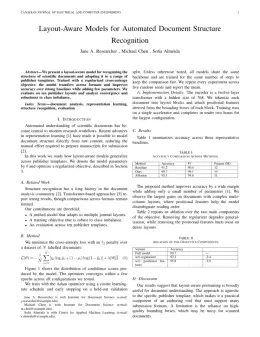
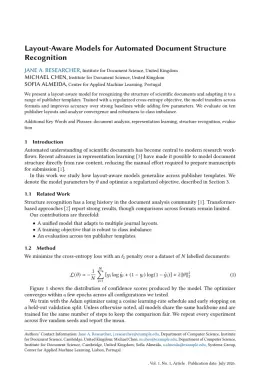
About the IEEE Vehicular Technology Magazine format
IEEE Vehicular Technology Magazine is a peer-reviewed journal published by IEEE, covering Diverse Scientific and Economic Studies, Vehicular Ad Hoc Networks (VANETs), Advanced MIMO Systems Optimization. Over its lifetime it has published 1,824 papers, which have received 42,140 citations.
| Publisher | IEEE |
|---|
| Reference style | Numbered (IEEE) Numbered — [1], [2] in the text
[1] A. Smith, B. Jones, and C. Lee, "A representative article title," IEEE Vehicular Technology Magazine, vol. 12, no. 3, pp. 45–58, 2023.
Formats any DOI in IEEE Vehicular Technology Magazine style. No sign-up.
|
|---|
| Abbreviation (ISO-4) | VTM |
|---|
| Publishes research in | Diverse Scientific and Economic Studies Vehicular Ad Hoc Networks (VANETs) Advanced MIMO Systems Optimization Human auditory perception and evaluation Educational Robotics and Engineering |
|---|
| ISSN | 1556-6072 |
|---|
| Citation impact (2-yr) | 4.09 |
|---|
| h-index | 94 |
|---|
| i10-index | 490 |
|---|
| Top institutions publishing here | University of Southampton |
|---|
| Journal website | ieeexplore.ieee.org |
|---|
| You get | A submission-ready PDF and the editable LaTeX source — ready to submit. |
|---|
Papers published in IEEE Vehicular Technology Magazine per year
Citation impact of IEEE Vehicular Technology Magazine by publication year
Citations each year’s papers have accumulated so far — the most recent years are still building up.
Most-cited papers in IEEE Vehicular Technology Magazine
6G Wireless Networks: Vision, Requirements, Architecture, and Key Technologies
Zhengquan Zhang, Yue Xiao, Zheng Ma et al. · 18 Jul 2019
A key enabler for the intelligent information society of 2030, 6G networks are expected to provide performance superior to 5G and satisfy emerging services and applications. In this article, we present our vision of what 6G will be and describe usage scenarios and requirements for multi-terabyte per second (Tb/s) and intelligent 6G networks. We present…
Single carrier FDMA for uplink wireless transmission
Hyung G. Myung, Junsung Lim, D.J. Goodman · 1 Sep 2006
Single carrier frequency division multiple access (SC FDMA), a modified form of orthogonal FDMA (OFDMA), is a promising technique for high data rate uplink communications in future cellular systems. SC-FDMA has similar throughput performance and essentially the same overall complexity as OFDMA. A principal advantage of SC-FDMA is the peak-to-average power ratio (PARR), which is…
Routing in vehicular ad hoc networks: A survey
Fan Li, Yu Wang · 1 Jan 2007
Vehicular ad hoc network (VANET) is an emerging new technology integrating ad hoc network, wireless LAN (WLAN) and cellular technology to achieve intelligent inter-vehicle communications and improve road traffic safety and efficiency. VANETs are distinguished from other kinds of ad hoc networks by their hybrid network architectures, node movement characteristics, and new application scenarios. Therefore,…
Intelligent Transportation Systems
George Dimitrakopoulos, Panagiotis Demestichas · 1 Mar 2010
The increasing need for mobility has brought about significant changes in transportation infrastructures. Inefficiencies cause enormous losses of time, decrease in the level of safety for both vehicles and pedestrians, high pollution, degradation of quality of life, and huge waste of nonrenewable fossil energy.The scope of this article is to introduce novel functionality for providing…
The Tactile Internet: Applications and Challenges
Gerhard Fettweis · 1 Mar 2014
Wireless communications today enables us to connect devices and people for an unprecedented exchange of multimedia and data content. The data rates of wireless communications continue to increase, mainly driven by innovation in electronics. Once the latency of communication systems becomes low enough to enable a round-trip delay from terminals through the network back to…