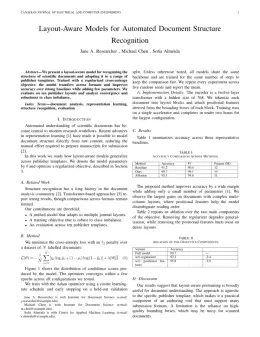
About the IEEE Transactions on Wireless Communications format
IEEE Transactions on Wireless Communications is a peer-reviewed journal published by IEEE, covering Advanced MIMO Systems Optimization, Cooperative Communication and Network Coding, Advanced Wireless Communication Techniques. Over its lifetime it has published 15,425 papers, which have received 685,001 citations.
| Publisher | IEEE |
|---|
| Reference style | Numbered (IEEE) Numbered — [1], [2] in the text
[1] A. Smith, B. Jones, and C. Lee, "A representative article title," IEEE Transactions on Wireless Communications, vol. 12, no. 3, pp. 45–58, 2023.
Formats any DOI in IEEE Transactions on Wireless Communications style. No sign-up.
|
|---|
| Abbreviation (ISO-4) | TWC |
|---|
| Publishes research in | Advanced MIMO Systems Optimization Cooperative Communication and Network Coding Advanced Wireless Communication Techniques Advanced Wireless Communication Technologies Wireless Communication Networks Research |
|---|
| ISSN | 1536-1276 |
|---|
| Citation impact (2-yr) | 7.29 |
|---|
| h-index | 299 |
|---|
| i10-index | 9,639 |
|---|
| Top institutions publishing here | Southeast University |
|---|
| Journal website | www.comsoc.org |
|---|
| You get | A submission-ready PDF and the editable LaTeX source — ready to submit. |
|---|
Papers published in IEEE Transactions on Wireless Communications per year
Citation impact of IEEE Transactions on Wireless Communications by publication year
Citations each year’s papers have accumulated so far — the most recent years are still building up.
Most-cited papers in IEEE Transactions on Wireless Communications
An application-specific protocol architecture for wireless microsensor networks
Wendi Heinzelman, Anantha P. Chandrakasan, Hari Balakrishnan · 1 Oct 2002
Networking together hundreds or thousands of cheap microsensor nodes allows users to accurately monitor a remote environment by intelligently combining the data from the individual nodes. These networks require robust wireless communication protocols that are energy efficient and provide low latency. We develop and analyze low-energy adaptive clustering hierarchy (LEACH), a protocol architecture for microsensor…
Noncooperative Cellular Wireless with Unlimited Numbers of Base Station Antennas
Thomas L. Marzetta · 8 Oct 2010
A cellular base station serves a multiplicity of single-antenna terminals over the same time-frequency interval. Time-division duplex operation combined with reverse-link pilots enables the base station to estimate the reciprocal forward- and reverse-link channels. The conjugate-transpose of the channel estimates are used as a linear precoder and combiner respectively on the forward and reverse links.…
Intelligent Reflecting Surface Enhanced Wireless Network via Joint Active and Passive Beamforming
Qingqing Wu, Rui Zhang · 23 Aug 2019
Intelligent reflecting surface (IRS) is a revolutionary and transformative technology for achieving spectrum and energy efficient wireless communication cost-effectively in the future. Specifically, an IRS consists of a large number of low-cost passive elements each being able to reflect the incident signal independently with an adjustable phase shift so as to collaboratively achieve three-dimensional (3D)…
Spatially Sparse Precoding in Millimeter Wave MIMO Systems
Omar El Ayach, Sridhar Rajagopal, Shadi Abu‐Surra et al. · 31 Jan 2014
Millimeter wave (mmWave) signals experience orders-of-magnitude more pathloss than the microwave signals currently used in most wireless applications and all cellular systems. MmWave systems must therefore leverage large antenna arrays, made possible by the decrease in wavelength, to combat pathloss with beamforming gain. Beamforming with multiple data streams, known as precoding, can be used to…
Sensing-Throughput Tradeoff for Cognitive Radio Networks
Ying‐Chang Liang, Yonghong Zeng, Edward Peh et al. · 1 Apr 2008
In a cognitive radio network, the secondary users are allowed to utilize the frequency bands of primary users when these bands are not currently being used. To support this spectrum reuse functionality, the secondary users are required to sense the radio frequency environment, and once the primary users are found to be active, the secondary…