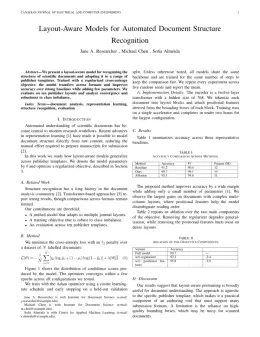
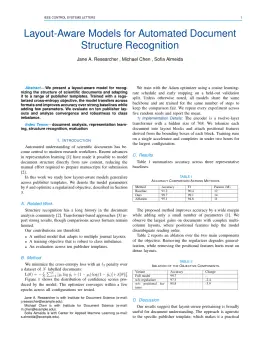
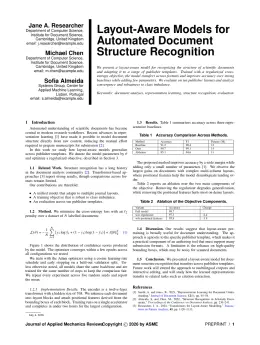
About the IEEE Wireless Communications Letters format
IEEE Wireless Communications Letters is a peer-reviewed journal published by IEEE, covering Advanced MIMO Systems Optimization, Advanced Wireless Communication Technologies, Cooperative Communication and Network Coding. Over its lifetime it has published 6,694 papers, which have received 134,933 citations.
| Publisher | IEEE |
|---|
| Reference style | Numbered (IEEE) Numbered — [1], [2] in the text
[1] A. Smith, B. Jones, and C. Lee, "A representative article title," IEEE Wireless Communications Letters, vol. 12, no. 3, pp. 45–58, 2023.
Formats any DOI in IEEE Wireless Communications Letters style. No sign-up.
|
|---|
| Abbreviation (ISO-4) | WCL |
|---|
| Publishes research in | Advanced MIMO Systems Optimization Advanced Wireless Communication Technologies Cooperative Communication and Network Coding Energy Harvesting in Wireless Networks Advanced Wireless Communication Techniques |
|---|
| ISSN | 2162-2337 |
|---|
| Citation impact (2-yr) | 3.67 |
|---|
| h-index | 134 |
|---|
| i10-index | 2,829 |
|---|
| Top institutions publishing here | Southeast University |
|---|
| Journal website | ieeexplore.ieee.org |
|---|
| You get | A submission-ready PDF and the editable LaTeX source — ready to submit. |
|---|
Papers published in IEEE Wireless Communications Letters per year
Citation impact of IEEE Wireless Communications Letters by publication year
Citations each year’s papers have accumulated so far — the most recent years are still building up.
Most-cited papers in IEEE Wireless Communications Letters
Optimal LAP Altitude for Maximum Coverage
Akram Al‐Hourani, Sithamparanathan Kandeepan, Simon Lardner · 24 Jul 2014
Low-altitude aerial platforms (LAPs) have recently gained significant popularity as key enablers for rapid deployable relief networks where coverage is provided by onboard radio heads. These platforms are capable of delivering essential wireless communication for public safety agencies in remote areas or during the aftermath of natural disasters. In this letter, we present an analytical…
Power of Deep Learning for Channel Estimation and Signal Detection in OFDM Systems
Hao Ye, Geoffrey Ye Li, Biing‐Hwang Juang · 28 Sep 2017
This letter presents our initial results in deep learning for channel estimation and signal detection in orthogonal frequency-division multiplexing (OFDM) systems. In this letter, we exploit deep learning to handle wireless OFDM channels in an end-to-end manner. Different from existing OFDM receivers that first estimate channel state information (CSI) explicitly and then detect/recover the transmitted…
Deep Learning for Massive MIMO CSI Feedback
Chao-Kai Wen, Wan-Ting Shih, Shi Jin · 22 Mar 2018
In frequency division duplex mode, the downlink channel state information (CSI) should be sent to the base station through feedback links so that the potential gains of a massive multiple-input multiple-output can be exhibited. However, such a transmission is hindered by excessive feedback overhead. In this letter, we use deep learning technology to develop CsiNet,…
Secure Wireless Communication via Intelligent Reflecting Surface
Miao Cui, Guangchi Zhang, Rui Zhang · 28 May 2019
An intelligent reflecting surface (IRS) can adaptively adjust the phase shifts of its reflecting units to strengthen the desired signal and/or suppress the undesired signal. In this letter, we investigate an IRS-aided secure wireless communication system where a multi-antenna access point (AP) sends confidential messages to a single-antenna user in the presence of a single-antenna…
Intelligent Reflecting Surface Versus Decode-and-Forward: How Large Surfaces are Needed to Beat Relaying?
Emil Bjornson, Ozgecan Ozdogan, Erik G. Larsson · 31 Oct 2019
The rate and energy efficiency of wireless channels can be improved by deploying software-controlled metasurfaces to reflect signals from the source to the destination, especially when the direct path is weak. While previous works mainly optimized the reflections, this letter compares the new technology with classic decode-and-forward (DF) relaying. The main observation is that very…