IEEE

IEEE Transactions on Computational Biology and Bioinformatics Template

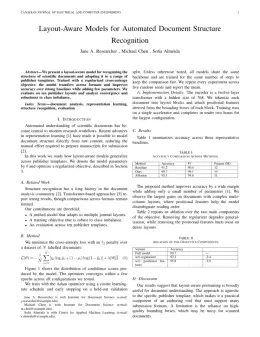
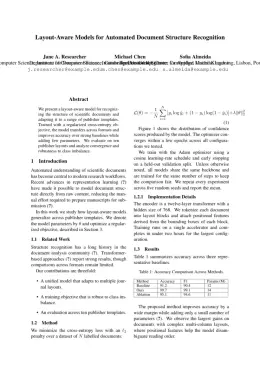
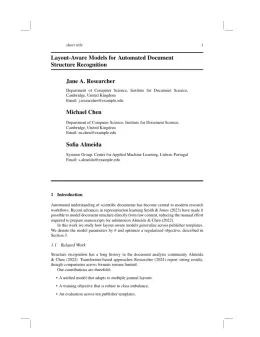
Write in a clean editor, then format for IEEE Transactions on Computational Biology and Bioinformatics in one click — DocuGuru applies the official IEEE template with numbered references and exports a submission-ready PDF plus the editable LaTeX source. Free to start.

About the IEEE Transactions on Computational Biology and Bioinformatics format

IEEE Transactions on Computational Biology and Bioinformatics is a peer-reviewed journal published by IEEE, covering Bioinformatics and Genomic Networks, Machine Learning in Bioinformatics, Computational Drug Discovery Methods. Over its lifetime it has published 483 papers, which have received 516 citations.

PublisherIEEE
Reference styleNumbered (IEEE)
Numbered — [1], [2] in the text
[1] A. Smith, B. Jones, and C. Lee, "A representative article title," IEEE Transactions on Computational Biology and Bioinformatics, vol. 12, no. 3, pp. 45–58, 2023.

Formats any DOI in IEEE Transactions on Computational Biology and Bioinformatics style. No sign-up.

Abbreviation (ISO-4)TCBB
Publishes research inBioinformatics and Genomic Networks Machine Learning in Bioinformatics Computational Drug Discovery Methods Gene expression and cancer classification Single-cell and spatial transcriptomics
ISSN2998-4165
Citation impact (2-yr)1.07
h-index9
i10-index9
Top institutions publishing hereCentral South University
You getA submission-ready PDF and the editable LaTeX source — ready to submit.

Papers published in IEEE Transactions on Computational Biology and Bioinformatics per year

1
2018
23
2024
358
2025

Citation impact of IEEE Transactions on Computational Biology and Bioinformatics by publication year

1
2018
80
2024
432
2025

Citations each year’s papers have accumulated so far — the most recent years are still building up.

Most-cited papers in IEEE Transactions on Computational Biology and Bioinformatics

DeepHIV: A Sequence-Based Deep Learning Model for Predicting HIV-1 Protease Cleavage Sites

Dongxu Li, Zhenfeng Li, Bo-Wei Zhao et al. · 16 Sep 2025

Human immunodeficiency virus type 1 (HIV-1) is one of the main causative agents of acquired immunodeficiency syndrome (AIDS), and effectively identifying HIV-1 protease cleavage sites (PCSs) is of great importance for the design of new anti-AIDS inhibitors. Computational prediction of HIV-1 PCSs can be used to discover new cleavable substrates, and further facilitates the understanding…

Deep Imputation Bi-Stochastic Graph Regularized Matrix Factorization for Clustering Single-Cell RNA-Sequencing Data

Wei Lan, Jianwei Chen, Mingyang Liu et al. · 12 Apr 2024

By generating massive gene transcriptome data and analyzing transcriptomic variations at the cell level, single-cell RNA-sequencing (scRNA-seq) technology has provided new way to explore cellular heterogeneity and functionality. Clustering scRNA-seq data could discover the hidden diversity and complexity of cell populations, which can aid to the identification of the disease mechanisms and biomarkers. In this…

An Ultra Lightweight Interpretable Convolution-Vision Transformer Fusion Model for Plant Disease Identification: ConViTX

Poornima Singh Thakur, Shubhangi Chaturvedi, Ayan Seal et al. · 1 Jan 2025

Plant diseases have been detrimental for the agriculture industry, as they cause substantial crop loss globally. To overcome this, IoT and AI-based smart agriculture solutions are being deployed for plant disease detection. However, a diverse range of crops and their diseases pose enormous challenges to these methods. Additionally, limited generalizability and the black-box nature of…

AI-Based Computational Methods in Early Drug Discovery and Post Market Drug Assessment: A Survey

Flora Rajaei, Cristian Minoccheri, Emily Wittrup et al. · 6 Nov 2024

Over the past few years, artificial intelligence (AI) has emerged as a transformative force in drug discovery and development (DDD), revolutionizing many aspects of the process. This survey provides a comprehensive review of recent advancements in AI applications within early drug discovery and post-market drug assessment. It addresses the identification and prioritization of new therapeutic…

LLMDTA: Improving Cold-Start Prediction in Drug-Target Affinity With Biological LLM

W.H. Wilson Tang, Qichang Zhao, Jianxin Wang · 13 Feb 2025

Drug-target affinity (DTA) prediction plays a crucial role in accelerating the drug development process. Although deep learning-based models achieve strong performance in benchmark datasets, their predictive accuracy declines sharply in cold-start scenarios, i.e., when encountering drugs or proteins absent from the training set. This limitation arises from the restricted scale of training datasets, leading to…

IEEE Transactions on Computational Biology and Bioinformatics template — frequently asked questions

How do I write a paper in the IEEE Transactions on Computational Biology and Bioinformatics format?
In DocuGuru you write your manuscript in a normal editor — no LaTeX setup required — and select the IEEE Transactions on Computational Biology and Bioinformatics template. When you export, DocuGuru compiles the paper into the official IEEE format and hands you a submission-ready PDF along with the editable LaTeX source.
What reference style does IEEE Transactions on Computational Biology and Bioinformatics use?
IEEE Transactions on Computational Biology and Bioinformatics uses Numbered (IEEE) references, shown as numbered [1], [2] markers in the text. DocuGuru formats every in-text citation and the reference list in this exact style automatically. A reference appears like this: [1] A. Smith, B. Jones, and C. Lee, "A representative article title," IEEE Transactions on Computational Biology and Bioinformatics, vol. 12, no. 3, pp. 45–58, 2023.
Do I need to know LaTeX to submit to IEEE Transactions on Computational Biology and Bioinformatics?
No. DocuGuru generates the IEEEtran LaTeX class and compiles the PDF for you in the background, so you get a IEEE-ready IEEE Transactions on Computational Biology and Bioinformatics document without writing any LaTeX. If you do want it, the LaTeX source is included in the export.
Can I import an existing draft into the IEEE Transactions on Computational Biology and Bioinformatics template?
Yes. Paste or upload your current manuscript — Word, LaTeX, Markdown, or plain text — and DocuGuru reflows it into the IEEE Transactions on Computational Biology and Bioinformatics format with correct headings, figures, tables, and numbered citations.
Who publishes IEEE Transactions on Computational Biology and Bioinformatics?
IEEE Transactions on Computational Biology and Bioinformatics is a engineering and computer science journal published by IEEE. DocuGuru's IEEE Transactions on Computational Biology and Bioinformatics template matches IEEE's official submission format.
Can I export a submission-ready IEEE Transactions on Computational Biology and Bioinformatics PDF?
Yes — DocuGuru produces a PDF built with the official IEEE Transactions on Computational Biology and Bioinformatics template (the IEEEtran class) that is ready to submit to IEEE, together with the matching LaTeX source files.
How much does the IEEE Transactions on Computational Biology and Bioinformatics template cost?
You can start writing in the IEEE Transactions on Computational Biology and Bioinformatics template for free. Exporting the final submission-ready IEEE Transactions on Computational Biology and Bioinformatics PDF and LaTeX source is part of DocuGuru's paid plans — see the app for current pricing.
Use the IEEE Transactions on Computational Biology and Bioinformatics template