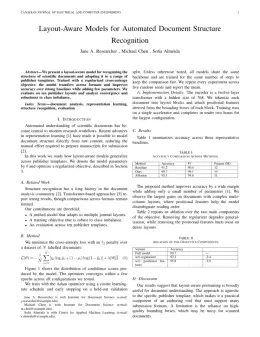
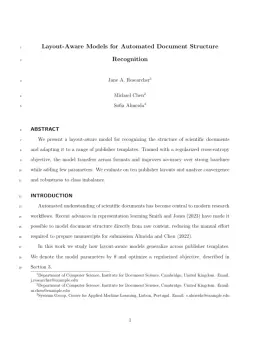
About the IEEE Communications Letters format
IEEE Communications Letters is a peer-reviewed journal published by IEEE, covering Advanced Wireless Communication Techniques, Advanced MIMO Systems Optimization, Cooperative Communication and Network Coding. Over its lifetime it has published 14,051 papers, which have received 335,747 citations.
| Publisher | IEEE |
|---|
| Reference style | Numbered (IEEE) Numbered — [1], [2] in the text
[1] A. Smith, B. Jones, and C. Lee, "A representative article title," IEEE Communications Letters, vol. 12, no. 3, pp. 45–58, 2023.
Formats any DOI in IEEE Communications Letters style. No sign-up.
|
|---|
| Publishes research in | Advanced Wireless Communication Techniques Advanced MIMO Systems Optimization Cooperative Communication and Network Coding Wireless Communication Networks Research Advanced Wireless Communication Technologies |
|---|
| ISSN | 1089-7798 |
|---|
| Citation impact (2-yr) | 2.98 |
|---|
| h-index | 194 |
|---|
| i10-index | 7,110 |
|---|
| Top institutions publishing here | Beijing University of Posts and Telecommunications |
|---|
| Journal website | www.comsoc.org |
|---|
| You get | A submission-ready PDF and the editable LaTeX source — ready to submit. |
|---|
Papers published in IEEE Communications Letters per year
Citation impact of IEEE Communications Letters by publication year
Citations each year’s papers have accumulated so far — the most recent years are still building up.
Most-cited papers in IEEE Communications Letters
Impulse radio: how it works
Moe Z. Win, R.A. Scholtz · 1 Feb 1998
Impulse radio, a form of ultra-wide bandwidth (UWB) spread-spectrum signaling, has properties that make it a viable candidate for short-range communications in dense multipath environments. This paper describes the characteristics of impulse radio using a modulation format that can be supported by currently available impulse signal technology and gives analytical estimates of its multiple-access capability…
On the design of low-density parity-check codes within 0.0045 dB of the Shannon limit
Sae-Young Chung, G. David Forney, Tom Richardson et al. · 1 Jan 2001
We develop improved algorithms to construct good low-density parity-check codes that approach the Shannon limit very closely. For rate 1/2, the best code found has a threshold within 0.0045 dB of the Shannon limit of the binary-input additive white Gaussian noise channel. Simulation results with a somewhat simpler code show that we can achieve within…
Cooperative Non-Orthogonal Multiple Access in 5G Systems
Zhiguo Ding, Mugen Peng, H. Vincent Poor · 4 Jun 2015
Non-orthogonal multiple access (NOMA) has received considerable recent attention as a promising candidate for 5G systems. A key feature of NOMA is that users with better channel conditions have prior information about the messages of other users. This prior knowledge is fully exploited in this letter, where a cooperative NOMA scheme is proposed. The outage…
Effects of clipping and filtering on the performance of OFDM
Xiaodong Li, Leonard J. Cimini · 1 May 1998
Orthogonal frequency division multiplexing (OFDM) is an attractive technique for wireless communication applications. However, an OFDM signal has a large peak-to-mean envelope power ratio, which can result in significant distortion when passed through a nonlinear device, such as a transmitter power amplifier. We investigate, through extensive computer simulations, the effects of clipping and filtering on…
Low-density parity check codes over GF(q)
M.C. Davey, David Mackay · 1 Jun 1998
Gallager's (1962) low-density binary parity check codes have been shown to have near-Shannon limit performance when decoded using a probabilistic decoding algorithm. We report the empirical results of error-correction using the analogous codes over GF(q) for q>2, with binary symmetric channels and binary Gaussian channels. We find a significant improvement over the performance of the…