IEEE

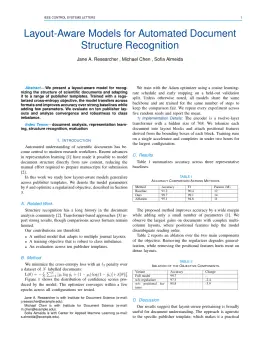
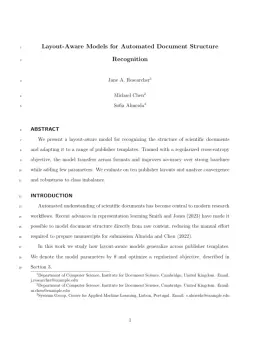
IEEE Transactions on Materials for Electron Devices Template

Write in a clean editor, then format for IEEE Transactions on Materials for Electron Devices in one click — DocuGuru applies the official IEEE template with numbered references and exports a submission-ready PDF plus the editable LaTeX source. Free to start.

About the IEEE Transactions on Materials for Electron Devices format

IEEE Transactions on Materials for Electron Devices is a peer-reviewed journal published by IEEE, covering Semiconductor materials and devices, Ferroelectric and Negative Capacitance Devices, Advanced Memory and Neural Computing. Over its lifetime it has published 76 papers, which have received 110 citations.

PublisherIEEE
Reference styleNumbered (IEEE)
Numbered — [1], [2] in the text
[1] A. Smith, B. Jones, and C. Lee, "A representative article title," IEEE Transactions on Materials for Electron Devices, vol. 12, no. 3, pp. 45–58, 2023.

Formats any DOI in IEEE Transactions on Materials for Electron Devices style. No sign-up.

Publishes research inSemiconductor materials and devices Ferroelectric and Negative Capacitance Devices Advanced Memory and Neural Computing Semiconductor materials and interfaces Electronic and Structural Properties of Oxides
ISSN2993-1576
Citation impact (2-yr)1.51
h-index6
i10-index1
Top institutions publishing hereNational Yang Ming Chiao Tung University
You getA submission-ready PDF and the editable LaTeX source — ready to submit.

Papers published in IEEE Transactions on Materials for Electron Devices per year

3
2023
26
2024
39
2025

Citation impact of IEEE Transactions on Materials for Electron Devices by publication year

0
2023
72
2024
28
2025

Citations each year’s papers have accumulated so far — the most recent years are still building up.

Most-cited papers in IEEE Transactions on Materials for Electron Devices

50 Years of Reactive Ion Etching in Microelectronics

Sergey Voronin, C. Vallée · 1 Jan 2024

In this short review, the evolution of plasma etching technologies used in microelectronics fabrication since the discovery of the reactive ion etching process 50 years ago is explored. These evolutions are first discussed from a process engineering point of view. After giving some examples of present and future challenges, it is described how the precision…

Silicene Applications in Nanotechnology: From Transistors to Bendable Membranes

Carlo Grazianetti, Alessandro Molle, Christian Martella · 1 Jan 2024

Two-dimensional (2D) materials are today potential candidates for next generation ultra-scaled devices. After the boost provided by graphene, the 2D materials family is still quickly expanding and it is now clear that their properties may suit specific target applications but not all of them as originally expected by device engineers. Among them, a silicon-based 2D…

On the Thickness Scaling of Ferroelectric Hafnia

Suzanne Lancaster, Stefan Slesazeck, Thomas Mikolajick · 1 Jan 2024

The discovery of ferroelectricity in hafnia has revolutionized the field and brought industry applications closer than ever. One of the most interesting aspects of hafnia compared to other ferroelectric materials is the possibility of scaling film thicknesses down to the 10 nm regime and even below. However, going significantly below 10 nm poses some challenges…

The HRDL Interposer Technology Using Metal/Polymer Hybrid Bonding and Its Characteristics

Yu-Lun Liu, Chien-Kang Hsiung, Tzu-Han Sun et al. · 1 Jan 2024

This article aims to comprehensively explore silicon, glass, organic, and RDL (Redistribution Layer) interposers, comparing their technological features, advantages, and associated challenges. Additionally, a pioneering technology, termed Hyper RDL interposer (HRDL), which integrates temporary bonding and low-temperature hybrid bonding techniques to create an RDL interposer with low warpage, high layer count, and minimal thermal accumulation…

Future Materials for Beyond Si Integrated Circuits: A Perspective

Luigi Colombo, Salim El Kazzi, M. Popovici et al. · 1 Jan 2024

The integration of novel materials has been pivotal in advancing Si-based devices ever since Si became the preferred material for transistors, and later, integrated circuits. New materials have rapidly been adopted in recent decades to enhance the performance of Si integrated circuits. The imperative to uphold Moore's Law for both More Moore and More than…

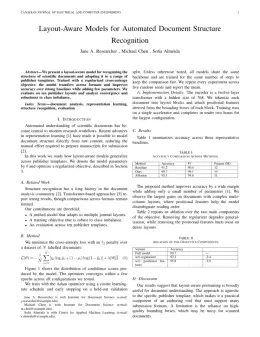
IEEE Transactions on Materials for Electron Devices template — frequently asked questions

How do I write a paper in the IEEE Transactions on Materials for Electron Devices format?
In DocuGuru you write your manuscript in a normal editor — no LaTeX setup required — and select the IEEE Transactions on Materials for Electron Devices template. When you export, DocuGuru compiles the paper into the official IEEE format and hands you a submission-ready PDF along with the editable LaTeX source.
What reference style does IEEE Transactions on Materials for Electron Devices use?
IEEE Transactions on Materials for Electron Devices uses Numbered (IEEE) references, shown as numbered [1], [2] markers in the text. DocuGuru formats every in-text citation and the reference list in this exact style automatically. A reference appears like this: [1] A. Smith, B. Jones, and C. Lee, "A representative article title," IEEE Transactions on Materials for Electron Devices, vol. 12, no. 3, pp. 45–58, 2023.
Do I need to know LaTeX to submit to IEEE Transactions on Materials for Electron Devices?
No. DocuGuru generates the IEEEtran LaTeX class and compiles the PDF for you in the background, so you get a IEEE-ready IEEE Transactions on Materials for Electron Devices document without writing any LaTeX. If you do want it, the LaTeX source is included in the export.
Can I import an existing draft into the IEEE Transactions on Materials for Electron Devices template?
Yes. Paste or upload your current manuscript — Word, LaTeX, Markdown, or plain text — and DocuGuru reflows it into the IEEE Transactions on Materials for Electron Devices format with correct headings, figures, tables, and numbered citations.
What is IEEE Transactions on Materials for Electron Devices?
IEEE Transactions on Materials for Electron Devices, published by IEEE. It is a engineering and computer science journal, published by IEEE.
Can I export a submission-ready IEEE Transactions on Materials for Electron Devices PDF?
Yes — DocuGuru produces a PDF built with the official IEEE Transactions on Materials for Electron Devices template (the IEEEtran class) that is ready to submit to IEEE, together with the matching LaTeX source files.
How much does the IEEE Transactions on Materials for Electron Devices template cost?
You can start writing in the IEEE Transactions on Materials for Electron Devices template for free. Exporting the final submission-ready IEEE Transactions on Materials for Electron Devices PDF and LaTeX source is part of DocuGuru's paid plans — see the app for current pricing.
Use the IEEE Transactions on Materials for Electron Devices template