IEEE

IEEE Reviews in Biomedical Engineering Template

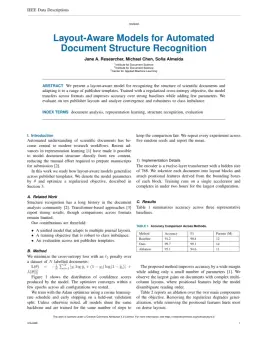
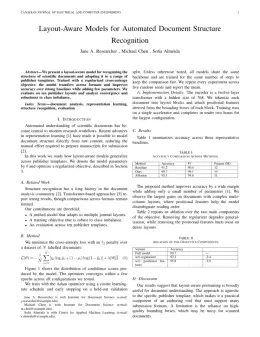
Write in a clean editor, then format for IEEE Reviews in Biomedical Engineering in one click — DocuGuru applies the official IEEE template with numbered references and exports a submission-ready PDF plus the editable LaTeX source. Free to start.

About the IEEE Reviews in Biomedical Engineering format

IEEE Reviews in Biomedical Engineering is a peer-reviewed journal published by IEEE, covering Biomedical and Engineering Education, EEG and Brain-Computer Interfaces, Neuroscience and Neural Engineering. Over its lifetime it has published 493 papers, which have received 34,407 citations.

PublisherIEEE
Reference styleNumbered (IEEE)
Numbered — [1], [2] in the text
[1] A. Smith, B. Jones, and C. Lee, "A representative article title," IEEE Reviews in Biomedical Engineering, vol. 12, no. 3, pp. 45–58, 2023.

Formats any DOI in IEEE Reviews in Biomedical Engineering style. No sign-up.

Publishes research inBiomedical and Engineering Education EEG and Brain-Computer Interfaces Neuroscience and Neural Engineering Non-Invasive Vital Sign Monitoring Wireless Body Area Networks
ISSN1937-3333
Citation impact (2-yr)12.53
h-index99
i10-index293
Top institutions publishing hereJohns Hopkins University
Journal websiteieeexplore.ieee.org
You getA submission-ready PDF and the editable LaTeX source — ready to submit.

Papers published in IEEE Reviews in Biomedical Engineering per year

18
2014
15
2015
25
2016
32
2017
43
2018
28
2019
36
2020
38
2021
39
2022
17
2023
25
2024
27
2025

Citation impact of IEEE Reviews in Biomedical Engineering by publication year

1.3K
2014
881
2015
1.7K
2016
2.9K
2017
3.3K
2018
1.5K
2019
3.8K
2020
2.2K
2021
1.7K
2022
863
2023
619
2024
155
2025

Citations each year’s papers have accumulated so far — the most recent years are still building up.

Most-cited papers in IEEE Reviews in Biomedical Engineering

Histopathological Image Analysis: A Review

Metin N. Gürcan, Laura E. Boucheron, Ali Can et al. · 1 Jan 2009

Over the past decade, dramatic increases in computational power and improvement in image analysis algorithms have allowed the development of powerful computer-assisted analytical approaches to radiological data. With the recent advent of whole slide digital scanners, tissue histopathology slides can now be digitized and stored in digital image form. Consequently, digitized tissue histopathology has now…

2,040 citations Cite SaveGo to paper →
Retinal Imaging and Image Analysis

Michael D. Abràmoff, Mona K. Garvin, Milan Sonka · 1 Jan 2010

Many important eye diseases as well as systemic diseases manifest themselves in the retina. While a number of other anatomical structures contribute to the process of vision, this review focuses on retinal imaging and image analysis. Following a brief overview of the most prevalent causes of blindness in the industrialized world that includes age-related macular…

1,445 citations Cite SaveGo to paper →
Dry-Contact and Noncontact Biopotential Electrodes: Methodological Review

Yu Mike, Tzyy‐Ping Jung, Gert Cauwenberghs · 1 Jan 2010

Recent demand and interest in wireless, mobile-based healthcare has driven significant interest towards developing alternative biopotential electrodes for patient physiological monitoring. The conventional wet adhesive Ag/AgCl electrodes used almost universally in clinical applications today provide an excellent signal but are cumbersome and irritating for mobile use. While electrodes that operate without gels, adhesives and even…

1,041 citations Cite SaveGo to paper →
Review of Artificial Intelligence Techniques in Imaging Data Acquisition, Segmentation, and Diagnosis for COVID-19

Feng Shi, Jun Wang, Jun Shi et al. · 16 Apr 2020

The pandemic of coronavirus disease 2019 (COVID-19) is spreading all over the world. Medical imaging such as X-ray and computed tomography (CT) plays an essential role in the global fight against COVID-19, whereas the recently emerging artificial intelligence (AI) technologies further strengthen the power of the imaging tools and help medical specialists. We hereby review…

1,016 citations Cite SaveGo to paper →
Cochlear Implants: System Design, Integration, and Evaluation

Fan‐Gang Zeng, Stephen J. Rebscher, William V. Harrison et al. · 1 Jan 2008

As the most successful neural prosthesis, cochlear implants have provided partial hearing to more than 120000 persons worldwide; half of which being pediatric users who are able to develop nearly normal language. Biomedical engineers have played a central role in the design, integration and evaluation of the cochlear implant system, but the overall success is…

IEEE Reviews in Biomedical Engineering template — frequently asked questions

How do I write a paper in the IEEE Reviews in Biomedical Engineering format?
In DocuGuru you write your manuscript in a normal editor — no LaTeX setup required — and select the IEEE Reviews in Biomedical Engineering template. When you export, DocuGuru compiles the paper into the official IEEE format and hands you a submission-ready PDF along with the editable LaTeX source.
What reference style does IEEE Reviews in Biomedical Engineering use?
IEEE Reviews in Biomedical Engineering uses Numbered (IEEE) references, shown as numbered [1], [2] markers in the text. DocuGuru formats every in-text citation and the reference list in this exact style automatically. A reference appears like this: [1] A. Smith, B. Jones, and C. Lee, "A representative article title," IEEE Reviews in Biomedical Engineering, vol. 12, no. 3, pp. 45–58, 2023.
Do I need to know LaTeX to submit to IEEE Reviews in Biomedical Engineering?
No. DocuGuru generates the ieeecolor LaTeX class and compiles the PDF for you in the background, so you get a IEEE-ready IEEE Reviews in Biomedical Engineering document without writing any LaTeX. If you do want it, the LaTeX source is included in the export.
Can I import an existing draft into the IEEE Reviews in Biomedical Engineering template?
Yes. Paste or upload your current manuscript — Word, LaTeX, Markdown, or plain text — and DocuGuru reflows it into the IEEE Reviews in Biomedical Engineering format with correct headings, figures, tables, and numbered citations.
What is IEEE Reviews in Biomedical Engineering?
IEEE Reviews in Biomedical Engineering, published by IEEE. It is a engineering and computer science journal, published by IEEE.
Can I export a submission-ready IEEE Reviews in Biomedical Engineering PDF?
Yes — DocuGuru produces a PDF built with the official IEEE Reviews in Biomedical Engineering template (the ieeecolor class) that is ready to submit to IEEE, together with the matching LaTeX source files.
How much does the IEEE Reviews in Biomedical Engineering template cost?
You can start writing in the IEEE Reviews in Biomedical Engineering template for free. Exporting the final submission-ready IEEE Reviews in Biomedical Engineering PDF and LaTeX source is part of DocuGuru's paid plans — see the app for current pricing.
Use the IEEE Reviews in Biomedical Engineering template