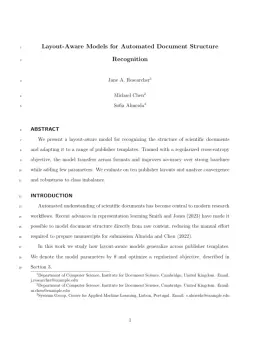
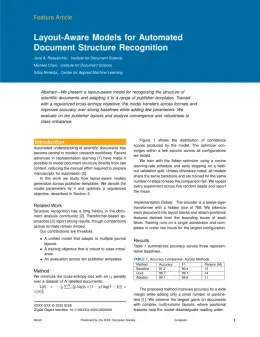
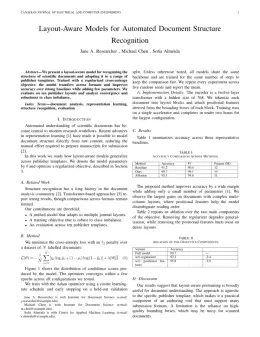
About the Journal of Hydraulic Engineering format
Journal of Hydraulic Engineering is a peer-reviewed journal published by ASCE, covering Hydrology and Sediment Transport Processes, Hydraulic flow and structures, Soil erosion and sediment transport. Over its lifetime it has published 7,241 papers, which have received 239,072 citations.
| Publisher | ASCE |
|---|
| Reference style | Author–year (ASCE) Author–year — (Smith, 2023) in the text
Smith, A., B. Jones, and C. Lee. (2023). "A representative article title." Journal of Hydraulic Engineering, 12(3), 45–58.
Formats any DOI in Journal of Hydraulic Engineering style. No sign-up.
|
|---|
| Publishes research in | Hydrology and Sediment Transport Processes Hydraulic flow and structures Soil erosion and sediment transport Water Systems and Optimization Hydrology and Watershed Management Studies |
|---|
| ISSN | 0733-9429 |
|---|
| Citation impact (2-yr) | 1.72 |
|---|
| h-index | 192 |
|---|
| i10-index | 3,721 |
|---|
| Top institutions publishing here | University of Iowa |
|---|
| Journal website | ascelibrary.org |
|---|
| You get | A submission-ready PDF and the editable LaTeX source — ready to submit. |
|---|
Papers published in Journal of Hydraulic Engineering per year
Citation impact of Journal of Hydraulic Engineering by publication year
Citations each year’s papers have accumulated so far — the most recent years are still building up.
Most-cited papers in Journal of Hydraulic Engineering
Sediment Transport, Part I: Bed Load Transport
Leo C. van Rijn · 1 Oct 1984
A method is presented which enables the computation of the bedload transport as the product of the saltation height, the particle velocity and the bed‐load concentration. The equations of motions for a solitary particle are solved numerically to determine the saltation height and particle velocity. Experiments with gravel particles (transported as bed load) are selected…
Despiking Acoustic Doppler Velocimeter Data
Derek G. Goring, Vladimir Nikora · 1 Jan 2002
A new method for detecting spikes in acoustic Doppler velocimeter data sequences is suggested. The method combines three concepts: (1) that differentiation enhances the high frequency portion of a signal, (2) that the expected maximum of a random series is given by the Universal threshold, and (3) that good data cluster in a dense cloud…
Sediment Transport, Part II: Suspended Load Transport
Leo C. van Rijn · 1 Nov 1984
A method is presented which enables the computation of the suspended load as the depth‐integration of the product of the local concentration and flow velocity. The method is based on the computation of the reference concentration from the bed‐load transport. Measured concentration profiles have been used for calibration. New relationships are proposed to represent the…
<i>Turbulence in Open‐Channel Flows</i>
Iehisa NEZU, Hiroji Nakagawa, Gerhard H. Jirka · 1 Oct 1994
A review of open channel turbulence, focusing especially on certain features stemming from the presence of the free surface and the bed of a river. Part one presents the statistical theory of turbulence; Part two addresses the coherent structures in open-channel flows and boundary layers.
Open‐channel Flow Measurements with a Laser Doppler Anemometer
Iehisa NEZU, W. Rodi · 1 May 1986
A powerful two‐color Laser Doppler Anemometer (LDA) system, with direct digital signal processing has been used to measure accurately the longitudinal and vertical velocity components in two‐dimensional, fully‐developed open‐channel flow over smooth beds. The law of the wall and the velocity defect law were re‐examined because the log‐law has been often applied to open channels…