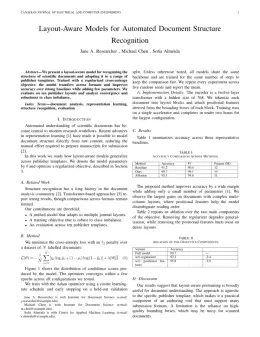
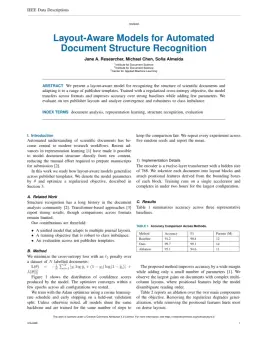
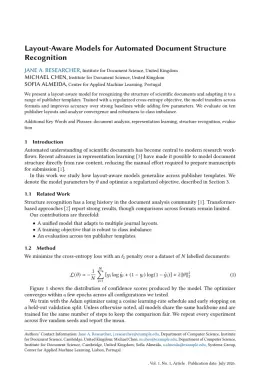
About the IEEE Software format
IEEE Software is a peer-reviewed journal published by IEEE, covering Software Engineering Techniques and Practices, Software Engineering Research, Advanced Software Engineering Methodologies. Over its lifetime it has published 7,507 papers, which have received 174,293 citations.
| Publisher | IEEE |
|---|
| Reference style | Numbered (IEEE) Numbered — [1], [2] in the text
[1] A. Smith, B. Jones, and C. Lee, "A representative article title," IEEE Software, vol. 12, no. 3, pp. 45–58, 2023.
Formats any DOI in IEEE Software style. No sign-up.
|
|---|
| Publishes research in | Software Engineering Techniques and Practices Software Engineering Research Advanced Software Engineering Methodologies Diverse Scientific and Economic Studies Software System Performance and Reliability |
|---|
| ISSN | 0740-7459 |
|---|
| Citation impact (2-yr) | 1.4 |
|---|
| h-index | 185 |
|---|
| i10-index | 2,280 |
|---|
| Top institutions publishing here | Beijing University of Posts and Telecommunications |
|---|
| Journal website | www.computer.org |
|---|
| You get | A submission-ready PDF and the editable LaTeX source — ready to submit. |
|---|
Papers published in IEEE Software per year
Citation impact of IEEE Software by publication year
Citations each year’s papers have accumulated so far — the most recent years are still building up.
Most-cited papers in IEEE Software
The 4+1 View Model of architecture
Philippe Kruchten · 1 Jan 1995
The 4+1 View Model organizes a description of a software architecture using five concurrent views, each of which addresses a specific set of concerns. Architects capture their design decisions in four views and use the fifth view to illustrate and validate them. The logical view describes the design's object model when an object-oriented design method…
Reverse engineering and design recovery: a taxonomy
Elliot J. Chikofsky, James H. Cross · 1 Jan 1990
The key to applying computer-aided software engineering to the maintenance and enhancement of existing systems lies in applying reverse-engineering approaches. However, there is considerable confusion over the terminology used in both technical and marketplace discussions. The authors define and relate six terms: forward engineering, reverse engineering, redocumentation, design recovery, restructuring, and reengineering. The objective is…
Usenix Security Symposium
26 Apr 2011
Software risk management: principles and practices
Barry Boehm · 1 Jan 1991
The emerging discipline of software risk management is described. It is defined as an attempt to formalize the risk-oriented correlates of success into a readily applicable set of principles and practices. Its objectives are to identify, address, and eliminate risk items before they become either threats to successful software operation or major sources of software…
Capability maturity model, version 1.1
Mark C. Paulk, Bruce Curtis, Mary Beth Chrissis et al. · 1 Jul 1993
The capability maturity model (CMM), developed to present sets of recommended practices in a number of key process areas that have been shown to enhance software-development and maintenance capability, is discussed. The CMM was designed to help developers select process-improvement strategies by determining their current process maturity and identifying the issues most critical to improving…