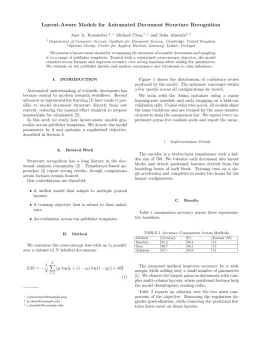
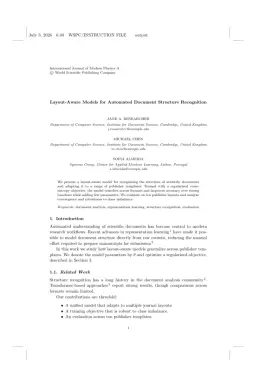
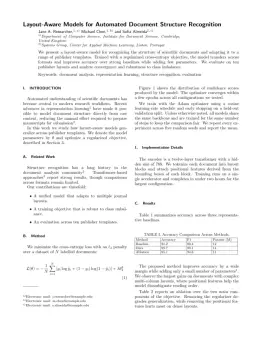
About the Physical Review Fluids format
Physical Review Fluids is a peer-reviewed journal published by American Physical Society, covering Fluid Dynamics and Turbulent Flows, Fluid Dynamics and Heat Transfer, Particle Dynamics in Fluid Flows. Over its lifetime it has published 5,584 papers, which have received 73,624 citations.
| Publisher | American Physical Society |
|---|
| Reference style | Numbered (APS) Numbered — [1], [2] in the text
[1] A. Smith, B. Jones, and C. Lee, Physical Review Fluids 12, 45 (2023).
Formats any DOI in Physical Review Fluids style. No sign-up.
|
|---|
| Publishes research in | Fluid Dynamics and Turbulent Flows Fluid Dynamics and Heat Transfer Particle Dynamics in Fluid Flows Fluid Dynamics and Vibration Analysis Fluid Dynamics and Thin Films |
|---|
| ISSN | 2469-990X |
|---|
| Citation impact (2-yr) | 2.57 |
|---|
| h-index | 80 |
|---|
| i10-index | 2,338 |
|---|
| Top institutions publishing here | Centre National de la Recherche Scientifique |
|---|
| Journal website | journals.aps.org |
|---|
| You get | A submission-ready PDF and the editable LaTeX source — ready to submit. |
|---|
Papers published in Physical Review Fluids per year
Citation impact of Physical Review Fluids by publication year
Citations each year’s papers have accumulated so far — the most recent years are still building up.
Most-cited papers in Physical Review Fluids
Physics-informed machine learning approach for reconstructing Reynolds stress modeling discrepancies based on DNS data
Jian-Xun Wang, Jin-Long Wu, Heng Xiao · 16 Mar 2017
We show that the discrepancies in Reynolds-averaged Navier-Stokes (RANS) modeled Reynolds stresses can be explained by mean flow features. A physics-informed machine learning framework is proposed to improve the predictive capabilities of RANS models by leveraging existing direct numerical simulations databases.
Physics-informed machine learning approach for augmenting turbulence models: A comprehensive framework
Jin-Long Wu, Heng Xiao, Eric Paterson · 10 Jul 2018
We present a comprehensive framework for augmenting turbulence models with physics-informed machine learning, illustrating a complete workflow from identification of input/output to prediction of mean velocities. The learned model has Galilean invariance and coordinate rotational invariance.
Perspective on machine learning for advancing fluid mechanics
Michael P. Brenner, Jeff D. Eldredge, Jonathan B. Freund · 16 Oct 2019
A perspective is presented on how machine learning methods might advance fluid mechanics. Current limitations are discussed, though the potential impact is deemed high, so long as outcomes are held to the long-standing critical standards that should guide studies of flow physics.
Predictive large-eddy-simulation wall modeling via physics-informed neural networks
Xiang I. A. Yang, Sana Zafar, Jianxun Wang et al. · 15 Mar 2019
A study shows that when trained using channel flow data at just one Reynolds number and informed with known flow physics, the neural network works robustly as a wall model in large-eddy simulation (LES) of channel flow at any Reynolds number. It also outperforms the equilibrium wall model in LES of a 3D boundary layer…
Predictions of turbulent shear flows using deep neural networks
Prem A. Srinivasan, Luca Guastoni, Hossein Azizpour et al. · 10 May 2019
The long short-term memory (LSTM) neural network is used to predict the temporal evolution of a low-order representation of near-wall turbulence. This network leads to excellent predictions of turbulence statistics and of the system dynamics, characterized by Poincar\'e maps and Lyapunov exponents.