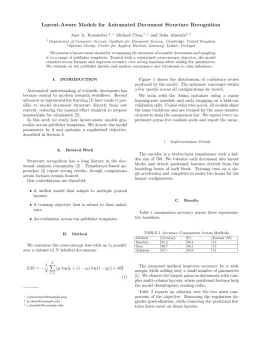
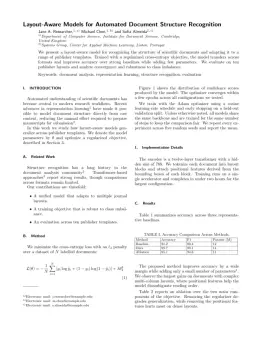
About the Physical Review E format
Physical Review E is a peer-reviewed journal published by American Physical Society, covering Theoretical and Computational Physics, Nonlinear Dynamics and Pattern Formation, Material Dynamics and Properties. Over its lifetime it has published 30,065 papers, which have received 1,135,650 citations.
| Publisher | American Physical Society |
|---|
| Reference style | Numbered (APS) Numbered — [1], [2] in the text
[1] A. Smith, B. Jones, and C. Lee, Physical Review E 12, 45 (2023).
Formats any DOI in Physical Review E style. No sign-up.
|
|---|
| Publishes research in | Theoretical and Computational Physics Nonlinear Dynamics and Pattern Formation Material Dynamics and Properties Advanced Thermodynamics and Statistical Mechanics stochastic dynamics and bifurcation |
|---|
| ISSN | 1539-3755 |
|---|
| h-index | 285 |
|---|
| i10-index | 21,485 |
|---|
| Top institutions publishing here | Centre National de la Recherche Scientifique |
|---|
| Journal website | journals.aps.org |
|---|
| You get | A submission-ready PDF and the editable LaTeX source — ready to submit. |
|---|
Papers published in Physical Review E per year
Citation impact of Physical Review E by publication year
Citations each year’s papers have accumulated so far — the most recent years are still building up.
Most-cited papers in Physical Review E
Finding and evaluating community structure in networks
Michelle G. Newman, Michelle Girvan · 26 Feb 2004
We propose and study a set of algorithms for discovering community structure in networks-natural divisions of network nodes into densely connected subgroups. Our algorithms all share two definitive features: first, they involve iterative removal of edges from the network to split it into communities, the edges removed being identified using any one of a number…
Finding community structure in very large networks
Aaron Clauset, M. E. J. Newman, Cristopher Moore · 6 Dec 2004
The discovery and analysis of community structure in networks is a topic of considerable recent interest within the physics community, but most methods proposed so far are unsuitable for very large networks because of their computational cost. Here we present a hierarchical agglomeration algorithm for detecting community structure which is faster than many competing algorithms:…
Fast algorithm for detecting community structure in networks
M. E. J. Newman · 18 Jun 2004
Many networks display community structure--groups of vertices within which connections are dense but between which they are sparser--and sensitive computer algorithms have in recent years been developed for detecting this structure. These algorithms, however, are computationally demanding, which limits their application to small networks. Here we describe an algorithm which gives excellent results when tested…
Finding community structure in networks using the eigenvectors of matrices
M. E. J. Newman · 11 Sep 2006
We consider the problem of detecting communities or modules in networks, groups of vertices with a higher-than-average density of edges connecting them. Previous work indicates that a robust approach to this problem is the maximization of the benefit function known as "modularity" over possible divisions of a network. Here we show that this maximization process…
Estimating mutual information
Alexander Kraskov, Harald Stögbauer, Peter Grassberger · 23 Jun 2004
We present two classes of improved estimators for mutual information M(X,Y), from samples of random points distributed according to some joint probability density mu(x,y). In contrast to conventional estimators based on binnings, they are based on entropy estimates from k -nearest neighbor distances. This means that they are data efficient (with k=1 we resolve structures…