Taylor & Francis

Xenobiotica Template

Write in a clean editor, then format for Xenobiotica in one click — DocuGuru applies the official Taylor & Francis template with author–year references and exports a submission-ready PDF plus the editable LaTeX source. Free to start.

About the Xenobiotica format

Xenobiotica is a peer-reviewed journal published by Taylor & Francis, covering Pharmacogenetics and Drug Metabolism, Drug Transport and Resistance Mechanisms, Drug-Induced Hepatotoxicity and Protection.

PublisherTaylor & Francis
Reference styleAuthor–year (Chicago, T&F)
Author–year — (Smith, 2023) in the text
Smith, Ada, Ben Jones, and Cara Lee. 2023. "A Representative Article Title." Xenobiotica 12 (3): 45–58.

Formats any DOI in Xenobiotica style. No sign-up.

Publishes research inPharmacogenetics and Drug Metabolism Drug Transport and Resistance Mechanisms Drug-Induced Hepatotoxicity and Protection Eicosanoids and Hypertension Pharmacology Pharmacological Effects and Toxicity Studies
ISSN0049-8254
Citation impact (2-yr)1.6
h-index117
i10-index3,261
Total citations131,132
Top institutions publishing hereUniversity of Surrey
Journal websiteinformahealthcare.com
You getA submission-ready PDF and the editable LaTeX source — ready to submit.

Papers published in Xenobiotica per year

122
2014
151
2015
161
2016
145
2017
140
2018
117
2019
107
2020
108
2021
100
2022
73
2023
77
2024
77
2025

Citation impact of Xenobiotica by publication year

2.1K
2014
2.5K
2015
2.7K
2016
1.6K
2017
1.8K
2018
1.5K
2019
1K
2020
678
2021
476
2022
294
2023
228
2024
80
2025

Citations each year’s papers have accumulated so far — the most recent years are still building up.

Most-cited papers in Xenobiotica

'Metabonomics': understanding the metabolic responses of living systems to pathophysiological stimuli via multivariate statistical analysis of biological NMR spectroscopic data

Jeremy K. Nicholson, John C. Lindon, Elaine Holmes · 1 Jan 1999

(1999). 'Metabonomics': understanding the metabolic responses of living systems to pathophysiological stimuli via multivariate statistical analysis of biological NMR spectroscopic data. Xenobiotica: Vol. 29, No. 11, pp. 1181-1189.

3,874 citations Cite SaveGo to paper →
Mammalian Epoxide Hydrases: Inducible Enzymes Catalysing the Inactivation of Carcinogenic and Cytotoxic Metabolites Derived from Aromatic and Olefinic Compounds

Franz Oesch · 1 Jan 1973

1. Several aromatic and olefinic compounds are converted to intermediate arene and alkene oxides by mammalian mono-oxygenases. Intermediate arene oxides rearrange non-enzymically to phenols. Arene and alkene oxides are converted by epoxide hydrases to vicinal diols and by glutathione S-epoxide conjugases to glutathione conjugates. Due to their high electrophilic reactivity, such oxiranes also bind to…

Structure, function and regulation of P-glycoprotein and its clinical relevance in drug disposition

Shu Zhou · 31 Jul 2008

1. P-glycoprotein (P-gp/MDR1), one of the most clinically important transmembrane transporters in humans, is encoded by the ABCB1/MDR1 gene. Recent insights into the structural features of P-gp/MDR1 enable a re-evaluation of the biochemical evidence on the binding and transport of drugs by P-gp/MDR1. 2. P-gp/MDR1 is found in various human tissues in addition to being…

Interaction of a series of nitriles with the alcohol-inducible isoform of P450: Computer analysis of structure—activity relationships

D. F. V. Lewis, Costas Ioannides, D. V. Parke · 1 Jan 1994

1. Structural studies are reported on a series of 20 nitriles of varying rates of P4502E-mediated oxidative metabolism. 2. Parameters of molecular and electronic structure have been calculated for the generation of quantitative structure-activity relationships (QSARs) with the rates of oxidative metabolism of the nitriles, and with their acute toxicity. 3. Correlations between molecular polarizability,…

Antioxidant and pro-oxidant properties of active rosemary constituents: carnosol and carnosic acid

Okezie I. Aruoma, Barry Halliwell, Robert Aeschbach et al. · 1 Jan 1992

1. Carnosol and carnosic acid have been suggested to account for over 90% of the antioxidant properties of rosemary extract. 2. Purified carnosol and carnosic acid are powerful inhibitors of lipid peroxidation in microsomal and liposomal systems, more effective than propyl gallate. 3. Carnosol and carnosic acid are good scavengers of peroxyl radicals (CCl3O2.) generated…

Xenobiotica template — frequently asked questions

How do I write a paper in the Xenobiotica format?
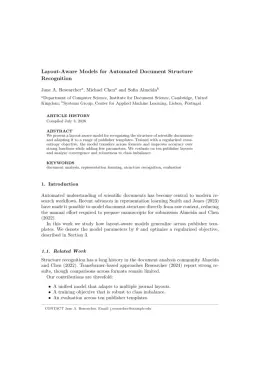
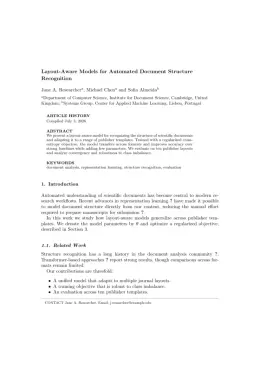
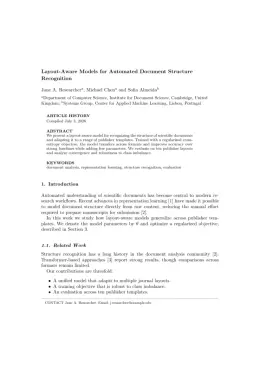
In DocuGuru you write your manuscript in a normal editor — no LaTeX setup required — and select the Xenobiotica template. When you export, DocuGuru compiles the paper into the official Taylor & Francis format and hands you a submission-ready PDF along with the editable LaTeX source.
What reference style does Xenobiotica use?
Xenobiotica uses Author–year (Chicago, T&F) references, shown as author–year markers such as (Smith, 2023) in the text. DocuGuru formats every in-text citation and the reference list in this exact style automatically. A reference appears like this: Smith, Ada, Ben Jones, and Cara Lee. 2023. "A Representative Article Title." Xenobiotica 12 (3): 45–58.
Do I need to know LaTeX to submit to Xenobiotica?
No. DocuGuru generates the interact LaTeX class and compiles the PDF for you in the background, so you get a Taylor & Francis-ready Xenobiotica document without writing any LaTeX. If you do want it, the LaTeX source is included in the export.
Can I import an existing draft into the Xenobiotica template?
Yes. Paste or upload your current manuscript — Word, LaTeX, Markdown, or plain text — and DocuGuru reflows it into the Xenobiotica format with correct headings, figures, tables, and author–year citations.
Who publishes Xenobiotica?
Xenobiotica is a multidisciplinary journal published by Taylor & Francis. DocuGuru's Xenobiotica template matches Taylor & Francis's official submission format.
Can I export a submission-ready Xenobiotica PDF?
Yes — DocuGuru produces a PDF built with the official Xenobiotica template (the interact class) that is ready to submit to Taylor & Francis, together with the matching LaTeX source files.
How much does the Xenobiotica template cost?
You can start writing in the Xenobiotica template for free. Exporting the final submission-ready Xenobiotica PDF and LaTeX source is part of DocuGuru's paid plans — see the app for current pricing.

Use the Xenobiotica template