Taylor & Francis

International Journal of Human-Computer Interaction Template

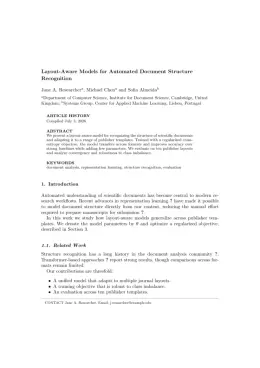
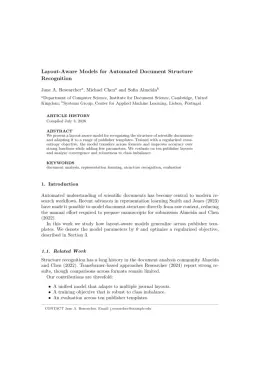
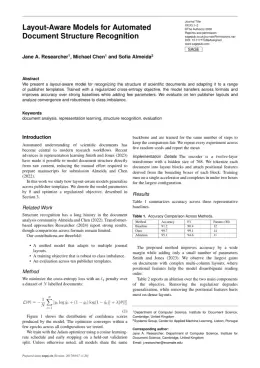
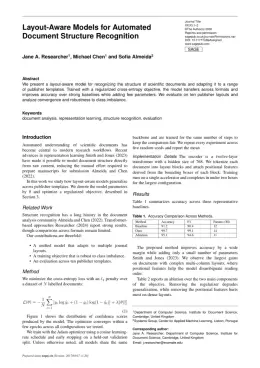
Write in a clean editor, then format for International Journal of Human-Computer Interaction in one click — DocuGuru applies the official Taylor & Francis template with author–year references and exports a submission-ready PDF plus the editable LaTeX source. Free to start.

About the International Journal of Human-Computer Interaction format

International Journal of Human-Computer Interaction is a peer-reviewed journal published by Taylor & Francis, covering Technology Adoption and User Behaviour, Human-Automation Interaction and Safety, Virtual Reality Applications and Impacts. Over its lifetime it has published 5,240 papers, which have received 119,509 citations.

PublisherTaylor & Francis
Reference styleAuthor–year (APA)
Author–year — (Smith, 2023) in the text
Smith, A., Jones, B., & Lee, C. (2023). A representative article title. International Journal of Human-Computer Interaction, 12(3), 45–58.

Formats any DOI in International Journal of Human-Computer Interaction style. No sign-up.

Publishes research inTechnology Adoption and User Behaviour Human-Automation Interaction and Safety Virtual Reality Applications and Impacts AI in Service Interactions Digital Marketing and Social Media
ISSN1044-7318
Citation impact (2-yr)4.87
h-index132
i10-index2,069
Top institutions publishing hereTsinghua University
Journal websitewww.tandfonline.com
You getA submission-ready PDF and the editable LaTeX source — ready to submit.

Papers published in International Journal of Human-Computer Interaction per year

71
2014
70
2015
109
2016
97
2017
148
2018
112
2019
132
2020
199
2021
396
2022
499
2023
688
2024
945
2025

Citation impact of International Journal of Human-Computer Interaction by publication year

2.5K
2014
5.2K
2015
2.7K
2016
3.8K
2017
8.7K
2018
4.9K
2019
8.2K
2020
5.7K
2021
11.7K
2022
9.7K
2023
8.2K
2024
2.4K
2025

Citations each year’s papers have accumulated so far — the most recent years are still building up.

Most-cited papers in International Journal of Human-Computer Interaction

An Empirical Evaluation of the System Usability Scale

Aaron Bangor, Philip Kortum, James Miller · 29 Jul 2008

Abstract This article presents nearly 10 year's worth of System Usability Scale (SUS) data collected on numerous products in all phases of the development lifecycle. The SUS, developed by CitationBrooke (1996), reflected a strong need in the usability community for a tool that could quickly and easily collect a user's subjective rating of a product's…

5,237 citations Cite SaveGo to paper →
IBM computer usability satisfaction questionnaires: Psychometric evaluation and instructions for use

James R. Lewis · 1 Jan 1995

This article describes recent research in subjective usability measurement at IBM, focused on evaluating the psychometric properties of questionnaires designed for use in scenario‐based usability evaluation. The questionnaires address evaluation at both a global overall system level and at a more detailed scenario level. The primary goals of this article are to (a) discuss the…

2,456 citations Cite SaveGo to paper →
The System Usability Scale: Past, Present, and Future

James R. Lewis · 30 Mar 2018

The System Usability Scale (SUS) is the most widely used standardized questionnaire for the assessment of perceived usability. This review of the SUS covers its early history from inception in the 1980s through recent research and its future prospects. From relatively inauspicious beginnings, when its originator described it as a “quick and dirty usability scale,”…

1,929 citations Cite SaveGo to paper →
Human-Centered Artificial Intelligence: Reliable, Safe & Trustworthy

Ben Shneiderman · 23 Mar 2020

Well-designed technologies that offer high levels of human control and high levels of computer automation can increase human performance, leading to wider adoption. The Human-Centered Artificial Intelligence (HCAI) framework clarifies how to (1) design for high levels of human control and high levels of computer automation so as to increase human performance, (2) understand the…

1,318 citations Cite SaveGo to paper →
A Review of Exploratory Factor Analysis Decisions and Overview of Current Practices: What We Are Doing and How Can We Improve?

Matt C. Howard · 14 Sep 2015

Authors within the fields of cyberpsychology and human−computer interaction have demonstrated a particular interest in measurement and scale creation, and exploratory factor analysis (EFA) is an extremely important statistical method for these areas of research. Unfortunately, EFA requires several statistical and methodological decisions to which the best choices are often unclear. The current article reviews…

1,278 citations Cite SaveGo to paper →

International Journal of Human-Computer Interaction template — frequently asked questions

How do I write a paper in the International Journal of Human-Computer Interaction format?
In DocuGuru you write your manuscript in a normal editor — no LaTeX setup required — and select the International Journal of Human-Computer Interaction template. When you export, DocuGuru compiles the paper into the official Taylor & Francis format and hands you a submission-ready PDF along with the editable LaTeX source.
What reference style does International Journal of Human-Computer Interaction use?
International Journal of Human-Computer Interaction uses Author–year (APA) references, shown as author–year markers such as (Smith, 2023) in the text. DocuGuru formats every in-text citation and the reference list in this exact style automatically. A reference appears like this: Smith, A., Jones, B., & Lee, C. (2023). A representative article title. International Journal of Human-Computer Interaction, 12(3), 45–58.
Do I need to know LaTeX to submit to International Journal of Human-Computer Interaction?
No. DocuGuru generates the interact LaTeX class and compiles the PDF for you in the background, so you get a Taylor & Francis-ready International Journal of Human-Computer Interaction document without writing any LaTeX. If you do want it, the LaTeX source is included in the export.
Can I import an existing draft into the International Journal of Human-Computer Interaction template?
Yes. Paste or upload your current manuscript — Word, LaTeX, Markdown, or plain text — and DocuGuru reflows it into the International Journal of Human-Computer Interaction format with correct headings, figures, tables, and author–year citations.
What is International Journal of Human-Computer Interaction?
Taylor & Francis journal (Interact). It is a multidisciplinary journal, published by Taylor & Francis.
Can I export a submission-ready International Journal of Human-Computer Interaction PDF?
Yes — DocuGuru produces a PDF built with the official International Journal of Human-Computer Interaction template (the interact class) that is ready to submit to Taylor & Francis, together with the matching LaTeX source files.
How much does the International Journal of Human-Computer Interaction template cost?
You can start writing in the International Journal of Human-Computer Interaction template for free. Exporting the final submission-ready International Journal of Human-Computer Interaction PDF and LaTeX source is part of DocuGuru's paid plans — see the app for current pricing.
Use the International Journal of Human-Computer Interaction template