Taylor & Francis

Slavic & East European Information Resources Template

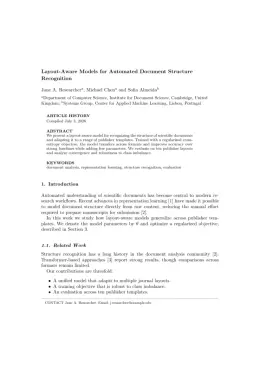
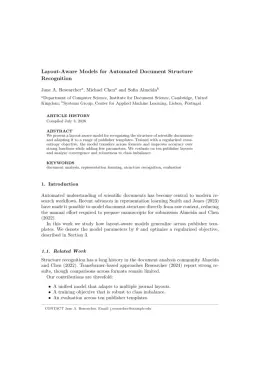
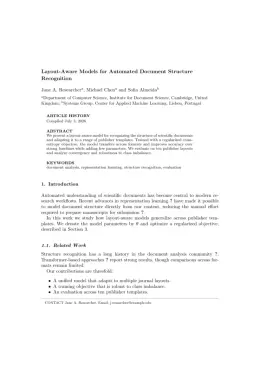
Write in a clean editor, then format for Slavic & East European Information Resources in one click — DocuGuru applies the official Taylor & Francis template with author–year references and exports a submission-ready PDF plus the editable LaTeX source. Free to start.

About the Slavic & East European Information Resources format

Slavic & East European Information Resources is a peer-reviewed journal published by Taylor & Francis, covering Historical Geopolitical and Social Dynamics, Library Science and Information Systems, Library Science and Information.

PublisherTaylor & Francis
Reference styleAuthor–year (Chicago, T&F)
Author–year — (Smith, 2023) in the text
Smith, Ada, Ben Jones, and Cara Lee. 2023. "A Representative Article Title." Slavic & East European Information Resources 12 (3): 45–58.

Formats any DOI in Slavic & East European Information Resources style. No sign-up.

Publishes research inHistorical Geopolitical and Social Dynamics Library Science and Information Systems Library Science and Information Eastern European Communism and Reforms Soviet and Russian History
ISSN1522-8886
Citation impact (2-yr)0.09
h-index8
i10-index8
Total citations594
Top institutions publishing hereLibrary of Congress
Journal websitewww.tandfonline.com
You getA submission-ready PDF and the editable LaTeX source — ready to submit.

Papers published in Slavic & East European Information Resources per year

27
2014
29
2015
35
2016
12
2017
26
2018
20
2019
24
2020
41
2021
16
2022
24
2023
31
2024
19
2025

Citation impact of Slavic & East European Information Resources by publication year

46
2014
30
2015
19
2016
18
2017
17
2018
17
2019
20
2020
39
2021
3
2022
21
2023
4
2024
1
2025

Citations each year’s papers have accumulated so far — the most recent years are still building up.

Most-cited papers in Slavic & East European Information Resources

Beyond LibGuides: The Past, Present, and Future of Online Research Guides

Jon Giullian, Ernest Zitser · 2 Oct 2015

The proliferation of research guides created using the LibGuides platform has triggered extensive discussion touting their benefits for everything from assessment, engagement, and marketing, to outreach and pedagogy. However, there is at present a relative paucity of critical reflection about the product’s place in the broader informational landscape. This article is an attempt to redress…

From Google Books to Library Catalogs: A Consumerist Exploration of Information Literacy for Graduate Students in Slavic Studies

Ruth Wallach · 1 Sep 2009

This essay offers a framework for a typical one‐shot, one‐hour instructional session for graduate students in Slavic and East European Studies. The framework rests on three assumptions: that graduate Slavic students' research behavior is not unique; that Slavic students begin their research through Google; and that the most important function of a one‐shot instructional session…

The SUCHO Ukrainian War Memes Collection

Anna Rakityanskaya · 2 Jan 2023

Since the onset of Russia’s full-scale invasion of Ukraine on February 24, 2022, internet memes about the war have been widely disseminated through social media, both in Ukraine and abroad. The Saving Ukrainian Cultural Heritage Online (SUCHO) initiative uses crowdsourcing to collect Ukrainian war memes. Community submissions are curated and published on the interactive online…

Russian-Language Periodicals in Toronto: Information Sources for Immigrants and Records for Documenting community

Keren Dali · 22 Mar 2005

ABSTRACT This study examines the reading interests and preferences of Russian-speaking immigrants in Toronto with regard to periodicals, and discusses Russian-language periodicals published in the Greater Toronto Area as both a source of information for Russian-speaking readers and an indispensable resource for documenting numerous aspects of the Russian-speaking community to be preserved as historical record.…

Slavic & East European Information Resources template — frequently asked questions

How do I write a paper in the Slavic & East European Information Resources format?
In DocuGuru you write your manuscript in a normal editor — no LaTeX setup required — and select the Slavic & East European Information Resources template. When you export, DocuGuru compiles the paper into the official Taylor & Francis format and hands you a submission-ready PDF along with the editable LaTeX source.
What reference style does Slavic & East European Information Resources use?
Slavic & East European Information Resources uses Author–year (Chicago, T&F) references, shown as author–year markers such as (Smith, 2023) in the text. DocuGuru formats every in-text citation and the reference list in this exact style automatically. A reference appears like this: Smith, Ada, Ben Jones, and Cara Lee. 2023. "A Representative Article Title." Slavic & East European Information Resources 12 (3): 45–58.
Do I need to know LaTeX to submit to Slavic & East European Information Resources?
No. DocuGuru generates the interact LaTeX class and compiles the PDF for you in the background, so you get a Taylor & Francis-ready Slavic & East European Information Resources document without writing any LaTeX. If you do want it, the LaTeX source is included in the export.
Can I import an existing draft into the Slavic & East European Information Resources template?
Yes. Paste or upload your current manuscript — Word, LaTeX, Markdown, or plain text — and DocuGuru reflows it into the Slavic & East European Information Resources format with correct headings, figures, tables, and author–year citations.
Who publishes Slavic & East European Information Resources?
Slavic & East European Information Resources is a multidisciplinary journal published by Taylor & Francis. DocuGuru's Slavic & East European Information Resources template matches Taylor & Francis's official submission format.
Can I export a submission-ready Slavic & East European Information Resources PDF?
Yes — DocuGuru produces a PDF built with the official Slavic & East European Information Resources template (the interact class) that is ready to submit to Taylor & Francis, together with the matching LaTeX source files.
How much does the Slavic & East European Information Resources template cost?
You can start writing in the Slavic & East European Information Resources template for free. Exporting the final submission-ready Slavic & East European Information Resources PDF and LaTeX source is part of DocuGuru's paid plans — see the app for current pricing.

Use the Slavic & East European Information Resources template