Taylor & Francis

Particulate Science And Technology Template

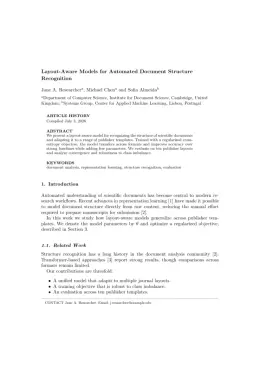
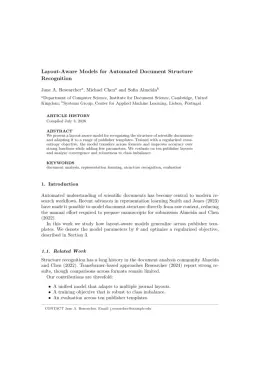
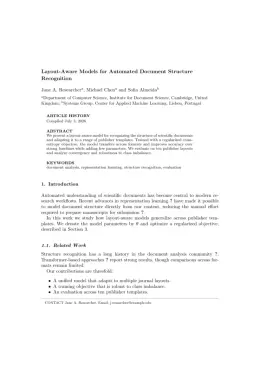
Write in a clean editor, then format for Particulate Science And Technology in one click — DocuGuru applies the official Taylor & Francis template with author–year references and exports a submission-ready PDF plus the editable LaTeX source. Free to start.

About the Particulate Science And Technology format

Particulate Science And Technology is a peer-reviewed journal published by Taylor & Francis, covering Granular flow and fluidized beds, Mineral Processing and Grinding, Cyclone Separators and Fluid Dynamics.

PublisherTaylor & Francis
Reference styleAuthor–year (Chicago, T&F)
Author–year — (Smith, 2023) in the text
Smith, Ada, Ben Jones, and Cara Lee. 2023. "A Representative Article Title." Particulate Science And Technology 12 (3): 45–58.

Formats any DOI in Particulate Science And Technology style. No sign-up.

Publishes research inGranular flow and fluidized beds Mineral Processing and Grinding Cyclone Separators and Fluid Dynamics Particle Dynamics in Fluid Flows Minerals Flotation and Separation Techniques
ISSN0272-6351
Citation impact (2-yr)1.55
h-index61
i10-index850
Total citations27,929
Top institutions publishing hereThapar Institute of Engineering & Technology
Journal websitewww.tandfonline.com
You getA submission-ready PDF and the editable LaTeX source — ready to submit.

Papers published in Particulate Science And Technology per year

89
2014
149
2015
142
2016
98
2017
96
2018
120
2019
66
2020
91
2021
100
2022
100
2023
59
2024
128
2025

Citation impact of Particulate Science And Technology by publication year

1.3K
2014
2.5K
2015
2.2K
2016
1.7K
2017
1.8K
2018
1.7K
2019
724
2020
1.1K
2021
785
2022
479
2023
197
2024
158
2025

Citations each year’s papers have accumulated so far — the most recent years are still building up.

Most-cited papers in Particulate Science And Technology

DELIVERY OF SUBSTANCES INTO CELLS AND TISSUES USING A PARTICLE BOMBARDMENT PROCESS

John C. Sanford, Theodore M. Klein, E. D. Wolf et al. · 1 Jan 1987

ABSTRACT Biologists commonly wish to introduce a wide range of substances into living cells. Such substances include biological stains, proteins (antibodies or enzymes), and genetic material (either RNA or DNA). The cell membrane and, in the case of plant ceils, the cell wall pose formidable barriers which exclude many macromolecules. The concept of particle bombardment…

SIGNIFICANCE OF PARTICLE PARAMETERS IN THE EVALUATION OF EXPOSURE-DOSE RESPONSE RELATIONSHIPS OF INHALED PARTICLES

Günter Oberdörster · 1 Apr 1996

Chronic rat inhalation studies have shown that a number of different panicle types can induce significant adverse effects, including impaired lung clearance, chronic pulmonary inflammation, pulmonary librosis, and lung tumors. These effects occurred when highly insoluble particles of low solubility and low cytotoxicity were inhaled in long-term studies. Inhaled concentrations ranged from a few milligrams…

Physical meaning of the Sauter mean diameter of spherical particulate matter

Przemyslaw B. Kowalczuk, Jan Drzymała · 6 Oct 2015

Diameter of a collection of different-size spherical objects such as particles, droplets, and bubbles can be represented by a single value called the mean diameter. There are many ways of calculating and expressing the mean diameter of particulate matter. One of them is the Sauter mean diameter also called the surface-volume mean diameter. This diameter…

RECENT PROGRESS IN ELECTROSTATIC SEPARATION TECHNOLOGY

Yoshio Higashiyama, K. Asano · 1 Jan 1998

ABSTRACT The applications of the electrostatic separation technique employed in the various field was overviewed. By classifying the electrostatic separators with the charging method and with the kind of sorting equipment, recent progress in the electrostatic separators was presented and also future trend was discussed. Principle and practical structure of the separator employing corona charging…

Organic Solar Cells: A Review of Materials, Limitations, and Possibilities for Improvement

Omar A. Abdulrazzaq, Viney Saini, Shawn E. Bourdo et al. · 25 Feb 2013

Abstract Significant attention has been given during the last few years to overcome technological and material barriers in order to develop organic photovoltaic devices (OPVs) with comparable cost efficiency similar to the inorganic photovoltaics (PVs) and to make them commercially viable. To take advantage of the low cost for such devices, major improvements are necessary…

Particulate Science And Technology template — frequently asked questions

How do I write a paper in the Particulate Science And Technology format?
In DocuGuru you write your manuscript in a normal editor — no LaTeX setup required — and select the Particulate Science And Technology template. When you export, DocuGuru compiles the paper into the official Taylor & Francis format and hands you a submission-ready PDF along with the editable LaTeX source.
What reference style does Particulate Science And Technology use?
Particulate Science And Technology uses Author–year (Chicago, T&F) references, shown as author–year markers such as (Smith, 2023) in the text. DocuGuru formats every in-text citation and the reference list in this exact style automatically. A reference appears like this: Smith, Ada, Ben Jones, and Cara Lee. 2023. "A Representative Article Title." Particulate Science And Technology 12 (3): 45–58.
Do I need to know LaTeX to submit to Particulate Science And Technology?
No. DocuGuru generates the interact LaTeX class and compiles the PDF for you in the background, so you get a Taylor & Francis-ready Particulate Science And Technology document without writing any LaTeX. If you do want it, the LaTeX source is included in the export.
Can I import an existing draft into the Particulate Science And Technology template?
Yes. Paste or upload your current manuscript — Word, LaTeX, Markdown, or plain text — and DocuGuru reflows it into the Particulate Science And Technology format with correct headings, figures, tables, and author–year citations.
Who publishes Particulate Science And Technology?
Particulate Science And Technology is a multidisciplinary journal published by Taylor & Francis. DocuGuru's Particulate Science And Technology template matches Taylor & Francis's official submission format.
Can I export a submission-ready Particulate Science And Technology PDF?
Yes — DocuGuru produces a PDF built with the official Particulate Science And Technology template (the interact class) that is ready to submit to Taylor & Francis, together with the matching LaTeX source files.
How much does the Particulate Science And Technology template cost?
You can start writing in the Particulate Science And Technology template for free. Exporting the final submission-ready Particulate Science And Technology PDF and LaTeX source is part of DocuGuru's paid plans — see the app for current pricing.

Use the Particulate Science And Technology template