Taylor & Francis

International Journal of Food Sciences and Nutrition Template

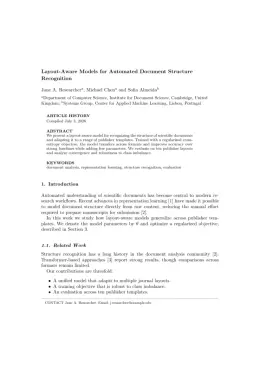
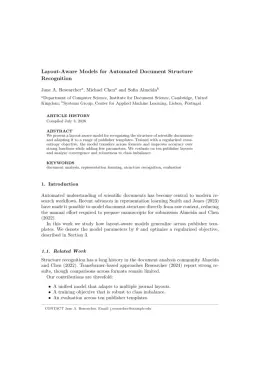
Write in a clean editor, then format for International Journal of Food Sciences and Nutrition in one click — DocuGuru applies the official Taylor & Francis template with author–year references and exports a submission-ready PDF plus the editable LaTeX source. Free to start.

About the International Journal of Food Sciences and Nutrition format

International Journal of Food Sciences and Nutrition is a peer-reviewed journal published by Taylor & Francis, covering Nutritional Studies and Diet, Food composition and properties, Phytochemicals and Antioxidant Activities.

PublisherTaylor & Francis
Reference styleAuthor–year (Chicago, T&F)
Author–year — (Smith, 2023) in the text
Smith, Ada, Ben Jones, and Cara Lee. 2023. "A Representative Article Title." International Journal of Food Sciences and Nutrition 12 (3): 45–58.

Formats any DOI in International Journal of Food Sciences and Nutrition style. No sign-up.

Publishes research inNutritional Studies and Diet Food composition and properties Phytochemicals and Antioxidant Activities Diet and metabolism studies Obesity, Physical Activity, Diet
ISSN0963-7486
Citation impact (2-yr)3.77
h-index115
i10-index2,196
Total citations99,529
Top institutions publishing hereUniversity of Parma
Journal websitewww.informapharmascience.com
You getA submission-ready PDF and the editable LaTeX source — ready to submit.

Papers published in International Journal of Food Sciences and Nutrition per year

119
2014
135
2015
253
2016
281
2017
257
2018
243
2019
210
2020
192
2021
62
2022
71
2023
79
2024
72
2025

Citation impact of International Journal of Food Sciences and Nutrition by publication year

3.9K
2014
4.2K
2015
5.8K
2016
4K
2017
2.4K
2018
3.2K
2019
2.5K
2020
1.8K
2021
877
2022
642
2023
474
2024
165
2025

Citations each year’s papers have accumulated so far — the most recent years are still building up.

Most-cited papers in International Journal of Food Sciences and Nutrition

Encapsulation in the food industry: a review

Selim Kermasha Bernard F. Gibbs · 1 Jan 1999

Encapsulation involves the incorporation of food ingredients, enzymes, cells or other materials in small capsules. Applications for this technique have increased in the food industry since the encapsulated materials can be protected from moisture, heat or other extreme conditions, thus enhancing their stability and maintaining viability. Encapsulation in foods is also utilized to mask odours…

1,174 citations Cite SaveGo to paper →
Six reasons why the waist-to-height ratio is a rapid and effective global indicator for health risks of obesity and how its use could simplify the international public health message on obesity

Margaret Ashwell, Shiun Dong Hsieh · 1 Jan 2005

We suggest that a simple, rapid screening tool-the waist-to-height ratio (WHTR)-could help to overcome debates about the use of different body mass index (BMI) boundary values for assessing health risks in different populations. There are six reasons for our proposal: WHTR is more sensitive than BMI as an early warning of health risks. WHTR is…

1,062 citations Cite SaveGo to paper →
The fruit of the date palm: its possible use as the best food for the future?

Walid Al‐Shahib, Richard J. Marshall · 1 Jan 2003

The fruits (dates) of the date palm (Phoenix dactylifera L.) contain a high percentage of carbohydrate (total sugars, 44-88%), fat (0.2-0.5%), 15 salts and minerals, protein (2.3-5.6%), vitamins and a high percentage of dietary fibre (6.4-11.5%). The flesh of dates contains 0.2-0.5% oil, whereas the seed contains 7.7-9.7% oil. The weight of the seed is…

The cupric ion reducing antioxidant capacity and polyphenolic content of some herbal teas

Reşat Apak, Kubilay Güçlü, Mustafa Özyürek et al. · 1 Jan 2006

The total antioxidant capacity of the aqueous extracts of some endemic herbs-prepared as infusions by steeping these herbs in hot water--was assayed with bis(neocuproine)copper(II) chloride, also known as the cupric ion reducing antioxidant capacity (CUPRAC) reagent, which was easily accessible, rapid, stable and responsive to both hydrophilic and lipophilic antioxidants. The highest antioxidant capacities of…

Fatty acid profile, tocopherol, squalene and phytosterol content of walnuts, almonds, peanuts, hazelnuts and the macadamia nut

Lindsay Maguire, Siobhán O’Sullivan, Karen Galvin et al. · 1 May 2004

Nuts are high in fat but have a fatty acid profile that may be beneficial in relation to risk of coronary heart disease. Nuts also contain other potentially cardioprotective constituents including phytosterols, tocopherols and squalene. In the present study, the total oil content, peroxide value, composition of fatty acids, tocopherols, phytosterols and squalene content were…

International Journal of Food Sciences and Nutrition template — frequently asked questions

How do I write a paper in the International Journal of Food Sciences and Nutrition format?
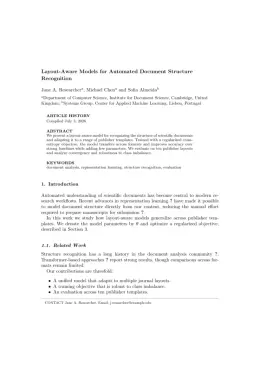
In DocuGuru you write your manuscript in a normal editor — no LaTeX setup required — and select the International Journal of Food Sciences and Nutrition template. When you export, DocuGuru compiles the paper into the official Taylor & Francis format and hands you a submission-ready PDF along with the editable LaTeX source.
What reference style does International Journal of Food Sciences and Nutrition use?
International Journal of Food Sciences and Nutrition uses Author–year (Chicago, T&F) references, shown as author–year markers such as (Smith, 2023) in the text. DocuGuru formats every in-text citation and the reference list in this exact style automatically. A reference appears like this: Smith, Ada, Ben Jones, and Cara Lee. 2023. "A Representative Article Title." International Journal of Food Sciences and Nutrition 12 (3): 45–58.
Do I need to know LaTeX to submit to International Journal of Food Sciences and Nutrition?
No. DocuGuru generates the interact LaTeX class and compiles the PDF for you in the background, so you get a Taylor & Francis-ready International Journal of Food Sciences and Nutrition document without writing any LaTeX. If you do want it, the LaTeX source is included in the export.
Can I import an existing draft into the International Journal of Food Sciences and Nutrition template?
Yes. Paste or upload your current manuscript — Word, LaTeX, Markdown, or plain text — and DocuGuru reflows it into the International Journal of Food Sciences and Nutrition format with correct headings, figures, tables, and author–year citations.
Who publishes International Journal of Food Sciences and Nutrition?
International Journal of Food Sciences and Nutrition is a multidisciplinary journal published by Taylor & Francis. DocuGuru's International Journal of Food Sciences and Nutrition template matches Taylor & Francis's official submission format.
Can I export a submission-ready International Journal of Food Sciences and Nutrition PDF?
Yes — DocuGuru produces a PDF built with the official International Journal of Food Sciences and Nutrition template (the interact class) that is ready to submit to Taylor & Francis, together with the matching LaTeX source files.
How much does the International Journal of Food Sciences and Nutrition template cost?
You can start writing in the International Journal of Food Sciences and Nutrition template for free. Exporting the final submission-ready International Journal of Food Sciences and Nutrition PDF and LaTeX source is part of DocuGuru's paid plans — see the app for current pricing.
Use the International Journal of Food Sciences and Nutrition template