
94 citations
Cite
SaveGo to paper →
Taylor & Francis
Contemporary Record Template
Write in a clean editor, then format for Contemporary Record in one click — DocuGuru applies the official Taylor & Francis template with author–year references and exports a submission-ready PDF plus the editable LaTeX source. Free to start.
About the Contemporary Record format
Contemporary Record is a peer-reviewed journal published by Taylor & Francis, covering Political and Economic history of UK and US, Irish and British Studies, Diverse Scientific and Economic Studies.
| Publisher | Taylor & Francis |
|---|---|
| Reference style | Author–year (Chicago, T&F) Author–year — (Smith, 2023) in the text Smith, Ada, Ben Jones, and Cara Lee. 2023. "A Representative Article Title." Contemporary Record 12 (3): 45–58.
Formats any DOI in Contemporary Record style. No sign-up. |
| Publishes research in | Political and Economic history of UK and US Irish and British Studies Diverse Scientific and Economic Studies Human auditory perception and evaluation Historical and Contemporary Political Dynamics |
| ISSN | 0950-9224 |
| h-index | 17 |
| i10-index | 32 |
| Total citations | 1,264 |
| Top institutions publishing here | Institute of Contemporary History |
| Journal website | www.tandfonline.com |
| You get | A submission-ready PDF and the editable LaTeX source — ready to submit. |
Papers published in Contemporary Record per year
Citation impact of Contemporary Record by publication year
Citations each year’s papers have accumulated so far — the most recent years are still building up.
Most-cited papers in Contemporary Record
Many of the explanations for the decline of the Scottish Conservatives have previously been untested. These include that the party has lost its loyalist Protestant base, suffered for its opposition to devolution and become too right‐wing for a normally progressive Scots electorate. Using a unique collection of survey data, doubt is cast on all three…
44 citations
Cite
SaveGo to paper →
Abstract This article tests whether British party politics is experiencing a crisis of declining confidence in party leaders due to a media‐fed climate of denigrating politicians or whether there is simply a cyclical alternation of confidence in particular leaders, leaving unaffected an underlying equilibrium of confidence. The first section looks at approval of the prime…
36 citations
Cite
SaveGo to paper →
This article examines the flows of migration to and from the United Kingdom in the years immediately after the Second World War. It identifies the paradox that while UK population was in long‐term decline, and the economy suffering from labour shortages, the Labour government chose to encourage emigration to the Dominions, and immigration from Europe,…
35 citations
Cite
SaveGo to paper →
35 citations
Cite
SaveGo to paper →
Related journal templates
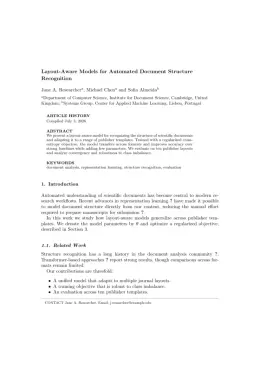
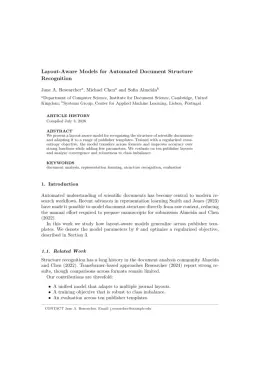
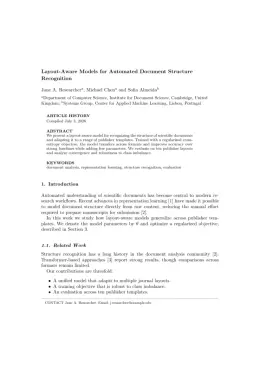
Contemporary Record template — frequently asked questions
How do I write a paper in the Contemporary Record format?
In DocuGuru you write your manuscript in a normal editor — no LaTeX setup required — and select the Contemporary Record template. When you export, DocuGuru compiles the paper into the official Taylor & Francis format and hands you a submission-ready PDF along with the editable LaTeX source.
What reference style does Contemporary Record use?
Contemporary Record uses Author–year (Chicago, T&F) references, shown as author–year markers such as (Smith, 2023) in the text. DocuGuru formats every in-text citation and the reference list in this exact style automatically. A reference appears like this: Smith, Ada, Ben Jones, and Cara Lee. 2023. "A Representative Article Title." Contemporary Record 12 (3): 45–58.
Do I need to know LaTeX to submit to Contemporary Record?
No. DocuGuru generates the interact LaTeX class and compiles the PDF for you in the background, so you get a Taylor & Francis-ready Contemporary Record document without writing any LaTeX. If you do want it, the LaTeX source is included in the export.
Can I import an existing draft into the Contemporary Record template?
Yes. Paste or upload your current manuscript — Word, LaTeX, Markdown, or plain text — and DocuGuru reflows it into the Contemporary Record format with correct headings, figures, tables, and author–year citations.
Who publishes Contemporary Record?
Contemporary Record is a multidisciplinary journal published by Taylor & Francis. DocuGuru's Contemporary Record template matches Taylor & Francis's official submission format.
Can I export a submission-ready Contemporary Record PDF?
Yes — DocuGuru produces a PDF built with the official Contemporary Record template (the interact class) that is ready to submit to Taylor & Francis, together with the matching LaTeX source files.
How much does the Contemporary Record template cost?
You can start writing in the Contemporary Record template for free. Exporting the final submission-ready Contemporary Record PDF and LaTeX source is part of DocuGuru's paid plans — see the app for current pricing.