Taylor & Francis

Biotechnology & Biotechnological Equipment Template

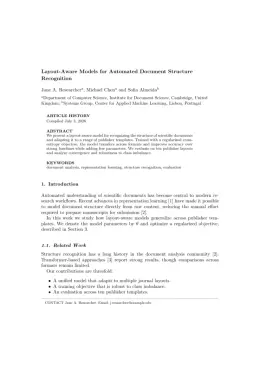
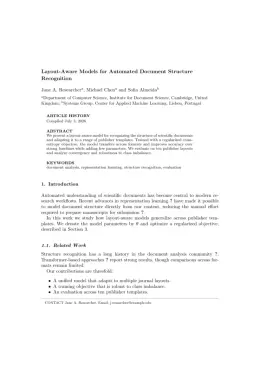
Write in a clean editor, then format for Biotechnology & Biotechnological Equipment in one click — DocuGuru applies the official Taylor & Francis template with author–year references and exports a submission-ready PDF plus the editable LaTeX source. Free to start.

About the Biotechnology & Biotechnological Equipment format

Biotechnology & Biotechnological Equipment is a peer-reviewed journal published by Taylor & Francis, covering Plant tissue culture and regeneration, Microbial Metabolic Engineering and Bioproduction, Biofuel production and bioconversion.

PublisherTaylor & Francis
Reference styleAuthor–year (Chicago, T&F)
Author–year — (Smith, 2023) in the text
Smith, Ada, Ben Jones, and Cara Lee. 2023. "A Representative Article Title." Biotechnology & Biotechnological Equipment 12 (3): 45–58.

Formats any DOI in Biotechnology & Biotechnological Equipment style. No sign-up.

Publishes research inPlant tissue culture and regeneration Microbial Metabolic Engineering and Bioproduction Biofuel production and bioconversion Transgenic Plants and Applications Plant Stress Responses and Tolerance
ISSN1310-2818
Citation impact (2-yr)2.43
h-index69
i10-index1,101
Total citations41,414
Article processing charge$1,533
Open accessYes
Top institutions publishing hereBulgarian Academy of Sciences
Journal websitewww.tandfonline.com
You getA submission-ready PDF and the editable LaTeX source — ready to submit.

Papers published in Biotechnology & Biotechnological Equipment per year

199
2014
185
2015
169
2016
163
2017
146
2018
187
2019
158
2020
182
2021
103
2022
93
2023
90
2024
11
2025

Citation impact of Biotechnology & Biotechnological Equipment by publication year

3.6K
2014
6.2K
2015
2.9K
2016
4K
2017
1.9K
2018
2.6K
2019
1.8K
2020
1.7K
2021
819
2022
404
2023
240
2024
7
2025

Citations each year’s papers have accumulated so far — the most recent years are still building up.

Most-cited papers in Biotechnology & Biotechnological Equipment

An overview of technologies for immobilization of enzymes and surface analysis techniques for immobilized enzymes

Nur Royhaila Mohamad, Nur Haziqah Che Marzuki, Nor Aziah Buang et al. · 17 Feb 2015

The current demands of sustainable green methodologies have increased the use of enzymatic technology in industrial processes. Employment of enzyme as biocatalysts offers the benefits of mild reaction conditions, biodegradability and catalytic efficiency. The harsh conditions of industrial processes, however, increase propensity of enzyme destabilization, shortening their industrial lifespan. Consequently, the technology of enzyme immobilization…

1,427 citations Cite SaveGo to paper →
DNA molecular markers in plant breeding: current status and recent advancements in genomic selection and genome editing

Muhammad Azhar Nadeem, Muhammad Amjad Nawaz, Muhammad Qasim Shahid et al. · 14 Nov 2017

With the development of molecular marker technology in the 1980s, the fate of plant breeding has changed. Different types of molecular markers have been developed and advancement in sequencing technologies has geared crop improvement. To explore the knowledge about molecular markers, several reviews have been published in the last three decades; however, all these reviews…

<i>Bacillus</i>species as versatile weapons for plant pathogens: a review

Jamil Shafi, Hui Qiao Tian, Mingshan Ji · 13 Feb 2017

Plant pathogens are the main threat for profitable agricultural productivity. Currently, chemical-based pesticides are thought to be an effective and reliable agricultural management measure for controlling pests. Chemical pesticides are highly effective and convenient to use but they are a potential threat for the environment and all kinds of life on earth. Therefore, the use…

Principle and application of plant mutagenesis in crop improvement: a review

Yusuff Oladosu, Mohd Y. Rafii, Norhani Abdullah et al. · 14 Dec 2015

The first step in plant breeding is to identify suitable genotypes containing the desired genes among existing varieties, or to create one if it is not found in nature. In nature, variation occurs mainly as a result of mutations and without it, plant breeding would be impossible. In this context, the major aim in mutation-based…

Myconanoparticles: synthesis and their role in phytopathogens management

Mousa A. Alghuthaymi, Hassan Almoammar, Mahendra Rai et al. · 4 Mar 2015

Nanotechnology can offer green and eco-friendly alternatives for plant disease management. Apart from being eco-friendly, fungi are used as bio-manufacturing units, which will provide an added benefit in being easy to use, as compared to other microbes. The non-pathogenic nature of some fungal species in combination with the simplicity of production and handling will improve…

Biotechnology & Biotechnological Equipment template — frequently asked questions

How do I write a paper in the Biotechnology & Biotechnological Equipment format?
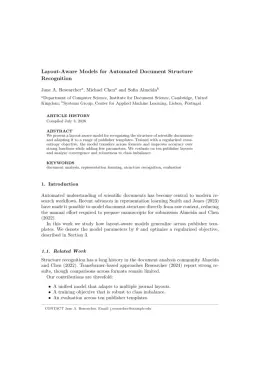
In DocuGuru you write your manuscript in a normal editor — no LaTeX setup required — and select the Biotechnology & Biotechnological Equipment template. When you export, DocuGuru compiles the paper into the official Taylor & Francis format and hands you a submission-ready PDF along with the editable LaTeX source.
What reference style does Biotechnology & Biotechnological Equipment use?
Biotechnology & Biotechnological Equipment uses Author–year (Chicago, T&F) references, shown as author–year markers such as (Smith, 2023) in the text. DocuGuru formats every in-text citation and the reference list in this exact style automatically. A reference appears like this: Smith, Ada, Ben Jones, and Cara Lee. 2023. "A Representative Article Title." Biotechnology & Biotechnological Equipment 12 (3): 45–58.
Do I need to know LaTeX to submit to Biotechnology & Biotechnological Equipment?
No. DocuGuru generates the interact LaTeX class and compiles the PDF for you in the background, so you get a Taylor & Francis-ready Biotechnology & Biotechnological Equipment document without writing any LaTeX. If you do want it, the LaTeX source is included in the export.
Can I import an existing draft into the Biotechnology & Biotechnological Equipment template?
Yes. Paste or upload your current manuscript — Word, LaTeX, Markdown, or plain text — and DocuGuru reflows it into the Biotechnology & Biotechnological Equipment format with correct headings, figures, tables, and author–year citations.
Who publishes Biotechnology & Biotechnological Equipment?
Biotechnology & Biotechnological Equipment is a multidisciplinary journal published by Taylor & Francis. DocuGuru's Biotechnology & Biotechnological Equipment template matches Taylor & Francis's official submission format.
Can I export a submission-ready Biotechnology & Biotechnological Equipment PDF?
Yes — DocuGuru produces a PDF built with the official Biotechnology & Biotechnological Equipment template (the interact class) that is ready to submit to Taylor & Francis, together with the matching LaTeX source files.
How much does the Biotechnology & Biotechnological Equipment template cost?
You can start writing in the Biotechnology & Biotechnological Equipment template for free. Exporting the final submission-ready Biotechnology & Biotechnological Equipment PDF and LaTeX source is part of DocuGuru's paid plans — see the app for current pricing.
Use the Biotechnology & Biotechnological Equipment template